


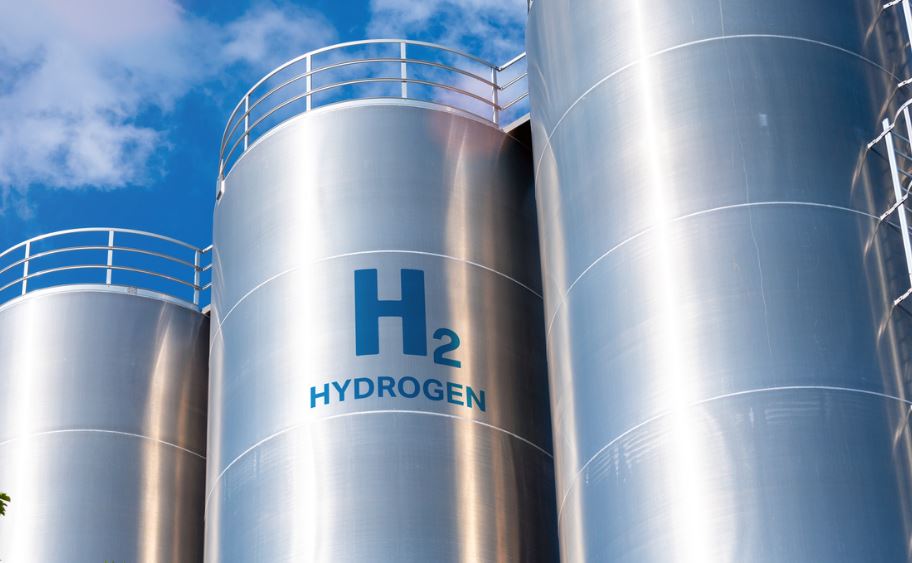


CF Industries’ decision to halt a planned 20 MW green hydrogen project at its Donaldsonville ammonia complex underscores the widening gap between early green hydrogen ambitions and projects that can clear today’s cost and policy hurdles.
Announced during the company’s Q4 2025 earnings call on February 19, the cancellation comes with a $51 million write down and marks a sharp contrast with the company’s continued momentum in low carbon ammonia through its Blue Point joint venture in Louisiana.
When CF Industries signed the engineering and procurement contract for the Donaldsonville project in 2021, the company positioned green hydrogen as a pathway to produce roughly 20,000 metric tons per year of green ammonia. At the time, electrolyzer costs, power price assumptions, and policy expectations aligned with a broader industry narrative that early mover projects could bridge the cost gap through scale and learning effects. Four years later, the economics appear less forgiving.
The write down signals that small scale green hydrogen integrated into existing ammonia assets remains vulnerable without durable policy support or long term offtake guarantees. A 20 MW electrolyzer is modest by today’s standards, but even at that scale, exposure to volatile power prices and the absence of firm revenue stabilization mechanisms can quickly erode project viability. CF has not detailed the specific drivers behind the cancellation, but the decision aligns with a broader industry pullback from merchant style green hydrogen projects in regions without explicit price support.
In contrast, the company’s Blue Point project in Ascension Parish illustrates where CF sees a clearer path forward. The low carbon ammonia facility, developed as a joint venture with JERA and Mitsui, reached a positive final investment decision in April 2025 and met all planned milestones by year end. According to CEO Christopher Bohn, progress included securing offtake commitments tied to emerging low carbon ammonia demand and obtaining contract for difference awards from the Japanese government.
Those CFDs materially change the risk profile. By guaranteeing a fixed price, they shield the project from market volatility and effectively transfer part of the cost gap to public balance sheets. This mechanism stands in sharp contrast to the Donaldsonville green hydrogen project, which lacked comparable long term price certainty. The divergence highlights how policy design, rather than technology readiness alone, is shaping which low carbon ammonia pathways advance.
CF expects to begin work at the Blue Point site in the second quarter of 2026, reinforcing the company’s view that low carbon ammonia linked to regulated or policy backed demand centers is commercially more defensible than standalone green hydrogen production in the US Gulf Coast. The involvement of Japanese partners is not incidental. Japan has emerged as one of the few markets offering concrete demand side incentives for low carbon ammonia, particularly for co firing and industrial use, backed by government supported pricing frameworks.
Bohn’s comments on demand further clarify CF’s strategic calculus. He noted that customers are already willing to pay a premium for low carbon ammonia in the near term, citing sustainability targets as a key driver. That willingness, however, appears highly segmented. Premiums are material where compliance costs or regulatory exposure are explicit, such as in Europe, where carbon pricing and border adjustment mechanisms increase the effective cost of conventional ammonia imports.
Interest from Europe and Africa, as cited by CF, reflects this regulatory pull. In Europe, carbon costs under the EU emissions framework and forthcoming import rules translate into tangible penalties for high emissions nitrogen products. In that context, low carbon ammonia is not just a branding exercise but a hedge against escalating compliance costs. The Donaldsonville green hydrogen project, by contrast, would have relied on voluntary demand and corporate sustainability commitments, a weaker foundation in a tightening capital environment.
The contrast between the two projects points to a more selective phase for low carbon investments in the fertilizer sector. Green hydrogen linked to ammonia production remains technically feasible, but without mechanisms to stabilize revenue or offset power price risk, it struggles to compete with blue or hybrid pathways that benefit from policy aligned demand. CF’s write down is therefore less a retreat from decarbonization than a recalibration toward projects where policy, partners, and offtake structures are aligned.


