


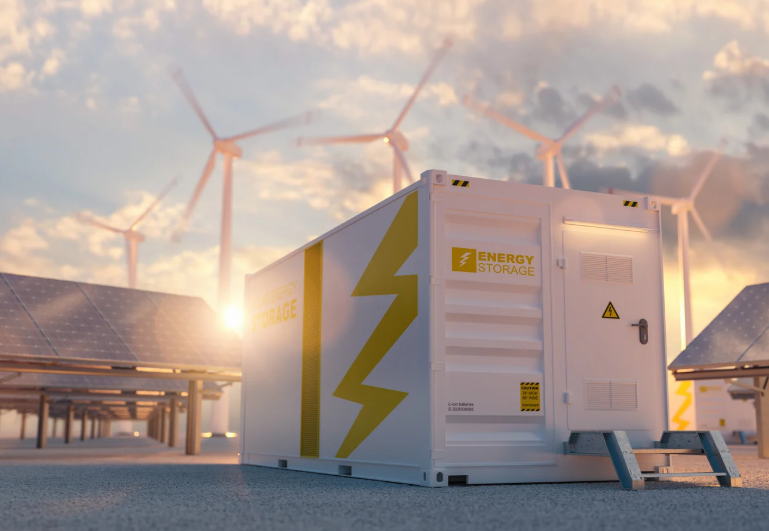


Jinko ESS has secured a strategic cooperation agreement covering 1 GWh of battery energy storage systems across the region. The portfolio is focused on grid-side and utility-scale deployments, reflecting a broader shift in storage demand from behind-the-meter applications toward system-level balancing.
The scale of the agreement signals how rapidly storage requirements are evolving. A gigawatt-hour portfolio places the projects firmly in the category of grid infrastructure rather than pilot deployments. In markets with increasing renewable penetration, storage is no longer an optional add-on but a prerequisite for maintaining frequency stability, managing peak demand, and mitigating curtailment.
Latin America presents a particularly complex case. Countries such as Chile and Brazil have expanded renewable generation aggressively, yet transmission bottlenecks and limited interconnection capacity continue to constrain system efficiency. In these conditions, grid-scale storage functions less as a decarbonization tool and more as an operational necessity.
Jinko ESS’s focus on grid-side applications aligns with this shift. Utility-scale storage can provide ancillary services, defer network upgrades, and smooth variability in renewable output. However, the economic case depends heavily on market design, including capacity payments, ancillary service markets, and regulatory clarity around storage participation.
A central element of the agreement is the company’s localized service framework, which combines regional partnerships with global technology deployment. This model reflects a broader industry trend in which international storage providers adapt to fragmented regulatory environments and project development practices.
Localization is not simply a commercial strategy. In emerging markets, project execution risks often stem from permitting delays, grid interconnection challenges, and supply chain constraints. By embedding local teams, companies aim to reduce these risks while aligning with national energy policies and procurement structures.
At the same time, the approach introduces operational complexity. Integrating global battery technology with local engineering, procurement, and construction processes requires standardization without sacrificing adaptability. For large-scale storage, where performance guarantees and safety compliance are critical, this balance is not trivial.
Jinko ESS indicates that the projects will deploy a battery energy storage system designed around safety, capacity, and economic performance. These priorities reflect lessons learned from earlier storage deployments, where thermal management, degradation rates, and system integration issues have affected long-term viability.
Safety remains a primary concern in utility-scale battery installations, particularly in high-temperature environments common in parts of Latin America. Advances in cell chemistry, thermal management systems, and enclosure design are increasingly central to project bankability. At the same time, capacity optimization and lifecycle cost reductions are critical for ensuring that storage competes effectively with alternative balancing solutions such as gas peaker plants.
Economic performance is closely tied to utilization rates. Storage assets must capture value across multiple revenue streams, including arbitrage, capacity services, and grid support functions. This requires not only robust hardware but also sophisticated energy management systems capable of optimizing dispatch in real time.
The agreement reinforces Jinko ESS’s ambition to expand its presence in Latin America, a region that is attracting growing interest from global storage providers. Competition is intensifying as established players and new entrants seek to secure early positions in markets where regulatory frameworks are still evolving.
While the company frames the deal as evidence of its global capabilities, execution will ultimately determine its impact. Large-scale storage projects face risks related to financing, policy changes, and grid integration. Delays or underperformance can quickly erode projected returns, particularly in markets with volatile electricity pricing.
At the same time, the strategic logic remains clear. As renewable generation continues to scale, storage becomes integral to system reliability. Companies that can combine technological performance with effective local execution are better positioned to capture this demand.
Add EnergyNews.biz as a preferred source on Google


