


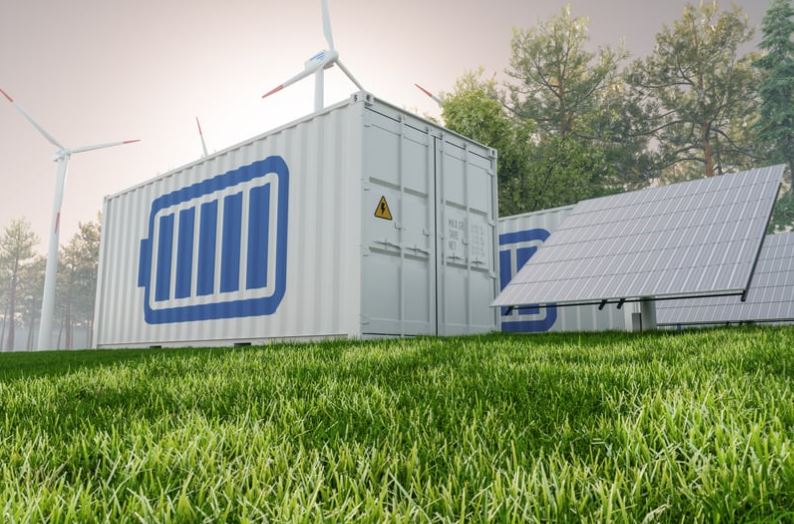


The Sedgwick County Commission approved a moratorium on new battery energy storage system applications through March 11, 2027. The decision reflects a widening disconnect between the pace of grid-scale storage deployment and the readiness of local governance structures to evaluate and regulate these projects.
The rationale, as outlined by County Commissioner Jeff Blubaugh, is less about opposition to storage itself and more about regulatory timing. Local authorities are seeking alignment with emerging best practices rather than approving projects under incomplete or outdated zoning frameworks. That caution mirrors actions in neighboring jurisdictions. Saline and Sumner counties have already rejected similar proposals, while voters in Halstead moved to block developments within city limits.
This pattern highlights a critical structural issue. Battery storage is often positioned as a stabilizing force for grids increasingly reliant on intermittent renewables. Yet at the local level, the technology introduces unfamiliar risk profiles that differ from traditional generation assets. Fire safety concerns, land use compatibility, and lifecycle management of lithium-ion systems are frequently cited, but the absence of standardized regulatory templates leaves counties navigating these issues independently.
Nationally, battery storage capacity has expanded rapidly, driven by declining costs and federal incentives. The U.S. Energy Information Administration has projected continued growth in installed storage capacity, particularly in regions integrating higher shares of solar and wind. However, that growth is unevenly distributed, with states such as California and Texas leading deployments while parts of the Midwest lag behind due to permitting uncertainty and local resistance.
Kansas presents a particularly revealing case. The state has seen significant wind capacity additions over the past decade, positioning it as a key renewable generation hub. Yet the lack of corresponding storage infrastructure raises questions about grid efficiency and curtailment risks. Without storage, excess generation during peak wind periods can go underutilized, limiting both economic returns and system flexibility.
The Sedgwick County moratorium effectively pauses any near-term attempt to address that imbalance at the local level. While officials emphasize the need to study regulatory approaches adopted elsewhere, the delay also introduces investment uncertainty. Developers typically operate within tight timelines tied to interconnection agreements, tax incentives, and supply chain contracts. A one-year halt, particularly in a market still defining its regulatory baseline, can redirect capital to more predictable jurisdictions.
This dynamic is already visible across the U.S. energy storage landscape. Markets with clear permitting pathways and established safety codes are capturing a disproportionate share of investment. In contrast, regions where regulatory ambiguity persists risk falling behind, even if their underlying resource potential is strong.
The core challenge for counties like Sedgwick is to reconcile localized concerns with system-level benefits. Battery storage is not merely an adjunct to renewable generation; it is increasingly integral to grid reliability, frequency regulation, and peak load management. However, those system-wide advantages are often abstract at the community level, where tangible impacts such as land use changes and perceived safety risks dominate public discourse.
Developing robust regulatory frameworks is therefore less about enabling individual projects and more about establishing predictable conditions for an emerging asset class. This includes zoning definitions specific to storage facilities, fire code integration aligned with evolving national standards, and decommissioning requirements that address long-term environmental considerations.
Add EnergyNews.biz as a preferred source on Google


