


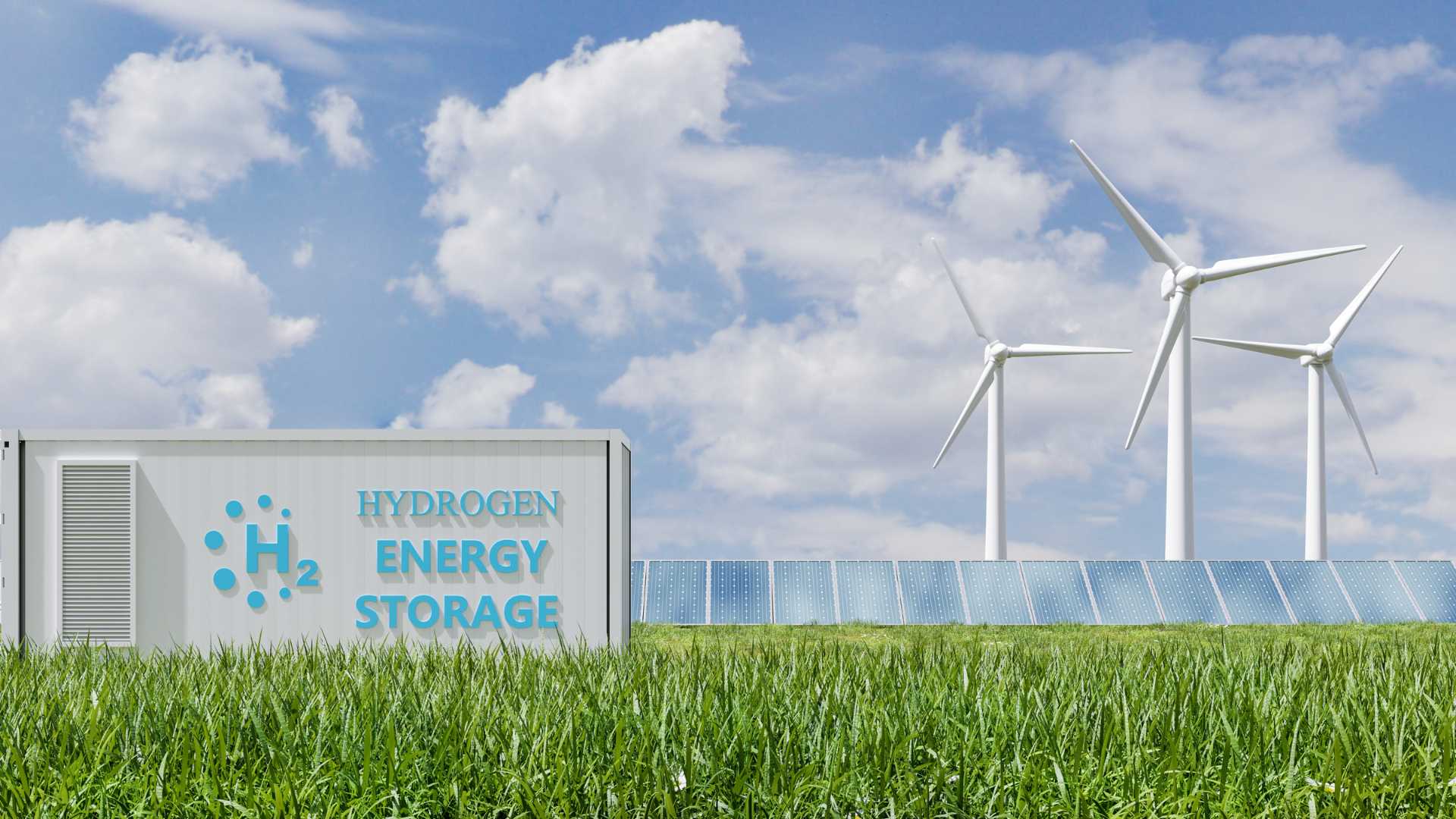


At the Etzel salt cavern site in Lower Saxony, approximately 90 tonnes of hydrogen, equivalent to around one million standard cubic meters, have been injected into repurposed underground caverns as part of a live pilot designed to test storage performance under real operating conditions.
The project, led by STORAG ETZEL GmbH in partnership with Gasunie, represents one of the more advanced European efforts to validate large-scale hydrogen storage using existing gas infrastructure. The focus is not only on injection feasibility but on full-cycle performance, including purification, compression, and repeated injection and withdrawal under varying operational loads.
The Etzel site itself reflects a legacy asset base increasingly central to the hydrogen transition. Developed in the 1970s for crude oil and natural gas storage, the cavern complex leverages deep salt formations that offer high impermeability and structural stability. These geological characteristics are critical for hydrogen, a molecule with high diffusivity that presents containment challenges not encountered in traditional gas storage.
The pilot’s hydrogen filling phase relied on a logistics-intensive delivery system involving roughly 200 trailer shipments, underscoring a current limitation in hydrogen supply chains. Without pipeline-scale hydrogen transport, early-stage projects depend on road-based delivery, increasing costs and limiting scalability. This constraint is particularly relevant for inland storage hubs, where infrastructure retrofitting must be synchronized with upstream production and transport capacity.
Operationally, the injection phase was completed without reported leakage or safety incidents, providing an early validation of cavern integrity under hydrogen service conditions. However, injection alone does not resolve the core technical uncertainties. The project’s analytical value lies in its multi-cycle testing program, which will assess how caverns perform under repeated pressure and temperature fluctuations. These cycles are essential to understanding long-term material fatigue, gas losses, and operational efficiency, all of which directly influence the levelized cost of storage.
A central component of the Etzel pilot is its modular hydrogen purification system. Designed as a configurable platform, the system integrates drying, filtering, and compression technologies that can be adjusted to optimize gas quality during both injection and withdrawal. This is particularly relevant because hydrogen purity requirements vary significantly across end uses, from industrial feedstock to fuel cell applications. Impurities introduced during storage or cycling could limit downstream usability without additional processing, adding cost and complexity to the value chain.
Data collection is therefore a primary objective. Sensors deployed throughout the caverns and surface infrastructure are continuously monitoring pressure, temperature, and gas composition. These datasets will inform not only site-specific performance but also broader engineering assumptions about salt cavern behavior under hydrogen cycling. The absence of large-scale empirical data has been a persistent gap in hydrogen infrastructure planning, often forcing developers to rely on extrapolations from natural gas storage models that may not fully capture hydrogen-specific dynamics.
From a system perspective, underground storage addresses one of the most significant structural challenges in hydrogen markets: temporal mismatch between production and demand. Renewable hydrogen production is inherently variable, tied to intermittent wind and solar generation. Without large-scale storage, excess production during peak generation periods cannot be efficiently retained for later use, limiting system utilization rates and increasing overall costs.
Salt caverns offer a potential solution due to their relatively low cost per unit of stored energy compared to above-ground alternatives such as pressurized tanks. Repurposing existing caverns also reduces capital expenditure and development timelines, an important factor given the urgency of decarbonization targets across the European Union. However, this approach introduces new engineering complexities, particularly around retrofitting wells, sealing systems, and surface facilities originally designed for hydrocarbons.
Geographically, the Etzel site benefits from proximity to the port of Wilhelmshaven, positioning it as a potential node in a future hydrogen import and distribution network. The ability to receive hydrogen via maritime routes or pipelines and store it at scale before redistribution could enhance supply flexibility across Northwestern Europe. This aligns with broader European efforts to integrate hydrogen into existing energy corridors, although infrastructure standardization and cross-border coordination remain unresolved.
Add EnergyNews.biz as a preferred source on Google


