


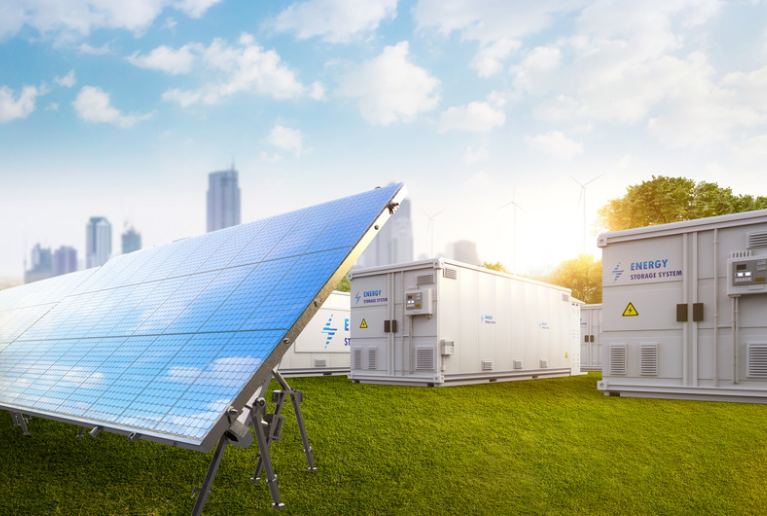


The agreement between Zelestra and EDP marks Spain’s first power purchase agreement to retrofit battery storage onto an operational solar plant, signaling a shift in how renewable assets are structured and optimized as dispatchability gains importance alongside generation capacity.
The deal focuses on hybridizing the 50 MW Pizarroso solar plant in Cáceres, operational since 2023, with the addition of a 160 MWh battery energy storage system developed by Zelestra, transforming the facility from a standalone generation asset into a more flexible resource capable of responding to market dynamics and grid stability requirements amid increasingly volatile electricity conditions.
Unlike greenfield hybrid projects, where solar and storage are designed simultaneously, the Pizarroso integration represents a retrofit model. This approach introduces additional engineering complexity, particularly in system integration, inverter compatibility, and grid interconnection constraints. However, it also reflects a growing need to enhance the performance of existing renewable assets rather than relying solely on new capacity additions.
Spain’s rapid solar expansion has intensified midday oversupply risks, leading to price cannibalization and curtailment in certain regions. By adding storage capacity, operators can shift generation to higher-value periods, improving revenue stability while reducing pressure on the grid during peak production hours.
The 160 MWh configuration suggests a storage duration designed for intra-day balancing rather than long-duration backup, aligning with current market opportunities in energy arbitrage and ancillary services. However, the long-term value of such systems will depend on how Spain’s electricity market evolves to reward flexibility.
The involvement of EDP as the offtaker signals a shift in PPA structures from fixed-volume energy contracts toward more dynamic agreements that incorporate storage-enabled optimization. Traditionally, PPAs have focused on securing predictable revenue streams for renewable generation, often at the expense of operational flexibility.
By integrating storage into the contract framework, EDP gains the ability to better align supply with demand, reducing exposure to negative pricing events and improving portfolio balancing. This model reflects broader changes in European power markets, where the value of dispatchable renewable energy is increasing as variable generation expands.
The agreement also builds on a previous deal between the two companies in Trujillo, Extremadura, which combined 170 MW of solar capacity with 400 MWh of storage. The progression from co-located hybrid systems to retrofitted storage suggests a widening application of hybridization strategies across different asset types and development stages.
Grid Stability and Market Design Pressures
Spain’s transmission system is facing increasing complexity as renewable penetration rises. Solar generation, in particular, introduces steep ramping requirements during evening hours when output declines rapidly while demand remains elevated. Battery storage addresses this imbalance by providing fast-response discharge, supporting frequency regulation and reducing reliance on thermal peaking plants.
However, the economic case for storage remains closely tied to regulatory frameworks and market signals. Revenue streams such as capacity payments, balancing services, and arbitrage opportunities must be sufficiently robust to justify investment. Without these mechanisms, storage deployment risks lagging behind renewable expansion, exacerbating grid instability.
The Pizarroso project highlights how private-sector agreements are beginning to fill this gap, embedding flexibility directly into commercial contracts rather than relying solely on regulated market incentives.
For Zelestra, the project reflects a broader strategy of integrating storage into its renewable portfolio to enhance asset performance and competitiveness. Backed by EQT, the company is expanding its presence in hybrid energy solutions, where value creation increasingly depends on the ability to manage variability rather than simply generate electricity.
EDP, with over 29 GW of installed capacity globally and a renewable share exceeding 90 percent, is similarly positioned to benefit from storage integration across its portfolio. As renewable penetration increases, large operators are under pressure to optimize energy management and reduce exposure to market volatility.
Add EnergyNews.biz as a preferred source on Google


