


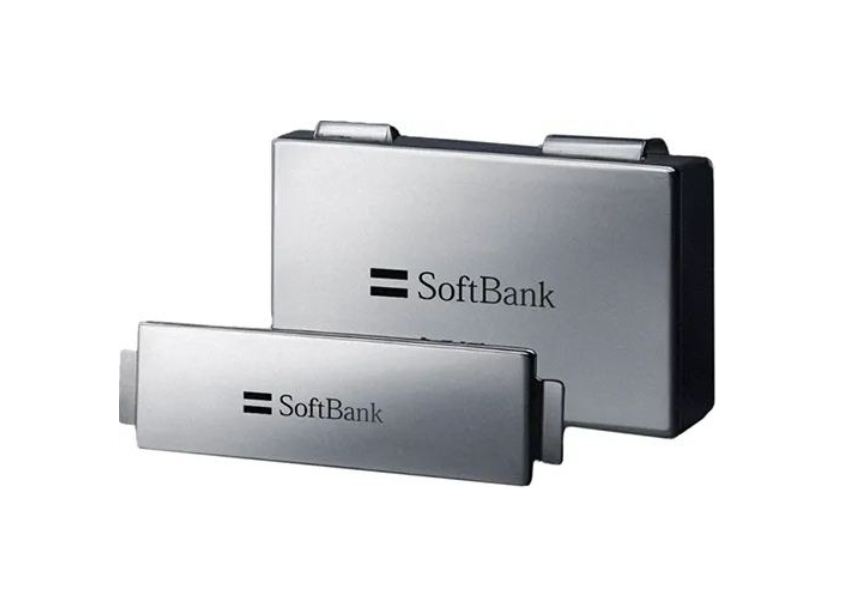


SoftBank is moving beyond its traditional telecommunications and technology focus with plans to establish a domestic battery manufacturing business aimed at supporting AI-driven power demand.
The company said it intends to build next-generation battery cells and battery energy storage systems through a vertically integrated model spanning development, manufacturing, and deployment. The initiative will be centered around the Osaka Sakai AI Data Center currently under development on the former Sharp Corporation factory site in Sakai.
The strategy reflects a broader industry shift in which hyperscale data center operators are increasingly forced to treat energy infrastructure as a core operational asset rather than a utility procurement issue. AI workloads require significantly higher electricity consumption than traditional cloud computing because of the computational intensity associated with large language model training and inference. That demand profile is already tightening electricity markets globally, particularly in countries where renewable integration and transmission upgrades have lagged behind digital infrastructure expansion.
SoftBank plans to establish both an AX Factory and a GX Factory at the Osaka Sakai site, with battery cell and energy storage system manufacturing targeted to begin in the fiscal year ending March 2028. The company aims to achieve production at gigawatt hour scale by around fiscal year 2029, positioning the facility within a segment of the battery market currently dominated by Chinese and South Korean manufacturers.
The timing is notable given Japan’s diminished role in global battery manufacturing. While Japanese firms once held leadership positions in lithium ion technology, market share has steadily shifted toward manufacturers in China and South Korea that scaled production capacity more aggressively over the past decade. SoftBank’s initiative therefore enters an increasingly competitive sector where cost competitiveness, supply chain localization, and manufacturing scale remain decisive factors.
Rather than competing directly in conventional lithium ion batteries, SoftBank is partnering with COSMOS LAB to develop zinc halogen battery cells that use water based electrolytes. The company argues the chemistry offers a key advantage over lithium ion batteries by reducing fire risk while maintaining strong energy storage performance.
Safety considerations are becoming more commercially relevant as battery deployments expand into dense urban infrastructure and large scale data center operations. Lithium ion thermal runaway incidents, while statistically limited relative to deployment volumes, have increased scrutiny around fire suppression requirements, insurance costs, and operational resilience for stationary storage installations.
However, zinc based battery systems face their own commercialization challenges. Lithium ion technologies continue to benefit from extensive manufacturing ecosystems, falling production costs, and established supply chains. Alternative chemistries must therefore demonstrate not only safety improvements but also competitive energy density, cycle life, and cost performance at industrial scale.
SoftBank appears to recognize that challenge by coupling battery cell development with advanced energy storage system engineering through collaboration with DeltaX Co., Ltd.. The companies are developing storage systems using Cell Connecting System architecture and Cell to Pack technology designed to maximize energy density and reduce inefficiencies between battery cells and pack level integration.
Energy density has become a critical competitive metric as utilities and industrial operators seek to optimize limited installation space while supporting increasingly volatile electricity demand patterns. Data centers are particularly sensitive to power continuity and storage efficiency because AI workloads generate sustained electricity demand spikes that can strain both local grids and backup infrastructure.
SoftBank also plans to integrate AI based energy management systems capable of forecasting power demand using technology developed through its electricity business. The approach highlights how battery storage is increasingly being linked with predictive software systems rather than treated as standalone hardware assets.
That convergence between AI and energy management is becoming central to grid modernization strategies globally. Electricity systems built around predictable industrial demand are now being forced to accommodate highly variable renewable generation alongside rapidly growing digital infrastructure loads. Battery storage is emerging as a balancing mechanism, though large scale deployment remains constrained by capital costs and raw material supply chains.
SoftBank’s decision to prioritize domestic manufacturing also aligns with Japan’s broader industrial policy objectives. Japan has been attempting to rebuild strategic supply chain resilience across semiconductors, batteries, and energy technologies following disruptions caused by the pandemic, geopolitical tensions, and concentrated manufacturing dependence on China.
Yet achieving competitive battery production at gigawatt hour scale will require substantial capital investment beyond the initial development phase. Global battery manufacturing economics remain heavily influenced by scale efficiencies, long term raw material procurement contracts, and government subsidies. Chinese manufacturers continue to dominate global battery production partly because of vertically integrated supply chains that extend from mineral processing through final cell assembly.
SoftBank’s target of generating more than ¥100 billion in annual domestic battery business revenue by fiscal year 2031 suggests the company sees energy infrastructure becoming a material business segment tied directly to AI expansion. The company plans to deploy the batteries initially at its own AI data centers before extending applications to grid storage, industrial facilities, and residential markets.
Add EnergyNews.biz as a preferred source on Google


