


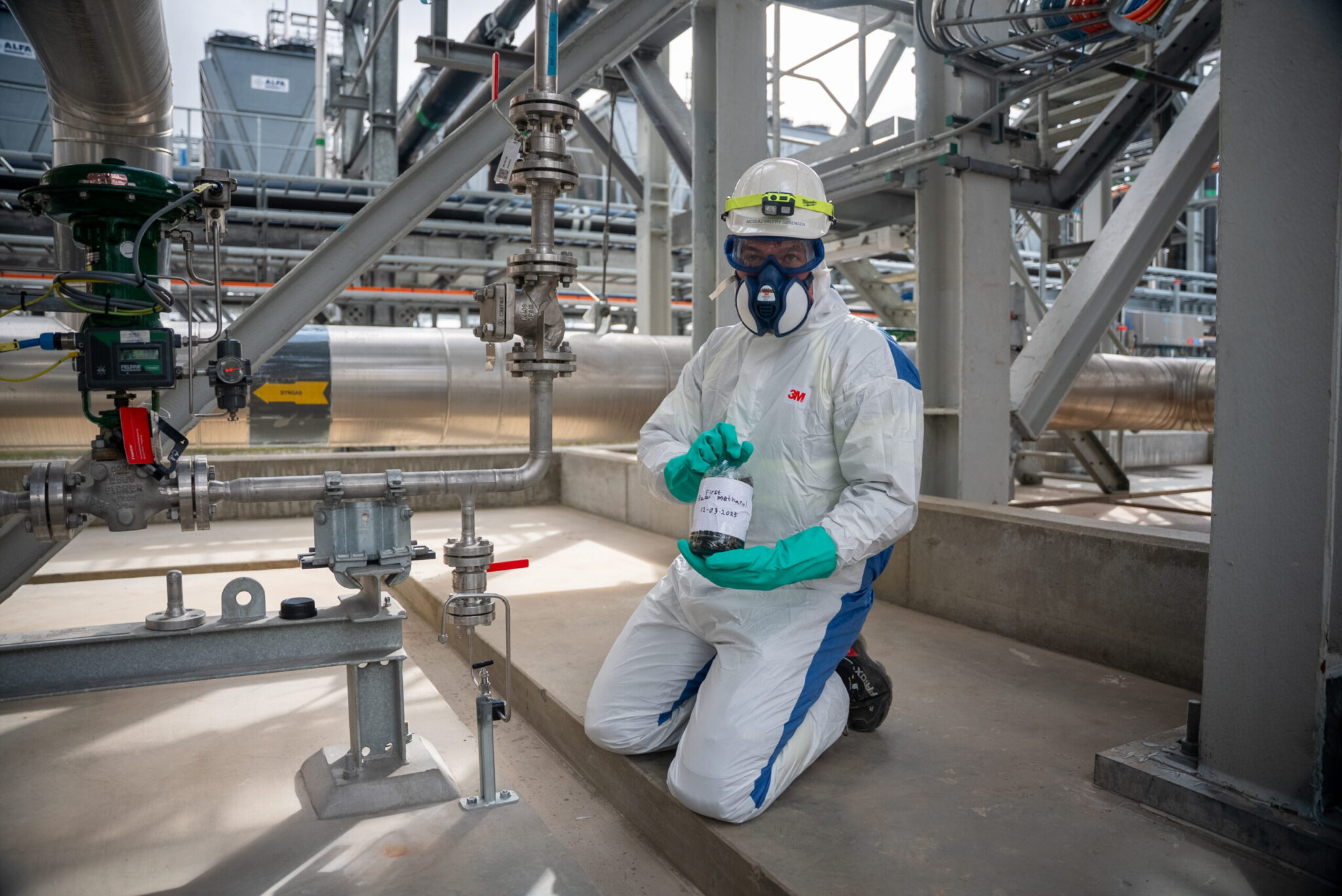


European Energy now says it has produced the first e methanol at its Kassø Power-to-X facility in Denmark, marking an operational milestone for a sector still under pressure to prove economic viability as much as technical feasibility.
The company confirmed the first methanol was produced using renewable hydrogen and locally sourced biogenic CO₂ from a biogas facility in Tønder. The production came from the first of two methanol lines planned at the site, with the facility expected to reach annual production capacity of 42,000 tonnes of e methanol once fully ramped up.
That figure remains modest compared with conventional methanol plants, many of which produce millions of tonnes annually using fossil feedstocks. However, for the Power-to-X sector, Kassø represents one of the clearest examples yet of an integrated commercial scale project linking renewable electricity, electrolysis, carbon capture utilization, and synthetic fuel synthesis within a single operational framework.
The facility relies on three electrolysers supplied by Siemens Energy with a combined capacity of 52.5 MW. Electricity is supplied primarily from the nearby Kassø Solar Park, also developed and operated by European Energy. That integrated structure matters because electricity pricing remains the single largest cost driver in green hydrogen and downstream electrofuel production.
The economics behind e methanol remain challenging despite the operational milestone. Renewable methanol produced through electrolysis and carbon utilization typically carries significantly higher production costs than conventional methanol derived from natural gas or coal. Industry estimates vary depending on power pricing, electrolyzer utilization, financing costs, and carbon sourcing, but green methanol often remains several times more expensive than fossil-based alternatives without regulatory incentives or premium offtake agreements.
That cost gap is particularly relevant for the shipping industry, one of the primary target markets for e methanol. Several shipping companies have invested in methanol-capable vessels as pressure grows to reduce lifecycle greenhouse gas emissions from maritime transport. Yet fuel demand projections still depend heavily on future carbon pricing mechanisms, emissions regulations from the International Maritime Organization, and the availability of long-term supply contracts.
European Energy framed the Kassø startup as evidence that Power-to-X can scale into practical industrial deployment. Emil Vikjær-Andresen, the company’s Executive Vice President and Head of Power-to-X, said operational experience from the project would help improve efficiencies and reduce costs for future developments.
The sequencing of the project is notable because the facility only began producing green hydrogen in January 2025. The successful integration of hydrogen production with methanol synthesis demonstrates that the plant’s methanol loop is functioning as designed, although stable long-term operation and commercial optimization remain separate challenges from first production.
The use of biogenic CO₂ also reflects a broader industry strategy aimed at improving lifecycle emissions performance while avoiding reliance on direct air capture technologies that remain substantially more expensive. By sourcing carbon dioxide from a local biogas facility, the project reduces transport complexity and feedstock costs, though scalability becomes more difficult when larger fuel volumes require proportionally larger and reliable CO₂ streams.
Kassø enters operation at a time when Europe’s broader hydrogen economy faces increasing scrutiny from investors and policymakers. Several high-profile Power-to-X and hydrogen projects across Europe have encountered delays, financing complications, or revised timelines amid rising interest rates and uncertain demand growth. Capital intensive e fuel projects remain particularly exposed because they combine renewable generation, electrolysis infrastructure, fuel synthesis technology, and logistics within a single investment structure.
European Energy describes Kassø as the world’s largest commercial e methanol facility. While definitions of “commercial” and “largest” vary depending on operational status and production criteria, the project nevertheless represents one of the most advanced operational Power-to-X plants currently producing e methanol in Europe.
Add EnergyNews.biz as a preferred source on Google


