




Copenhagen Infrastructure Partners (CIP) has secured investment from the Scottish National Investment Bank and the Nuclear Liabilities Fund for the 500 MW Devilla battery energy storage project in Fife, highlighting the growing role of large scale storage in maintaining grid reliability as fossil fuel generation declines.
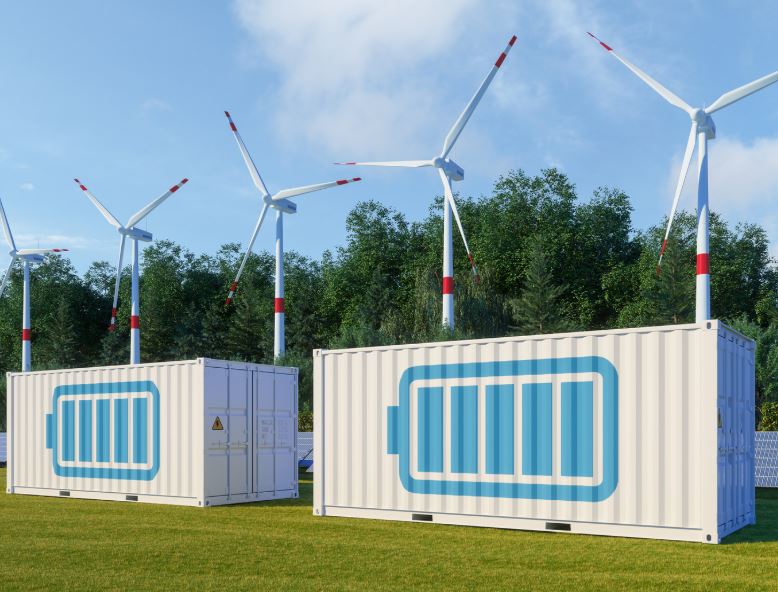
The Devilla facility is designed as a 500 MW, two hour lithium ion battery system with the ability to store 1,000 MWh of electricity. Once operational, it will absorb excess renewable power during periods of high wind generation and low demand, then discharge electricity during peak consumption periods. This flexibility is becoming increasingly important as the UK expands renewable capacity, particularly offshore and onshore wind, where electricity output can fluctuate significantly.
Located near the former Longannet power station site in Kincardine, Fife, the project reflects a broader transformation in energy infrastructure. The location previously hosted one of Europe’s largest coal fired power plants, but the redevelopment signals a shift from centralized fossil generation toward flexible assets designed to support a decentralized renewable system.
Construction began in March 2025, with grid connection expected by late 2027. Devilla is part of CIP’s wider Scottish battery storage portfolio, which also includes the Coalburn 1 and 2 projects. Together, the three developments are expected to provide 1.5 GW of power capacity and 3 GWh of storage.
The investment structure behind Devilla also demonstrates how public capital is increasingly being used to support energy transition infrastructure. The Scottish National Investment Bank committed £50 million for an equity stake, positioning the project within its mandate to support long term economic and environmental priorities.
The Nuclear Liabilities Fund’s participation adds another dimension. The fund, which manages financial resources associated with the decommissioning of the UK’s historic nuclear fleet, is expanding its exposure to energy transition assets. The move reflects a wider trend among institutional investors seeking infrastructure assets with stable, long duration returns while supporting grid modernization.
For battery storage developers, securing predictable revenue streams remains one of the central challenges. Unlike traditional power plants, batteries generate value through multiple services including energy arbitrage, grid balancing, and capacity availability. Devilla’s financial model is supported by a 10 year optimization agreement with SSE and a 15 year capacity market agreement, reducing some of the revenue uncertainty typically associated with standalone battery projects.
The project’s importance extends beyond electricity storage. Large scale batteries can reduce reliance on gas fired peaking plants that have historically been used to respond to short term demand spikes. By providing rapid response capability, storage can help integrate higher levels of renewable generation without requiring equivalent increases in conventional backup capacity.
However, battery deployment at this scale also presents technical and market challenges. Lithium ion systems require careful management of degradation, thermal conditions, and operational cycles to maintain performance over their lifetime. The economics depend heavily on electricity price volatility, grid requirements, and evolving market structures that determine how storage assets are compensated.
The Devilla project is being delivered with technology support from E STORAGE, a subsidiary of Canadian Solar, which is supplying battery storage systems, while Wood Group is supporting construction management. The involvement of established industrial suppliers reflects the increasing maturity of the battery storage market as projects move from demonstration scale toward utility scale deployment.
The UK government has identified grid flexibility as a critical component of achieving a cleaner electricity system by 2030. Meeting those ambitions will require not only additional renewable generation but also infrastructure capable of absorbing excess output and responding quickly when renewable production falls.
Devilla illustrates how the future power system is likely to depend on a combination of renewable generation, storage, upgraded networks, and flexible demand. As coal and other dispatchable fossil assets decline, investment is increasingly moving toward technologies that can provide reliability without locking in additional emissions.


