




The shift toward large scale renewable energy deployment in the United States is increasingly becoming a financing and infrastructure challenge rather than a technology question. Permanent Power Company, a national power platform backed by CIM Group, has secured approximately $600 million in construction financing for its Grape solar and energy storage project in California, highlighting the growing role of hybrid renewable projects in addressing grid reliability and clean energy demand.
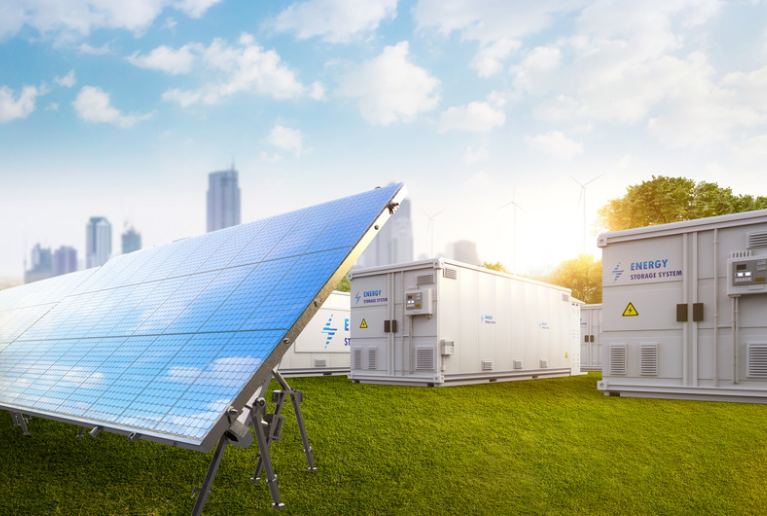
The financing package supports construction of a 246.4 MWac solar photovoltaic project combined with 150 MWac and 600 MWh of battery energy storage capacity in California’s San Joaquin Valley. The facility is being developed at Westlands Solar Park, one of the largest permitted solar development areas in the United States, covering more than 20,000 acres.
The financing structure includes an approximately $372.3 million construction to term loan, a $166.7 million tax credit transfer bridge loan and a $61.3 million letter of credit facility. Truist is serving as administrative agent, while Wells Fargo is acting as collateral agent.
The project financing reflects a broader market trend: utility scale solar projects increasingly require integrated storage solutions to secure long term value as renewable penetration increases and grid operators face challenges related to intermittency.
Grape’s development comes at a time when California’s electricity system is undergoing rapid transformation. The state has expanded solar generation significantly, creating periods of excess daytime electricity production and increasing demand for resources capable of shifting power availability into evening hours.
Battery energy storage systems have become a key component of this transition because they allow renewable electricity generated during high production periods to be stored and dispatched when demand increases. However, storage projects also introduce additional complexity, including higher capital costs, battery lifecycle considerations and the need for long term revenue structures.
The project secured a long term power purchase agreement with an investment grade regulated energy service provider covering the full capacity of both solar generation and battery storage before completion. Securing an offtake agreement at this stage is significant because predictable revenue streams are increasingly important for attracting project financing in a market where equipment costs, interest rates and regulatory conditions continue to influence investment decisions.
The $600 million financing commitment demonstrates continued investor appetite for large renewable infrastructure projects, particularly those supported by contracted revenues.
Permanent Power Company previously secured a $400 million financing commitment from funds and accounts managed by HPS Investment Partners, part of BlackRock Private Financing Solutions. The company is using these capital resources to expand its portfolio of power generation, storage and transmission assets across the United States.
Upon completion, Grape will contribute to the company’s broader development pipeline, which is expected to include approximately 1,200 MWac of solar photovoltaic capacity and 690 MWac of battery storage, equivalent to 2,760 MWh.
The expansion reflects a shift in renewable energy investment strategies. Developers are increasingly moving away from standalone solar assets and toward integrated platforms combining generation, storage and grid infrastructure. These projects can potentially provide more reliable power profiles and better align with utility procurement requirements.
The location of Grape within Westlands Solar Park illustrates the importance of large scale development zones in accelerating renewable deployment. California’s San Joaquin Valley provides access to significant solar resources and existing infrastructure networks, although large projects still face challenges related to transmission capacity, permitting timelines and land use considerations.
Westlands Solar Park has been positioned as a major renewable energy development area because of its size and existing permitting framework. However, successful deployment depends not only on available land but also on grid connection capacity and the ability to integrate projects into California’s evolving electricity market.
The project is expected to support more than 400 construction jobs and generate enough electricity to supply more than 86,000 California homes annually. While these local economic benefits are common features of utility scale renewable developments, the longer term value depends on operational performance, market participation and effective integration with grid needs.
Although battery storage deployment is expanding, the economics of large scale systems remain an important consideration. Storage increases project value by allowing electricity to be delivered when demand is higher, but it also adds upfront costs and introduces additional technical and operational requirements.
The success of projects like Grape depends on balancing multiple revenue sources, including power purchase agreements, capacity value and potential grid services. As renewable generation grows, markets are likely to place increasing importance on flexible assets capable of responding quickly to changing supply conditions.
Add EnergyNews.biz as a preferred source on Google


