


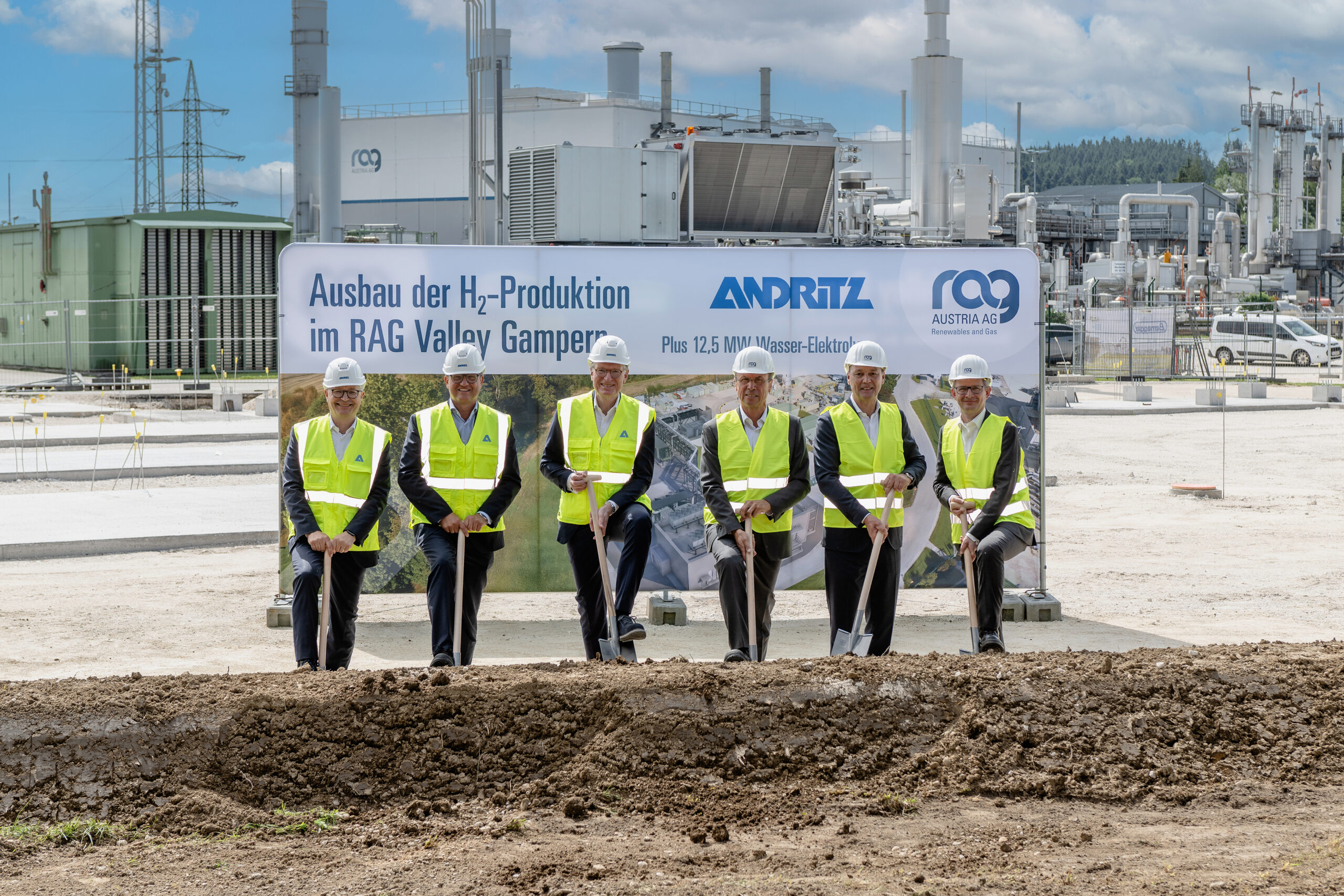


International technology group ANDRITZ and energy storage company RAG Austria AG have begun construction of what is expected to become the country’s largest green hydrogen production facility, designed to convert surplus summer solar power into hydrogen for use during periods of higher winter energy demand.
The 12.5 MW plant is scheduled to begin operations by the end of 2026 and is expected to produce approximately 17 million cubic meters of green hydrogen annually, equivalent to more than 1,500 metric tons. Unlike many hydrogen projects that primarily focus on industrial decarbonization, the Austrian facility is positioned as part of a broader seasonal energy storage strategy intended to improve energy security while supporting the continued expansion of renewable electricity.
Seasonal energy storage has become an increasingly important issue as European electricity systems integrate larger shares of wind and solar generation. While lithium ion batteries have become the dominant technology for balancing daily fluctuations, they are generally not designed to store energy for weeks or months. Hydrogen offers an alternative by converting excess renewable electricity into a fuel that can be stored underground and later used for electricity generation, heating, or industrial applications when renewable output declines.
The project will rely primarily on solar energy to power electrolysis during periods of surplus electricity generation. The hydrogen produced will be integrated into RAG Austria’s energy storage infrastructure, allowing renewable energy captured during the summer to be utilized during winter when electricity demand and heating requirements increase while solar generation falls.
This approach reflects a growing recognition that achieving high shares of renewable electricity may require multiple forms of energy storage operating over different timescales. Short duration batteries can stabilize hourly and daily grid fluctuations, while hydrogen storage is increasingly being evaluated for balancing seasonal variations that batteries cannot economically address.
ANDRITZ will deliver the facility under an engineering, procurement, and construction contract, assuming responsibility for project execution and commissioning. Its scope includes the complete hydrogen production system together with hydrogen purification and compression technologies required to prepare the gas for storage and industrial use.
For RAG Austria, the project builds upon the company’s expertise in underground energy storage. Austria already possesses geological formations suitable for storing gaseous energy carriers, creating opportunities to repurpose existing infrastructure developed for natural gas into assets supporting low carbon energy systems.
The project’s annual hydrogen output remains modest relative to Europe’s long term hydrogen demand projections, but its significance lies in demonstrating how hydrogen production can be integrated with renewable electricity and underground storage rather than operating as a standalone industrial facility.
Markus Mitteregger, Chief Executive Officer of RAG Austria, argued that increasing domestic hydrogen production has become increasingly important as demand grows across industry, heating, and power generation, particularly during winter months when renewable electricity production is more constrained. His comments reflect broader European concerns about reducing dependence on imported energy while developing domestic low carbon fuel production.
The project also illustrates the evolving role of engineering companies in the hydrogen sector. Rather than supplying individual components, firms such as ANDRITZ are increasingly positioning themselves as providers of complete hydrogen production facilities capable of integrating electrolysis, gas purification, compression, and supporting infrastructure into a single system.
Despite continued momentum, projects centered on seasonal hydrogen storage still face economic challenges. Green hydrogen production costs remain highly dependent on electricity prices, electrolyzer utilization rates, and infrastructure availability. Facilities designed to absorb surplus renewable generation may experience lower operating hours than continuously operated industrial hydrogen plants, affecting project economics. At the same time, the value of long duration storage is difficult to quantify under electricity market structures that were not originally designed to compensate seasonal flexibility.
Add EnergyNews.biz as a preferred source on Google


