


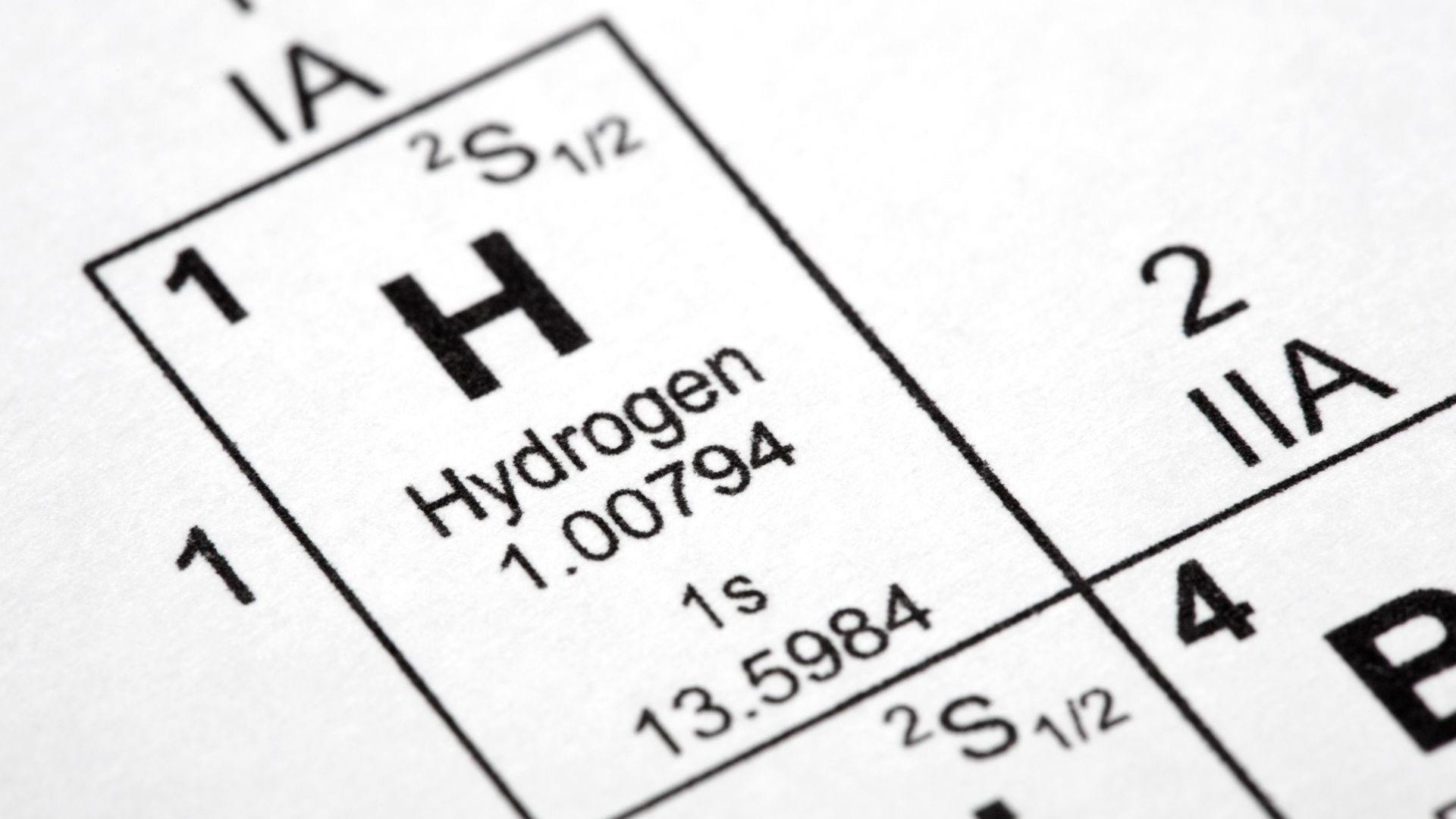


Global hydrogen demand surpassed 100 million tonnes in 2025, yet low emissions hydrogen still accounted for only around 1% of production.
The gap between the scale of hydrogen ambitions and the projects actually reaching operation is becoming increasingly difficult to dismiss, forcing governments and investors to reconsider where hydrogen can deliver value in the energy transition.
California offers one of the clearest examples of that reassessment. After two decades of state support for hydrogen fuel cell vehicles, the number of light duty fuel cell electric vehicles registered in the state fell for the first time in 2025. California Energy Commission data show 14,128 light duty FCEVs on the road as of April 2025, while the state’s public hydrogen fueling network has struggled with reliability and utilization.
The economics have also become increasingly difficult to defend against battery electric alternatives. The Los Angeles Times reported in August 2026 that hydrogen fuel costs approximately four times more per mile than gasoline in California, even after accounting for higher conventional fuel prices. The state’s experience illustrates a broader problem: hydrogen can offer technical advantages in particular transport applications, but those advantages do not automatically translate into a commercially competitive mass market.
California’s infrastructure experience is particularly revealing. The state’s 2025 assessment found 50 public hydrogen stations open to customers and another 11 temporarily nonoperational as of September 2, 2025. Average network availability over the preceding year was approximately 60%, with maintenance problems, equipment failures and hydrogen supply disruptions contributing to outages.
That does not mean California’s hydrogen infrastructure lacks technical capacity. The California Energy Commission estimated that the available network could support approximately 34,300 FCEVs, more than twice the 14,128 light duty vehicles registered in April 2025. The mismatch is therefore not simply a question of building enough stations. It is a question of whether sufficient vehicles, fuel demand and infrastructure utilization can develop simultaneously to justify continued capital deployment.
The problem becomes even more pronounced when the discussion moves from transport to green hydrogen production. The International Energy Agency estimates that global hydrogen production reached almost 100 million tonnes in 2024, while less than 1% was produced using low emissions technologies. Fossil fuels continue to dominate supply, meaning that the energy transition challenge is not primarily about creating a new hydrogen market from scratch. It is about replacing an enormous existing fossil based hydrogen system while creating additional demand in sectors where hydrogen can outperform alternatives.
The project pipeline shows why that transition is proving difficult. A Nature Energy analysis tracking 190 green hydrogen projects found that only 7% of capacity announced for 2023 was ultimately installed and operational on schedule. Of the 4.3 GW initially announced for installation that year, only 0.3 GW was eventually operating. The study also found that projects announced in 2021 faced substantial attrition, with 86% delayed and 14% disappearing altogether.
The scale of the announced pipeline has consequently become a poor proxy for actual market development. The IEA’s 2026 assessment found that the global pipeline of low emissions hydrogen production projects had shrunk by about 10 million tonnes per year, to 27 million tonnes per year by 2030, following delays, cancellations and projects being paused. More than 100 GW of announced electrolyzer capacity could fail to enter operation by 2030 if investment decisions are not taken before the end of 2027.
This recalibration is not evidence that hydrogen technology itself has stalled. Installed electrolysis capacity more than doubled in 2025 to above 4 GW, according to the IEA, with more than 2.5 GW under construction and targeting operation in 2026. The problem is that technology deployment is still occurring from a very small base, while the commercial conditions required to support rapid scale up remain weak.
Cost remains central to that equation. The IEA says renewable hydrogen remains more expensive than unabated fossil based hydrogen in most markets, with slower than expected deployment, inflation and lower fossil fuel prices widening the gap in recent years. The agency expects the difference to narrow by 2030 in some regions, particularly where renewable electricity and financing costs are favorable, but continued policy support will be required in the near term.
The economic case becomes more complicated when the electricity required to produce hydrogen is considered. Electrolysis converts electricity into hydrogen, which can then be converted back into useful energy or used as a feedstock. Every conversion introduces losses. That does not make green hydrogen inherently inefficient, but it raises the opportunity cost of using renewable electricity to produce a molecule when electricity itself can sometimes directly replace fossil fuel consumption.
This distinction is increasingly shaping the debate over where hydrogen should be deployed. A 2025 perspective in Nature Reviews Clean Technology concluded that fuel cell passenger vehicles and space heating are among the least promising applications because direct electric alternatives have advanced rapidly. The researchers instead identified industrial processes, long duration energy storage and long haul transport as areas where hydrogen could retain a strategic role, provided deployment can deliver significant cost reductions.
The implication is not that green hydrogen has failed. Rather, the market is moving away from the idea that hydrogen should become a generalized energy carrier. Its stronger case is emerging in applications where direct electrification is technically difficult, operationally constrained or economically unattractive.
Heavy industry is particularly important. Hydrogen is already embedded in refining, ammonia and methanol production, meaning that replacing fossil based hydrogen with low emissions hydrogen can reduce emissions without requiring an entirely new industrial process. The IEA reports that almost all current hydrogen demand remains concentrated in these established applications, while new uses account for less than 1% of demand.
Steelmaking presents a different opportunity because hydrogen can act as a reducing agent in direct reduced iron production, potentially replacing coal based reduction. Yet even here, project economics depend on the price and availability of renewable electricity, hydrogen, iron ore and supporting infrastructure. The IEA notes that signed low emissions hydrogen offtake agreements covered 1.7 million tonnes per year in 2024, down from 2.4 million tonnes per year in 2023, with only about 20% of the new volumes backed by firm contractual commitments.
That lack of bankable demand is becoming one of the sector’s defining constraints. Developers can announce electrolyzers, renewable generation and hydrogen hubs, but without credible customers willing to sign long term contracts, projects remain exposed to commodity prices and policy uncertainty. The IEA’s 2026 assessment identifies uncertain demand, high costs, regulatory complexity and infrastructure shortages as the principal barriers preventing faster deployment.
The same logic applies to transport. Hydrogen may still have a role in segments where battery weight, charging time, utilization rates or route requirements create disadvantages for battery electric vehicles. The IEA identifies heavy trucks as the fastest growing fuel cell road transport segment, although fuel cell trucks continue to face higher total costs of ownership than battery electric and diesel alternatives. China accounts for almost 95% of the global fuel cell commercial vehicle stock, making the heavy transport market substantially different from California’s passenger car experiment.
This points toward a more selective hydrogen strategy. Instead of measuring progress by the number of announced gigawatts of electrolyzers, governments and investors increasingly need to assess whether projects have secured renewable electricity, financing, infrastructure, permitting and credible offtake. The distinction between an announcement, a final investment decision and an operating asset has become one of the most important indicators of hydrogen market maturity.
The IEA’s latest figures reinforce that shift. Low emissions hydrogen production reached almost 1 million tonnes in 2025 and is expected to exceed 1% of global production in 2026. Projects that are already operating, under construction or have reached final investment decision could lift production above 4 million tonnes per year by 2030. That would still represent only around 4% of global hydrogen production, but it would mark a substantial increase from today’s base.
The emerging hydrogen market is therefore smaller in scope than many early forecasts implied, but potentially more strategically important. The question is no longer whether hydrogen can replace electricity, gasoline or natural gas across the energy system. It is where the molecule provides a sufficiently strong combination of technical necessity, emissions reduction and economic value to justify the additional infrastructure and energy required to produce it.
Add EnergyNews.biz as a preferred source on Google


