




Vanadium redox flow batteries had reached only about 1.6 gigawatt-hours of cumulative global deployment by early 2026, roughly 1.5% of all stationary battery storage installed worldwide. Installed costs for utility-scale vanadium systems still run one and a half to two times higher per kilowatt-hour than lithium iron phosphate at comparable duration. Sumitomo Electric’s new 2 megawatt addition to its V40 lineup, unveiled ahead of SMART GRID EXPO in Chiba, is entering a market that remains a narrow specialty rather than a broad alternative to lithium-ion.
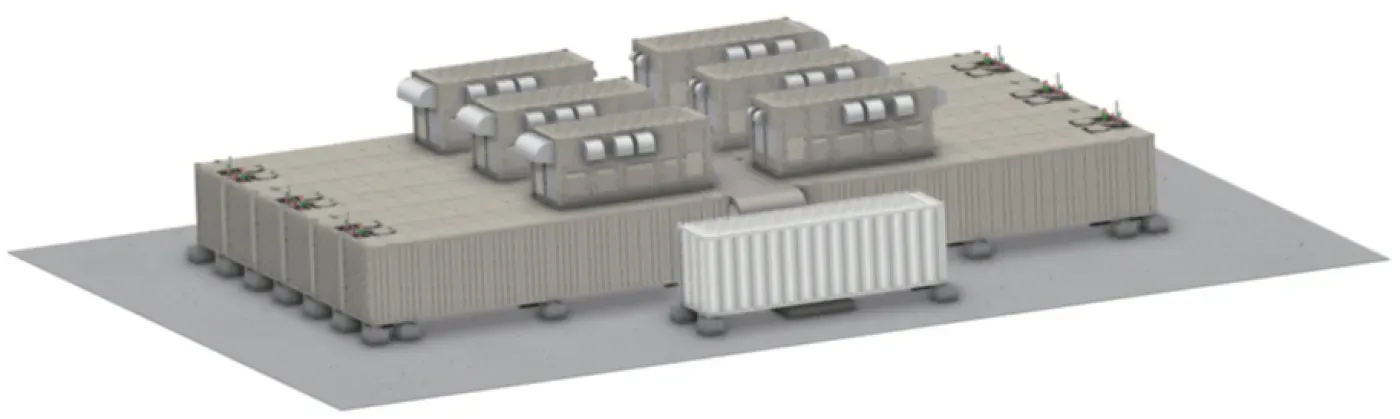
The new V40 model pairs a 2 megawatt power conditioning system with 12 megawatt-hours of storage capacity, a 6-hour duration configuration that sits close to the threshold where vanadium flow technology’s economics begin to compete with lithium on a levelized basis. Cost analyses of the grid storage market through 2026 consistently place that crossover point somewhere between 6 and 8 hours of duration; below it, lithium iron phosphate’s lower installed cost, typically $230 to $280 per kilowatt-hour for utility-scale systems in that duration range against $400 to $500 for vanadium flow, is difficult for redox flow to overcome even accounting for its longer service life and lack of capacity degradation. Sumitomo’s decision to specify a 6-hour system, rather than a shorter-duration configuration that would leave the cost gap more exposed, reflects that competitive reality rather than an arbitrary product choice, and the company’s own framing, consolidating the AC-side transformers and high-voltage cabling that two separate 1 megawatt systems would otherwise require into one 2 megawatt installation, targets a real but incremental source of savings, installation and site footprint costs rather than the underlying per-kilowatt-hour cost disadvantage the technology still carries against lithium-ion.
That disadvantage exists within a vanadium flow battery manufacturing base that, like most other battery chemistries scaled up over the past decade, is increasingly concentrated in China, with Rongke Power established as the sector’s dominant global producer. Sumitomo Electric’s position as one of the few non-Chinese manufacturers with a sustained, multi-year commercial deployment record gives the company a distinctive footing in Japan specifically, where government procurement and subsidy programs have shown a preference for domestic supply chains across energy technologies. That preference shows up directly in Sumitomo’s project history: the company’s redox flow system installed for fuel distributor IDEX at the Nagasu Energy Storage Facility in Kumamoto, announced in March 2025, was the first redox flow battery ever approved under METI’s subsidy program for grid-scale energy storage, a program that had previously supported only lithium-ion projects. That approval marks a genuinely recent diversification in Japanese storage policy rather than an established, years-long pattern, since the scheme had run as an effectively lithium-only program until that point.
Sumitomo’s most substantial track record sits in Hokkaido, where the company has been developing redox flow technology commercially since a 2012 pilot at its Yokohama Works and a 2015 real-scale demonstration funded through Japan’s national energy agency. That work led to a 17-megawatt, 51 megawatt-hour grid-side installation at Hokkaido Electric Power Network’s Minami-Hayakita substation, which began commercial operation in April 2022 and was, at the time, among the largest redox flow battery systems in the world. The newly announced third installation at the same site, disclosed by Sumitomo in April 2026, is not scheduled for completion until the end of May 2029, three years beyond this September’s product announcement, and comes with a 20-year operations and maintenance agreement covering the system’s full service life. The project is explicitly tied to a specific grid function: enabling 97,000 kilowatts of additional wind power capacity to interconnect in a region where renewable generation has previously outpaced the grid’s capacity to absorb it, illustrating that Sumitomo’s redox flow business in Japan is built less around displacing lithium-ion on cost and more around Hokkaido’s specific, recurring need for long-duration storage that can absorb wind and solar variability without the cycling limitations lithium systems eventually face.
Japan’s broader storage buildout gives that specialty a defined, if still modest, addressable scale. The country’s Long-Term Decarbonization Power Source Auction had awarded more than 1.37 gigawatts of power capacity and 6.7 gigawatt-hours of energy capacity as of 2024, part of a national target of 10 gigawatts of storage capacity by 2030, and Sumitomo has continued winning repeat orders within that framework, including a fourth-phase vanadium installation underway in Kashiwazaki alongside deployments at Osaka Metropolitan University and, outside Japan, an Australian coal mine solar and storage project at Boggabri. None of that activity changes the fundamental cost position redox flow occupies relative to lithium-ion across the broader storage market, but it does show a specific, recurring customer base, grid operators managing renewable variability over the long duration windows where vanadium’s degradation-free cycling and multi-decade design life offset its higher upfront cost, willing to keep ordering the technology on its own terms rather than as a general-purpose lithium substitute.
Add EnergyNews.biz as a preferred source on Google


