


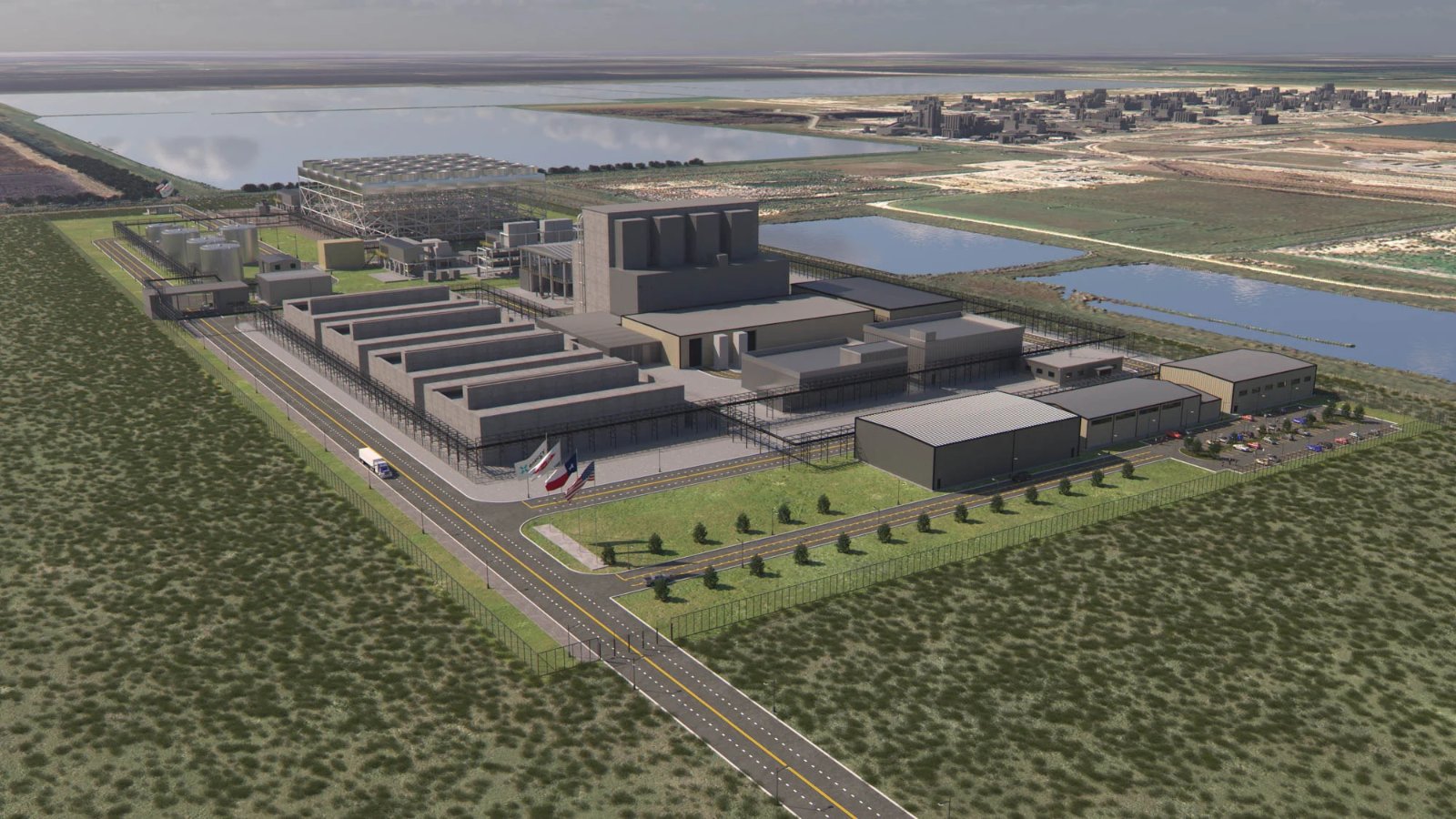


The Long Mott permit covers four reactors with a combined 320 MWe and no decision to build any of them. The US Nuclear Regulatory Commission approved the construction permit application on 9 November 2026 for the Xe-100 plant at Dow’s Seadrift Operations site in Texas, according to a release from X-energy and Dow. The Long Mott permit is the first for a high temperature gas cooled reactor in nearly 60 years and the first for a pebble bed design.
What the Long Mott permit settles is the safety and environmental review. What it leaves open is everything that decides whether construction starts: Dow says it expects to consider a preliminary investment decision in 2027, and full scale construction follows only a final decision. The permit is a licensing result, not a project decision.
What the Long Mott permit allows
The applicant is Long Mott Energy, a wholly owned Dow subsidiary, and the plant is four Xe-100 units. Each Xe-100 is rated at 80 MWe and 200 MWt, so four units are 320 MWe and 800 MWt. The plant is meant to supply electricity and high temperature steam to the Seadrift site, replacing energy and steam assets near the end of their life, and the companies expect it to serve the site for 60 years.
The arithmetic of the ratings shows why the steam matters. At 320 MWe from 800 MWt, electricity is 40% of thermal output, which is the share a pure power plant of this design would convert. At an industrial site the value depends on how much of the heat Dow can actually use as steam. The release gives no split between electricity and steam.
The permit does not authorise fuel loading or operation. A separate operating license is required, and X-energy says it is developing that application together with Dow.
The review clock and the planning zone
The NRC chairman said the agency delivered on its 18 month schedule. The Department of Energy reported the application as docketed on 14 May 2025, so the Long Mott permit arrived 18 months after docketing (arithmetic from the two dates). The companies note that Dow has worked with the NRC since 2023 and X-energy since 2018.
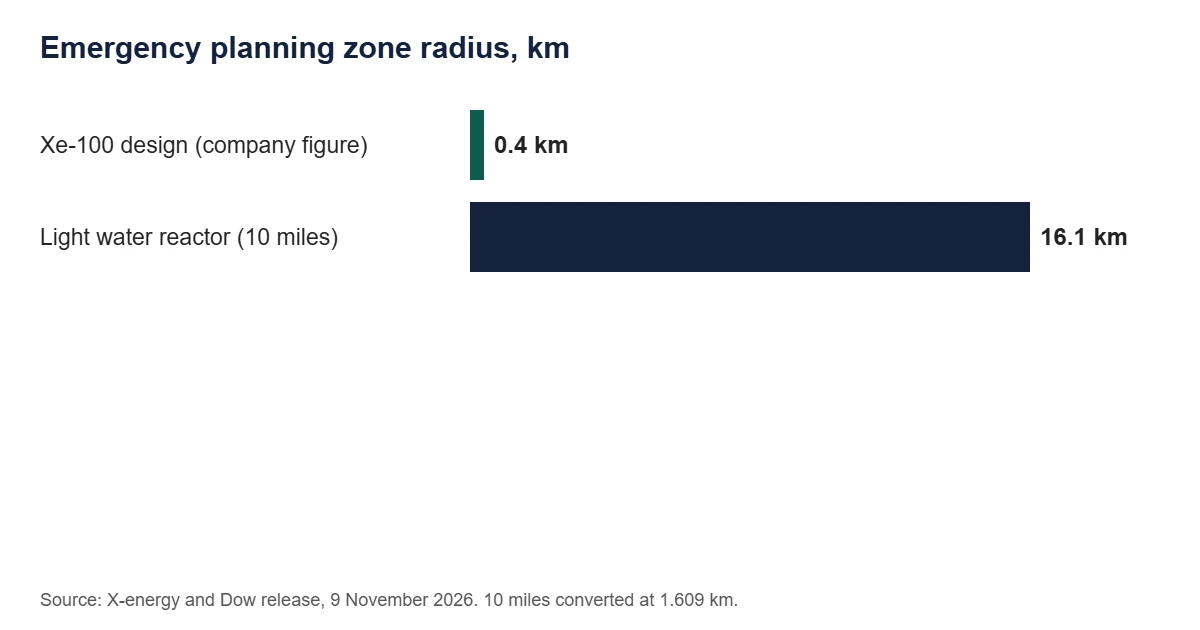
The companies also state that the Xe-100’s fuel and passive safety characteristics are expected to support a 400 metre emergency planning zone, against 10 miles for conventional light water reactors. Ten miles is 16.1 km, so the radius is about 40 times smaller and the area about 1,600 times smaller. This is the companies’ expectation, and the release does not say that the NRC set that zone in the permit.
What stands between permit and power
The next steps named in the release are finalising and standardising the design, maturing the supply chain for long lead components, and preparing the operating license application. Dow says it will keep assessing the project on competitiveness, execution readiness and capital affordability before any construction decision. First delivery is described as early in the 2030s. No cost estimate for the Long Mott permit project appears in the release, and neither do the permit conditions or a docket number.
The same reactor is already being engineered for a second site, as covered in the Xe-100 Cascade story, which depends on the licensing precedent set at Seadrift. The Department of Energy’s account of the first filing is in its Office of Nuclear Energy note on the docketing.
The first dated check is Dow’s preliminary investment decision, which the companies place in 2027. The Long Mott permit does not move it forward, and a published cost for four units is the figure that would show whether the decision is close.
Add EnergyNews.biz as a preferred source on Google


