


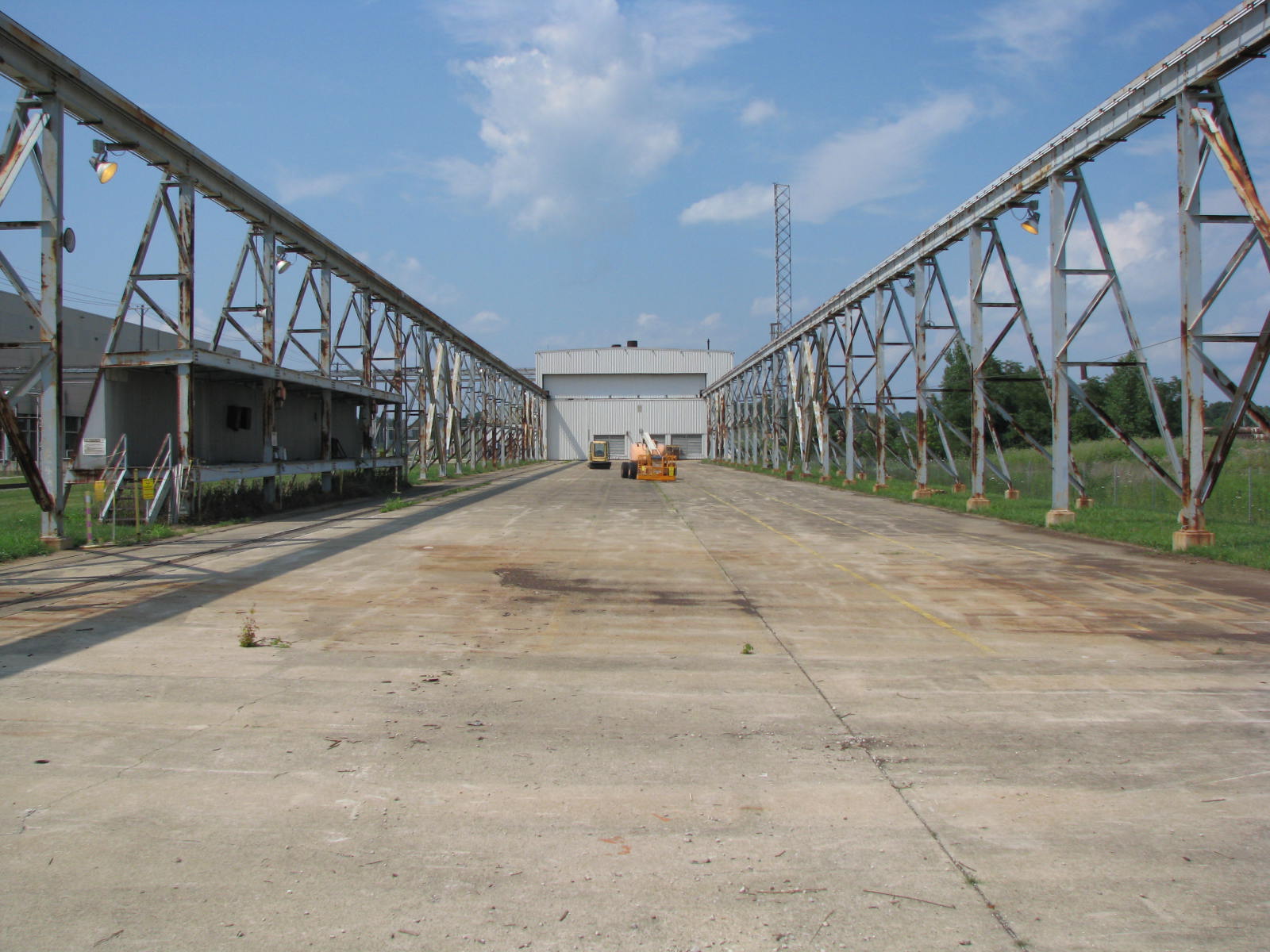


Oklo Centrus fuel supply is now contractual. Oklo and Centrus Energy have signed definitive purchase agreements for high-assay low-enriched uranium (HALEU), the fuel Oklo’s Aurora fast reactors need, turning a June 2026 letter of intent into binding commitments. Deliveries from Centrus’s American Centrifuge Plant in Pike County, Ohio, are scheduled to begin in 2029.
The structure of the Oklo Centrus deal matters more than the headline. Meta pays Oklo in advance for future power. Oklo uses that money to prepay Centrus for future fuel. Centrus uses prepayments like these to build the enrichment capacity that will make the fuel. Every link in the chain depends on the next one being built on time, and the agreements disclose neither the volume of HALEU nor the value of the prepayments.
What the Oklo Centrus agreements cover
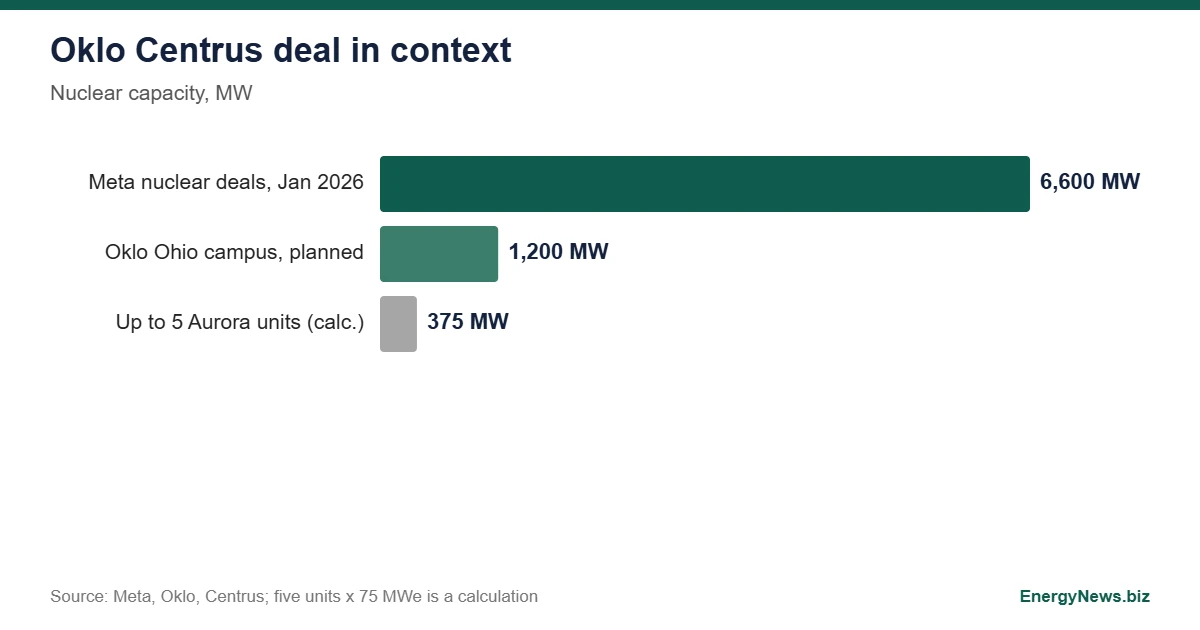
According to the companies, the HALEU secures fuel for the first phase of a planned 1.2 GW power campus in southern Ohio that is to supply Meta’s data centres, for future Aurora deployments, and for later refuelling of the first Aurora unit at Idaho National Laboratory. The June letter of intent referred to enough HALEU for up to five Aurora powerhouses for multiple years.
The Oklo agreement was one of three nuclear deals Meta signed in January 2026 for up to 6.6 GW of capacity. The Ohio campus therefore represents less than a fifth of Meta’s nuclear commitments, and the fuel now contracted covers only its first phase.
Oklo chief executive Jacob DeWitte said securing fuel is essential to scaling the company’s power business beyond its first reactor in Idaho. Centrus chief executive Amir Vexler said the prepayments will help fund the build-out of the American Centrifuge technology for commercial production.
The arithmetic behind the Oklo Centrus first phase
Oklo’s Aurora powerhouse is designed at 75 MWe. Five units would therefore total 375 MWe, about 31% of the 1.2 GW campus. Filling the rest of the site would take around 16 units in all, each needing its own HALEU core and later reloads.
The Oklo Centrus supply side is still small. Centrus currently enriches HALEU in a single 16-centrifuge demonstration cascade at Piketon, which under its Department of Energy contract was sized to produce about 900 kilograms a year. The first new centrifuge for the commercial expansion was built in Oak Ridge, Tennessee, and shipped to Ohio at the end of October. New cascades are expected online in 2029, the same year the Oklo deliveries begin, which leaves no slack in the schedule.
Centrus says it now holds USD 5.4 billion in customer contracts and commitments to buy LEU and HALEU from its new capacity, and the expansion is also supported by a USD 900 million HALEU task order from the Department of Energy.
Why the Oklo Centrus chain is fragile
Aurora is a sodium-cooled fast reactor that moves heat from the core with heat pipes to a supercritical carbon dioxide power cycle. Its design draws on the Experimental Breeder Reactor II, which ran at Idaho National Laboratory from 1964 to 1994. The first Aurora unit in Idaho is to use HALEU recovered from EBR-II fuel, a one-off government allocation that cannot supply a commercial fleet. The Department of Energy describes the national shortage in its HALEU Availability Program.
That is the real test for the Oklo Centrus arrangement. Commercial HALEU supply outside Russia and China does not yet exist at scale, so the Ohio campus schedule sits on top of an enrichment plant that still has to be built. Other advanced reactor projects face the same constraint, from the Xe-100 units for Dow at Long Mott to the many SMR plans tied to data centres.
What would have to be true for the plan to hold: new Centrus cascades producing commercial quantities of HALEU in 2029, an NRC licence for Aurora units in Ohio, and Meta’s prepayments continuing until the first electrons flow. The agreements signed this month secure the first of those links on paper. The volume of fuel behind them remains undisclosed.
Add EnergyNews.biz as a preferred source on Google


