


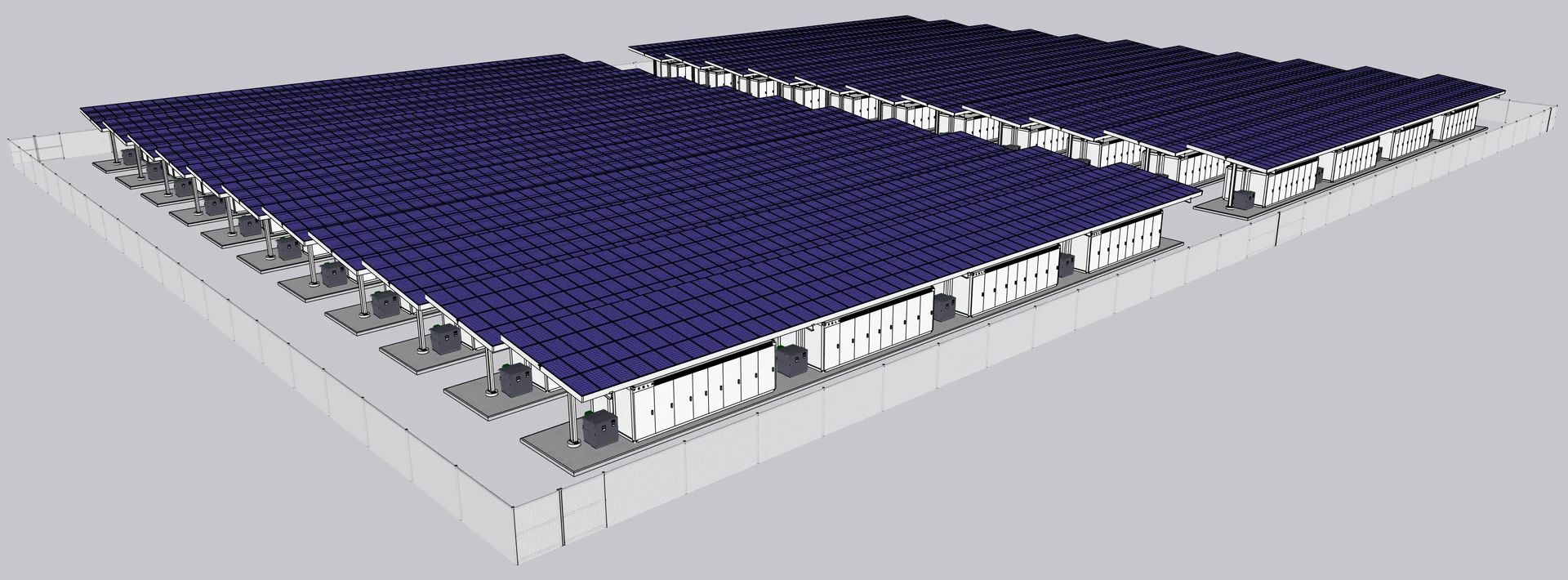


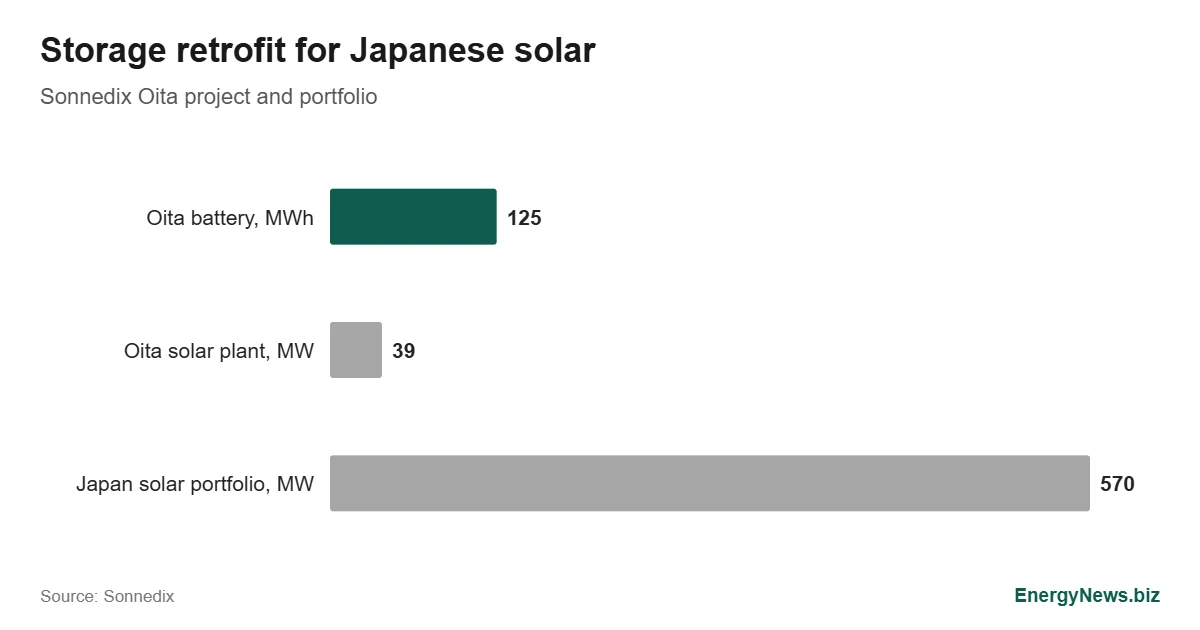
The Sonnedix Oita battery will add 125 MWh of storage to an existing 39 MW solar plant in Oita Prefecture on the island of Kyushu, Japan. Sonnedix, an independent solar power producer, will use Tesla Megapack systems and expects construction to take about 13 months.
The project is the first step in a retrofit programme across Sonnedix’s Japanese solar portfolio, which totals about 570 MW. Adding storage to operating plants lets owners shift output from the middle of the day into the evening, when prices are higher and solar curtailment is less likely.
An ENB calculation of the Sonnedix Oita battery
An ENB calculation shows the scale: 125 MWh of storage equals about 3.2 hours of the solar plant’s full 39 MW output. That is enough to absorb most of the midday surplus on a sunny day and release it after sunset.
Why Kyushu needs storage
Kyushu has more solar capacity relative to demand than any other region in Japan. The local grid operator has curtailed solar output on sunny spring and autumn days for several years, which cuts revenue for plant owners. Batteries reduce that loss and allow plants to sell into the wholesale market at better times.
Kyushu Electric Power began curtailing solar output on the island in 2018, the first large-scale curtailment in Japan. Since then, curtailment has spread to other regions with high solar shares. For plant owners, every curtailed hour is lost revenue, and the Sonnedix Oita battery is designed to capture part of that energy instead.
Japan’s market is also changing. Many early solar plants were built under a fixed feed-in tariff. As projects move to the feed-in premium system, owners are exposed to market prices, which makes storage more valuable. Japan’s long-term decarbonisation auction has also supported large battery projects since 2024.
The Sonnedix Oita battery as a template
Retrofitting batteries to existing solar sites uses grid connections that are already in place, which avoids the long queues facing new projects. The same logic is driving large standalone and hybrid projects worldwide, from the Stadorf battery in Germany to the Energizar project in Massachusetts. For Sonnedix, the Oita project will show whether the economics work before it adds storage to more of its Japanese plants.
Tesla Megapack units are delivered as containerised systems with batteries, inverters and controls integrated, which shortens installation on site. Using one supplier across a portfolio also simplifies operations and maintenance, an important factor for a retrofit programme spread over many plants.
Sonnedix is a global independent power producer founded in 2009 that develops, owns and operates solar and storage plants in Europe, Asia and the Americas. Its Japanese portfolio of about 570 MW makes Japan an important market for the company, and one where the shift away from fixed tariffs changes how solar plants earn money.
Storage retrofits in a wider market
Japan is moving toward a market where solar output must respond to prices. Solar plants that once sold every kilowatt-hour at a fixed price now face midday prices that can fall close to zero in sunny regions, while evening prices stay higher. A plant with a battery can charge when prices are low and sell in the evening peak, which turns curtailment risk into a trading opportunity.
The retrofit model also carries lower risk than building new plants. The land, grid connection and operating history are already in place, and the battery can be sized to the existing inverter and transformer capacity. That makes projects like the Sonnedix Oita battery faster to approve than greenfield sites.
Sonnedix has not given a start date for construction, which it expects to take about 13 months. Company information is available from Sonnedix.
Add EnergyNews.biz as a preferred source on Google


