


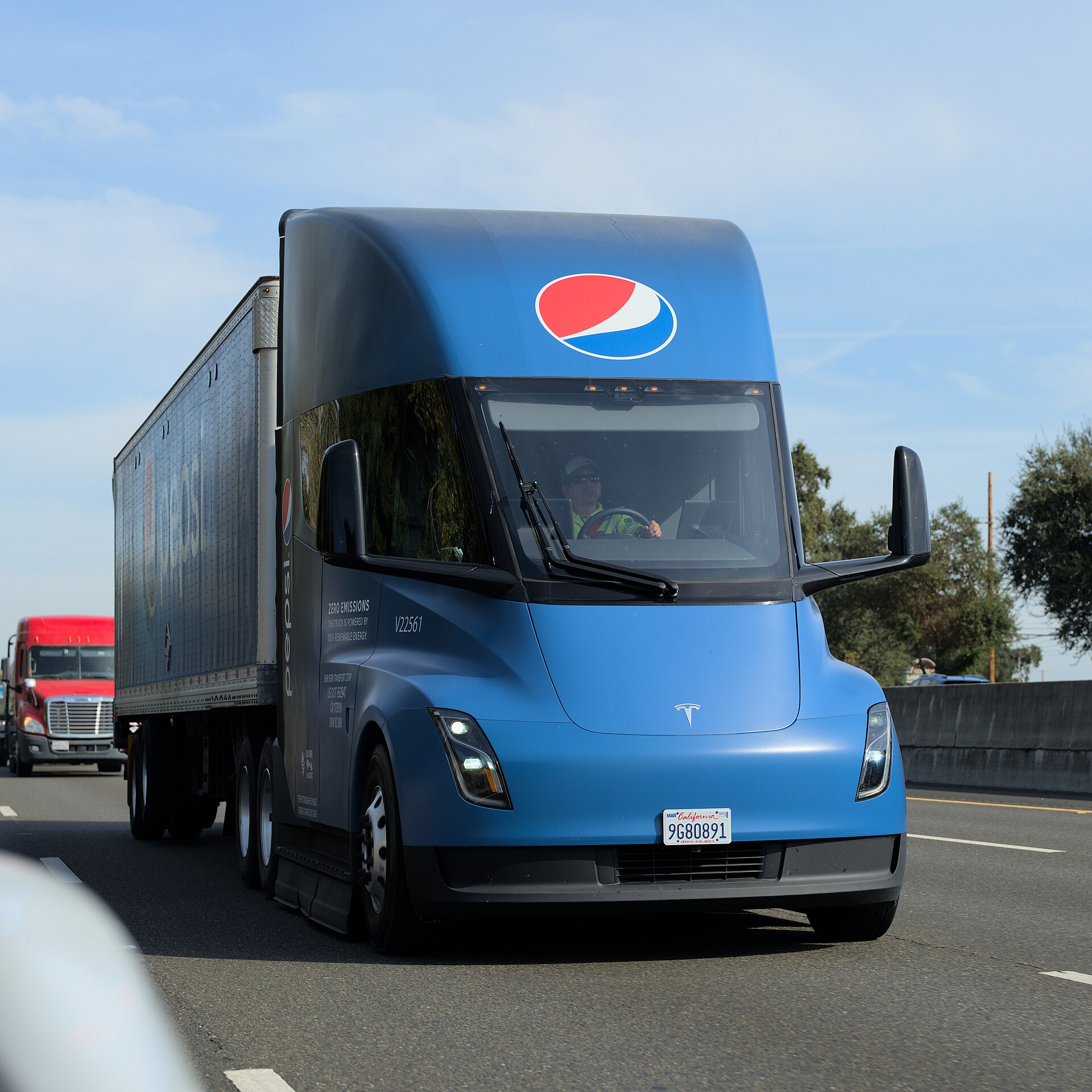


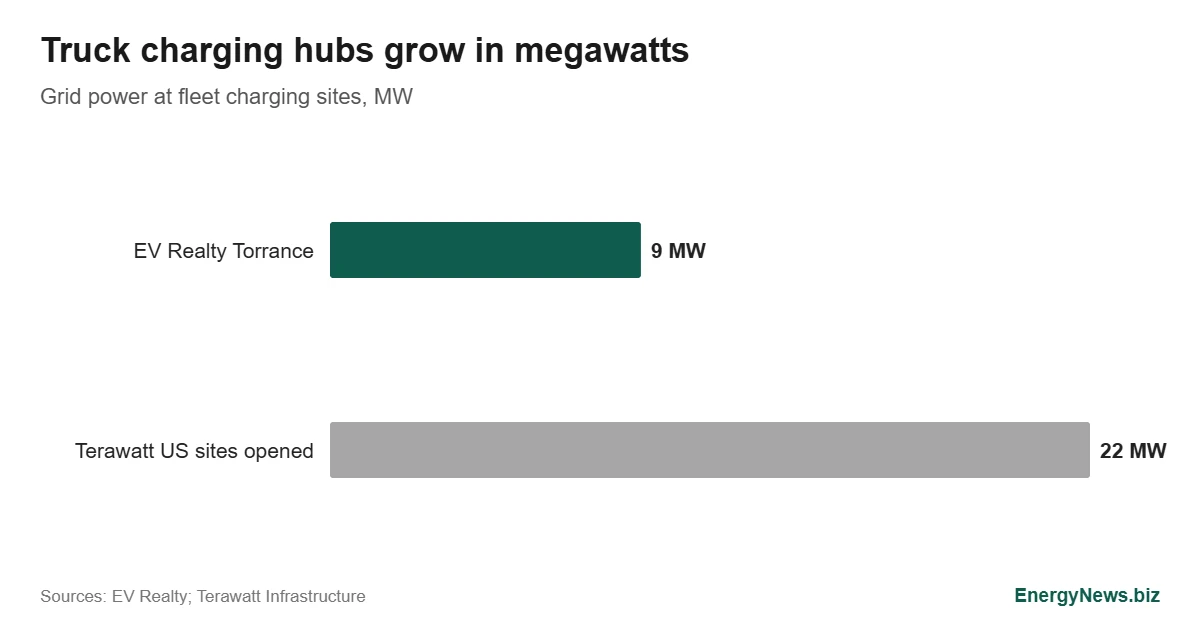
EV Realty Torrance is a new charging hub for medium and heavy trucks planned in Torrance, California, close to the ports of Los Angeles and Long Beach. EV Realty, a developer of shared charging sites for fleets, says the hub will have 9 MW of power and 50 charging ports, including Megawatt Charging System and CCS connectors, and is set to open in mid-2027.
The site is aimed at drayage trucks, which move containers between the ports and warehouses in the Inland Empire. Port clean air plans and California truck policy push drayage operators toward zero-emission trucks, which makes reliable charging near the ports a business need rather than an option.
An ENB calculation for EV Realty Torrance
An ENB calculation shows that 9 MW spread across 50 ports gives an average of 180 kW per port if all are in use at once. In practice, the site will mix megawatt chargers for fast top-ups with slower ports for overnight or depot-style charging, and power management will shift capacity to the trucks that need it most.
A second ENB calculation shows the energy behind the hub. If the site ran at its full 9 MW for 20 hours, it would deliver up to 180 MWh a day. At a typical consumption of around 1.3 kWh per km for a loaded electric heavy truck, that would cover roughly 140,000 km of driving per day, the equivalent of several hundred drayage runs.
Shared charging for fleets
Most early electric truck fleets charged at their own depots. Shared hubs like EV Realty Torrance let smaller operators and owner-drivers use electric trucks without building their own grid connection, which can take years in the Los Angeles basin. The model is similar to the one used by Terawatt Infrastructure, which recently opened 22 MW of fleet charging across US sites.
Megawatt charging is the key technology for heavy trucks. The MCS standard allows charging at more than 1 MW, enough to add several hundred kilometres of range during a driver’s mandatory break. Major truck makers in North America and Europe are preparing heavy models that can use it.
Why location matters
The ports of Los Angeles and Long Beach handle a large share of US container imports and generate thousands of truck trips a day. Placing EV Realty Torrance a short drive from the terminals reduces dead kilometres and allows trucks to charge between runs. The pace of truck electrification elsewhere, such as in China where electric heavy trucks reached half of sales in September, shows how quickly the market can move once charging is in place.
The San Pedro Bay ports have a Clean Air Action Plan that aims for a zero-emission drayage fleet by 2035. Meeting that goal requires public and shared charging capacity at scale, because many drayage operators are small firms without their own depots or the capital to build high-power grid connections.
What drivers and fleets get
For drivers, a shared hub close to the terminals reduces time spent searching for a charger and allows charging during waiting periods at the port. For fleet owners, it removes the need to finance their own high-power grid connection, which can cost millions of dollars and take years to approve. Shared hubs typically sell reserved capacity to larger fleets under contract and keep some ports open for spot use by smaller operators and independent drivers.
The hub will also serve as a test of how much megawatt charging port operators actually use once heavy electric trucks arrive in larger numbers, data that utilities need for planning grid upgrades around freight corridors. In the United States, new battery capacity such as BMW’s Woodruff plant is building the supply side of the same transition.
Details on the MCS standard are published by CharIN.
Add EnergyNews.biz as a preferred source on Google


