


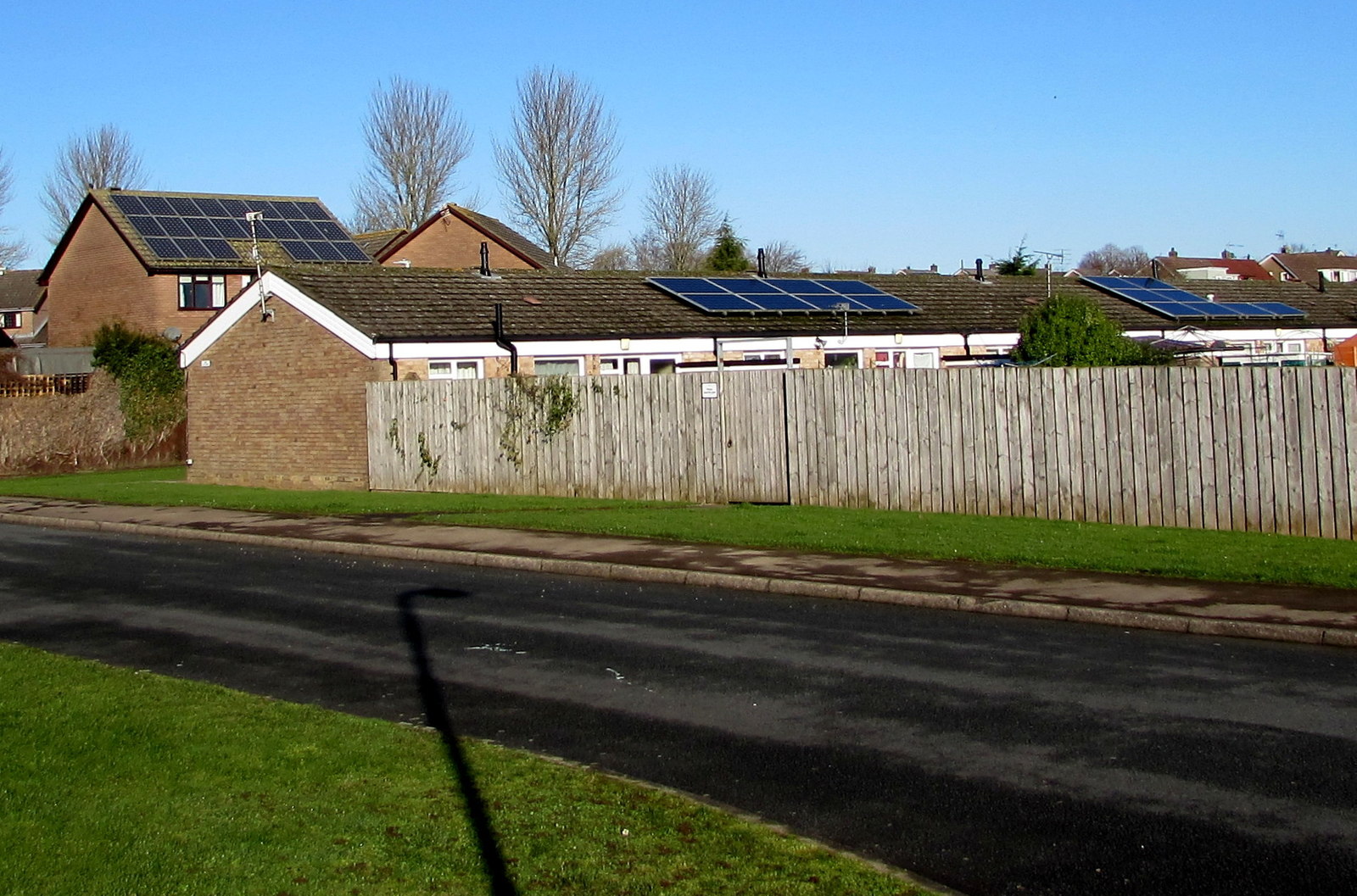


Australia Solar Sharer is a new scheme that will let households use three hours of free solar electricity every day. Energy Minister Chris Bowen announced the program, which starts next year, to put the country’s large midday solar surplus to use rather than waste it. The free window falls in the middle of the day, when rooftop and grid solar push wholesale prices toward zero.
The logic of Australia Solar Sharer is to turn a grid problem into a household benefit. Australia has so much rooftop solar that midday generation regularly exceeds demand, forcing curtailment and sometimes negative prices. Giving that surplus away to households shifts flexible demand, dishwashers, pool pumps, water heating and electric-vehicle charging, into the hours when power is effectively free.
An ENB calculation of what Australia Solar Sharer is worth
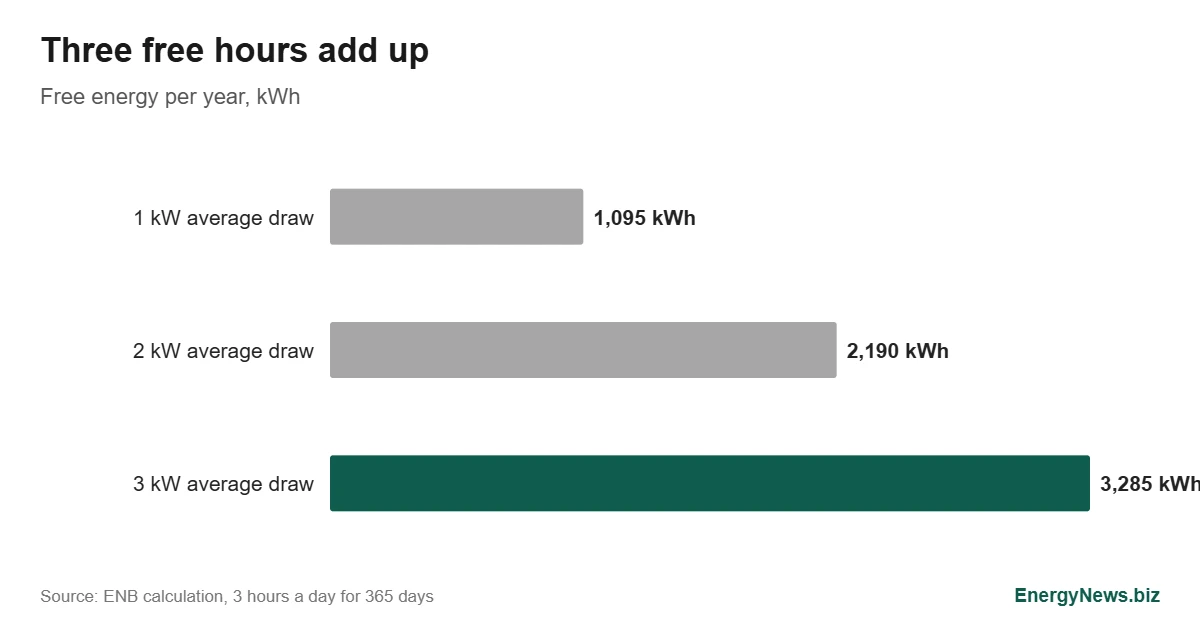
The value depends on how much a household actually uses in the free window. An ENB calculation shows the range: three free hours a day at an average draw of 1 kW is about 1,095 kWh a year, at 2 kW about 2,190 kWh, and at 3 kW about 3,285 kWh. A typical Australian home uses on the order of 4,000 to 6,000 kWh a year, so a household that shifts heavy loads into the free window could cover a large slice of its bill.
Who pays for the free hours
Nothing is truly free; the midday surplus pays. Solar that would otherwise be curtailed has close to zero marginal value, so handing it to households costs the system little and avoids the waste of switching panels off. Retailers recover the cost through the rest of the tariff, and the scheme nudges demand toward the hours that suit the grid, which reduces evening peaks and the need for firming capacity.
The design rewards flexibility. Households with batteries, heat pumps or EVs gain most, because they can soak up the free energy and use it later, the same arbitrage that makes storage retrofits on solar plants pay. Homes that cannot shift load gain least, which is the main equity question the scheme will face.
The metric that matters
The mechanics matter for whether it works. The free window is set in the middle of the day, when solar floods the grid, and retailers recover the cost across the rest of the tariff. Households that can move heavy loads into the window gain; those that cannot gain little, which is the main fairness question the scheme faces. The design effectively pays people to use power when it is abundant, the opposite of the usual peak-pricing signal.
Australia is a natural test bed because its rooftop solar penetration is the highest in the world, and midday oversupply is now a routine grid-management problem rather than a rare event. If Solar Sharer shifts enough demand to soak up that surplus, it reduces curtailment and the need for firming, and it gives other high-solar grids, from California to southern Europe, a model to copy. The risk is that without storage behind the meter, the free hours mostly reward households that already have batteries and electric vehicles.
Australia Solar Sharer is, in effect, a demand-response scheme dressed as a giveaway. If other sunny grids copy Australia Solar Sharer, the midday solar glut that now forces curtailment could become a daily window of cheap, flexible demand rather than a problem to switch off.
The number to watch is how much load actually moves into the free window. If households shift a meaningful share of daily use into the midday hours, Solar Sharer cuts curtailment and flattens the evening peak, and other sunny grids will copy it. If uptake is thin, it is a headline more than a reform. The policy fits the wider push to lift electricity’s role in energy, the theme running through COP31’s cooling and efficiency agenda. Scheme details are published by the Australian Department of Climate Change and Energy.
Add EnergyNews.biz as a preferred source on Google


