


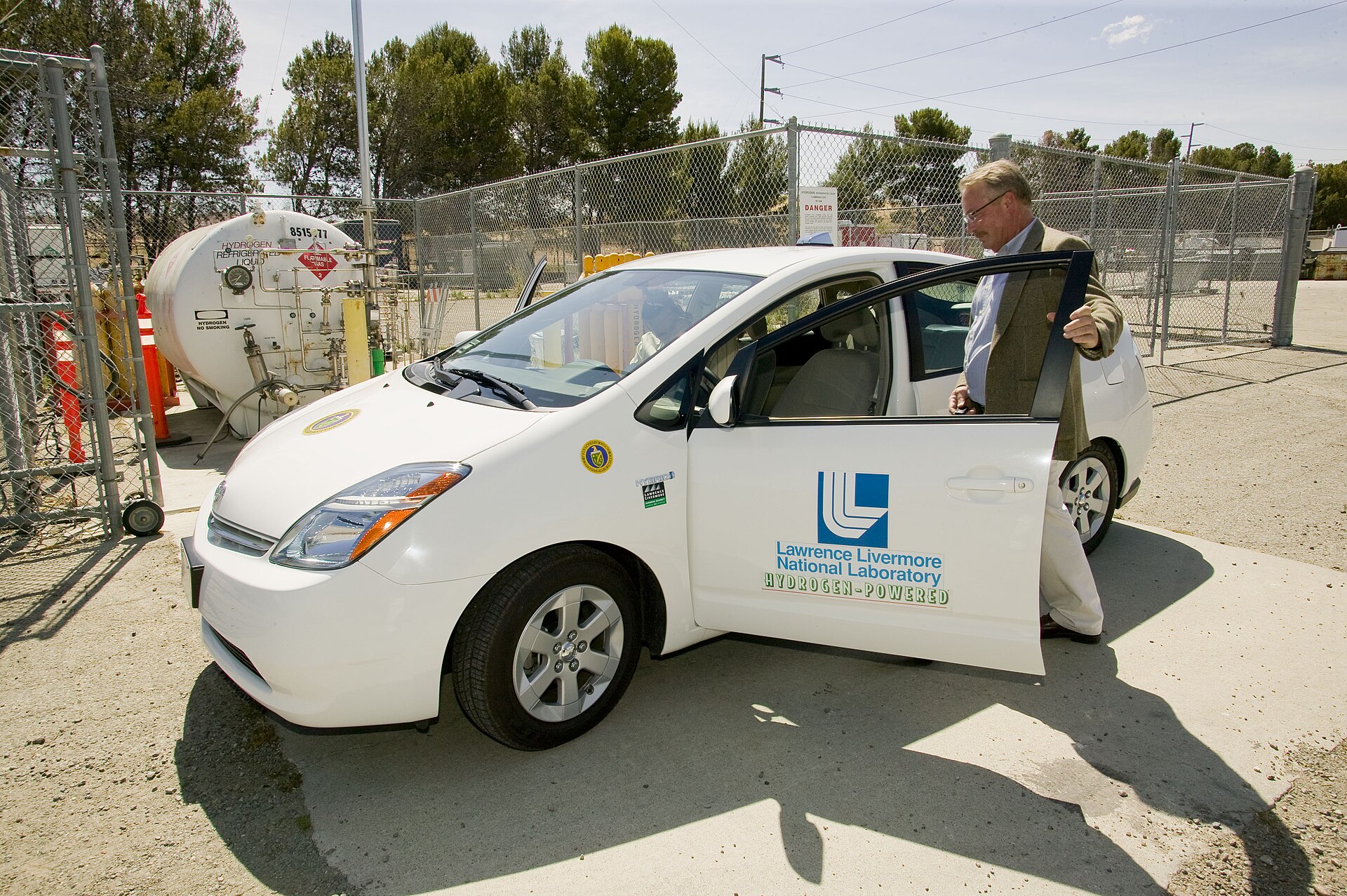


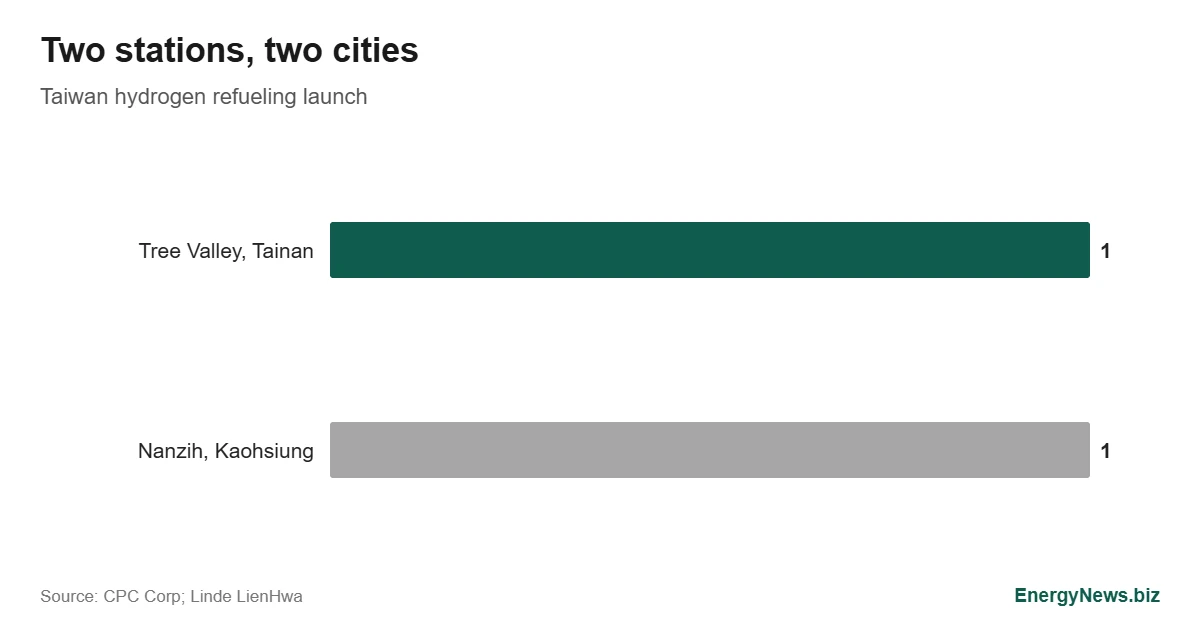
Taiwan hydrogen refueling has two new sites. State energy firm CPC Corp has partnered with Linde LienHwa to launch the Tree Valley Demonstration Hydrogen Refueling Station in Tainan and the Nanzih Hydrogen Refueling Station in Kaohsiung. Both sit at existing hydrogen production plants, which is the practical way early refuelling networks hold down cost.
Placing a refuelling station next to a hydrogen plant removes the hardest part of the chain, which is delivery. Hydrogen is expensive and awkward to move, so a station fed directly from an on-site plant avoids compression, trucking and a second set of storage. For a demonstration network, co-location is what makes the first stations economic enough to run at all, rather than waiting for a pipeline or a fleet of tube trailers that does not yet exist.
Why Taiwan hydrogen refueling starts at plants
Taiwan’s interest in hydrogen is industrial and maritime as much as it is about cars. The island has a dense manufacturing base and busy ports, and hydrogen is being tested where batteries are harder to use: heavy vehicles, port handling equipment and backup power. Starting at industrial hydrogen sites puts the fuel where large users already operate, instead of building consumer stations ahead of demand that may not arrive for years.
The wider pattern is the one visible across the sector. Projects that pair production with a committed, nearby user move ahead, while those relying on a market that does not yet exist stall, as the analysis of the low-emission hydrogen pipeline set out. Anchoring the two stations at existing plants is the low-risk way to begin, because the supply side is already there and only the demand has to be proven.
What Taiwan hydrogen refueling must prove
The economics will be decided by utilisation, not by the number of stations. A refuelling station is a largely fixed cost that only pays off when enough vehicles and equipment use it, so the early sites have to attract fleets, port machinery and industrial users quickly. Scaling beyond demonstration will need either a committed anchor fleet or a policy mandate that guarantees demand, the same condition every early hydrogen network has faced.
Why Taiwan is pushing hydrogen now
Taiwan imports almost all of its energy, which gives it a strong reason to test every low-carbon option, hydrogen included. The island’s semiconductor and manufacturing base needs reliable, clean power and process heat, and its ports handle some of the busiest container traffic in the world. Hydrogen and its derivatives such as ammonia are among the few options that can decarbonise heavy port equipment, shipping and high-temperature industrial heat, where batteries struggle, so the government is seeding the supply chain early.
The two stations are deliberately modest. Rather than betting on a consumer hydrogen-car market that has not materialised anywhere at scale, Taiwan is placing the fuel next to industrial users who already handle hydrogen and have predictable demand. That lowers the risk of stranded infrastructure, and it lets operators learn the practical side, compression, dispensing, safety and throughput, before any larger network is committed. It is a cautious strategy, but caution is the right posture for a fuel whose economics still depend heavily on who is standing next to the plant.
The practical measure of Taiwan hydrogen refueling will therefore be daily throughput at the two sites: how many vehicles and how much port and industrial equipment actually fuel there. Two demonstration stations will not build a national network on their own, but they are a low-cost test of whether the demand shows up, and the data they produce will show whether the economics can scale. CPC’s energy projects are detailed by CPC Corp.
Add EnergyNews.biz as a preferred source on Google


