


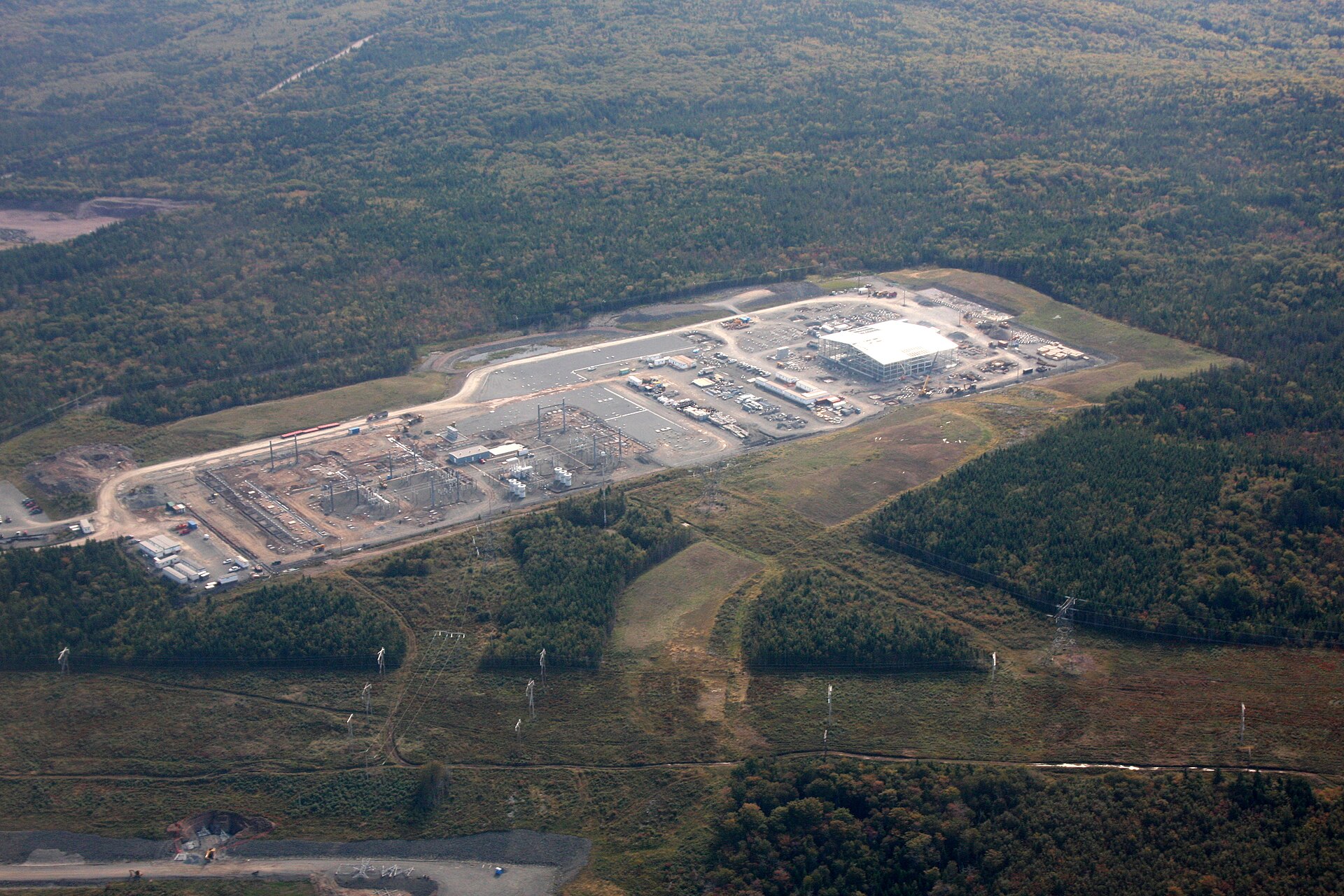


Turkiye HVDC took a step forward this month. Hitachi Energy and TEIAS, the country’s national transmission system owner and operator, have agreed to collaborate on high-voltage direct current links and on a framework to optimise and standardise Turkiye’s future HVDC developments. The announcement lands while Turkiye hosts the COP31 climate conference in Antalya and promotes what it calls the age of electricity.
The driver is renewable growth. Turkiye is adding wind and solar faster than its existing alternating-current grid can comfortably move, and the best generation sites are often far from the biggest demand. HVDC is the standard answer for carrying large amounts of power over long distances with low losses, which is why national operators turn to it as renewable shares climb and the grid, not the power plant, becomes the limiting factor.
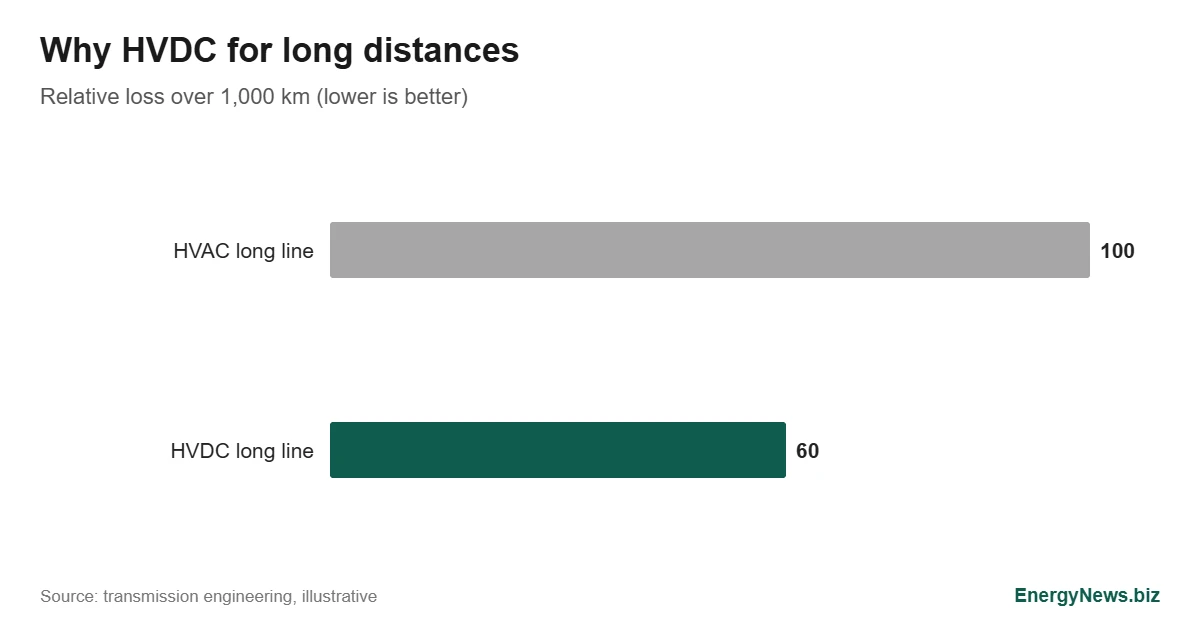
Why Turkiye HVDC is being standardized
Direct current loses less energy over long lines than alternating current, and it can link grids or regions that are hard to synchronise. The trade-off is cost: HVDC needs a converter station at each end to switch between AC and DC, so it only pays off over distance or for a specific job. Moving bulk renewable power across a large country is exactly that job, which is why Turkiye is turning to it now rather than building more conventional AC lines.
The standardisation is the real content of the deal, not any single line. By agreeing common converter and control designs up front, TEIAS and Hitachi Energy aim to build each future project faster and operate the links together as one system, instead of treating every scheme as a bespoke one-off. That is the difference between a demonstration line and a national direct-current backbone, and it is where most of the long-run cost saving sits.
What Turkiye HVDC changes
The move mirrors the grid build-out pressure visible in markets from PJM in the United States to Europe, where transmission, not generation, is now the binding constraint on adding clean power. A country cannot electrify if its grid cannot carry the new generation, so transmission frameworks like this one are the unglamorous foundation under every electrification headline, including Turkiye’s own goal of lifting electricity to 35% of final energy by 2035.
The grid geography behind the deal
Turkiye’s renewable resource and its demand sit in different places. The strongest solar is in the south and the best wind in the west and the interior, while heavy industrial and urban demand clusters around the northwest and the Marmara region. Bridging that distance with alternating current means large losses and stability limits; direct current carries the same power over the same distance with less waste, which is why a country electrifying quickly ends up needing a direct-current layer on top of its AC grid.
The deal also fits a global pattern. HVDC has become the tool of choice for the big transmission jobs of the energy transition, from undersea interconnectors between countries to long overland lines carrying desert solar or remote wind to cities. Standardising the technology nationally, rather than importing a different design for each project, is how a grid operator keeps the cost of that layer under control as it scales, and it is the part of the Turkiye HVDC agreement most likely to matter in ten years.
For the companies, Turkiye HVDC is a long-term framework rather than a one-off contract, and its value compounds with each project built to the shared standard. The practical measure will be how quickly the first standardised links move from framework to steel in the ground, and whether the common design actually lowers the cost of the projects that follow. Hitachi Energy’s grid work is detailed by Hitachi Energy.
Add EnergyNews.biz as a preferred source on Google


