



Plug Power has introduced GenEco Scale, a line of large electrolyzer blocks of 20 MW each, at its hydrogen symposium on 19 November. The company named Arcadia as the first customer, with 280 MW of capacity, which equals 14 blocks. The launch moves Plug Power further into the market for large green hydrogen plants, where projects are measured in hundreds of megawatts.
The blocks use proton exchange membrane technology, which responds quickly to changes in power supply. That suits plants fed by variable solar and wind. Building large plants from standard 20 MW blocks is meant to cut engineering time and cost, since each block is designed once and repeated.
Plug Power projects in Europe
The company also gave updates on European projects that use its equipment. Galp’s 100 MW electrolyzer plant in Portugal is expected to produce its first hydrogen by the end of 2026. In Spain, Iberdrola and bp’s 25 MW project is another reference for Plug Power’s PEM systems in refining and industry.
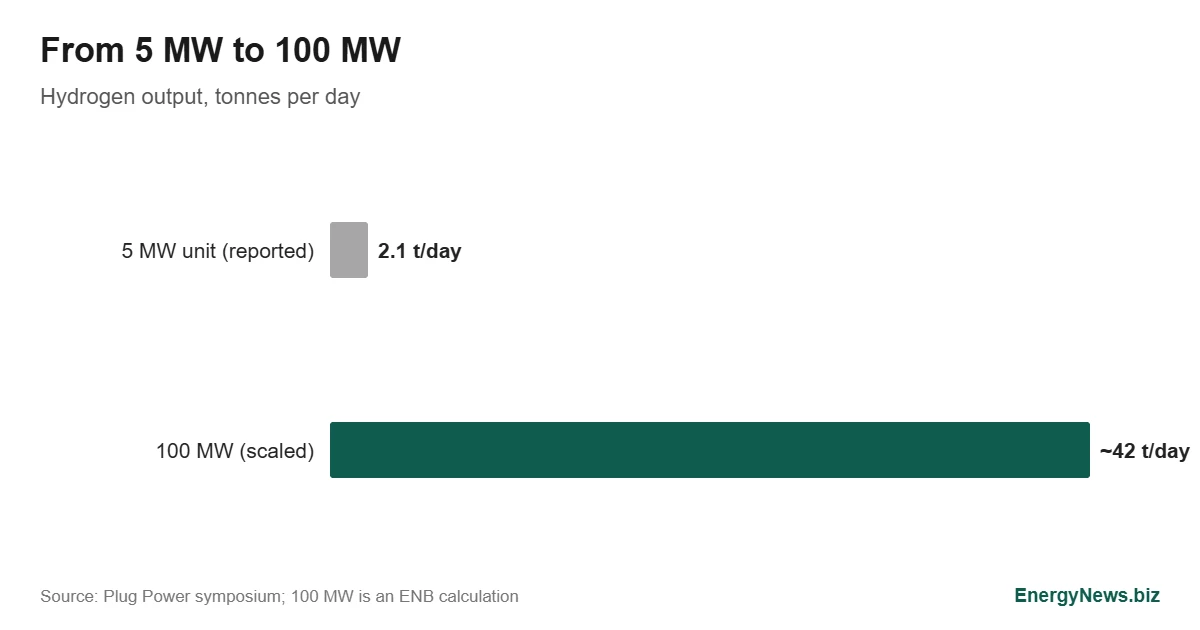
Plug Power also presented operating data from a 5 MW unit at Avina, which produces about 2.1 tonnes of hydrogen a day. An ENB calculation scales that rate to show what larger plants deliver. At the same output per megawatt, a 100 MW plant would make about 42 tonnes a day, or about 15,300 tonnes a year if it ran every day. Arcadia’s 280 MW would reach close to 118 tonnes a day on the same basis, though real plants rarely run at full output all year.
Why blocks matter for hydrogen costs
Green hydrogen projects have struggled with costs well above early forecasts. Bespoke engineering, long lead times for equipment and expensive balance of plant have all added to the bill. Standard blocks address part of that by turning a custom plant into a repeatable product, much as solar farms are built from identical inverter and module blocks.
The bigger challenge is demand. Many announced hydrogen projects have stalled because buyers will not sign long-term offtake contracts at current prices, a pattern set out in the report on low-emission hydrogen. Projects with a committed nearby user, such as refineries replacing grey hydrogen, are moving ahead first. Mobility projects remain smaller, as with Taiwan’s new refueling stations at industrial sites.
Energy security as the driver
At the symposium, Plug Power pointed to the Hydrogen Council’s Compass research, which ranks energy security as the top driver for hydrogen investment. That marks a shift from climate targets alone: governments and industrial users increasingly value domestic hydrogen as protection against imported fuel price shocks.
Competition in the electrolyzer market is intense. Chinese manufacturers offer alkaline systems at much lower prices per megawatt, while European suppliers such as Siemens Energy, Nel and ITM Power compete in PEM. Plug Power’s pitch rests on integration: it sells electrolyzers alongside liquefaction, storage and fuel cells, aiming to supply a full hydrogen chain rather than one component.
For buyers, the deciding numbers are cost per kilogram of hydrogen and uptime. Stack degradation, power prices and how many hours a plant runs each year matter more than the headline megawatts. Operating data from early plants, such as the Avina unit, will carry more weight with customers than launch announcements. Those figures will show whether 20 MW blocks deliver the cost cuts the design promises.
The company’s own finances remain under scrutiny after years of losses, and investors will watch whether GenEco Scale orders turn into deliveries and margins. The next marker is first hydrogen at Galp’s Portuguese plant, scheduled for the end of this year. Company details are published by Plug Power.
Add EnergyNews.biz as a preferred source on Google


