


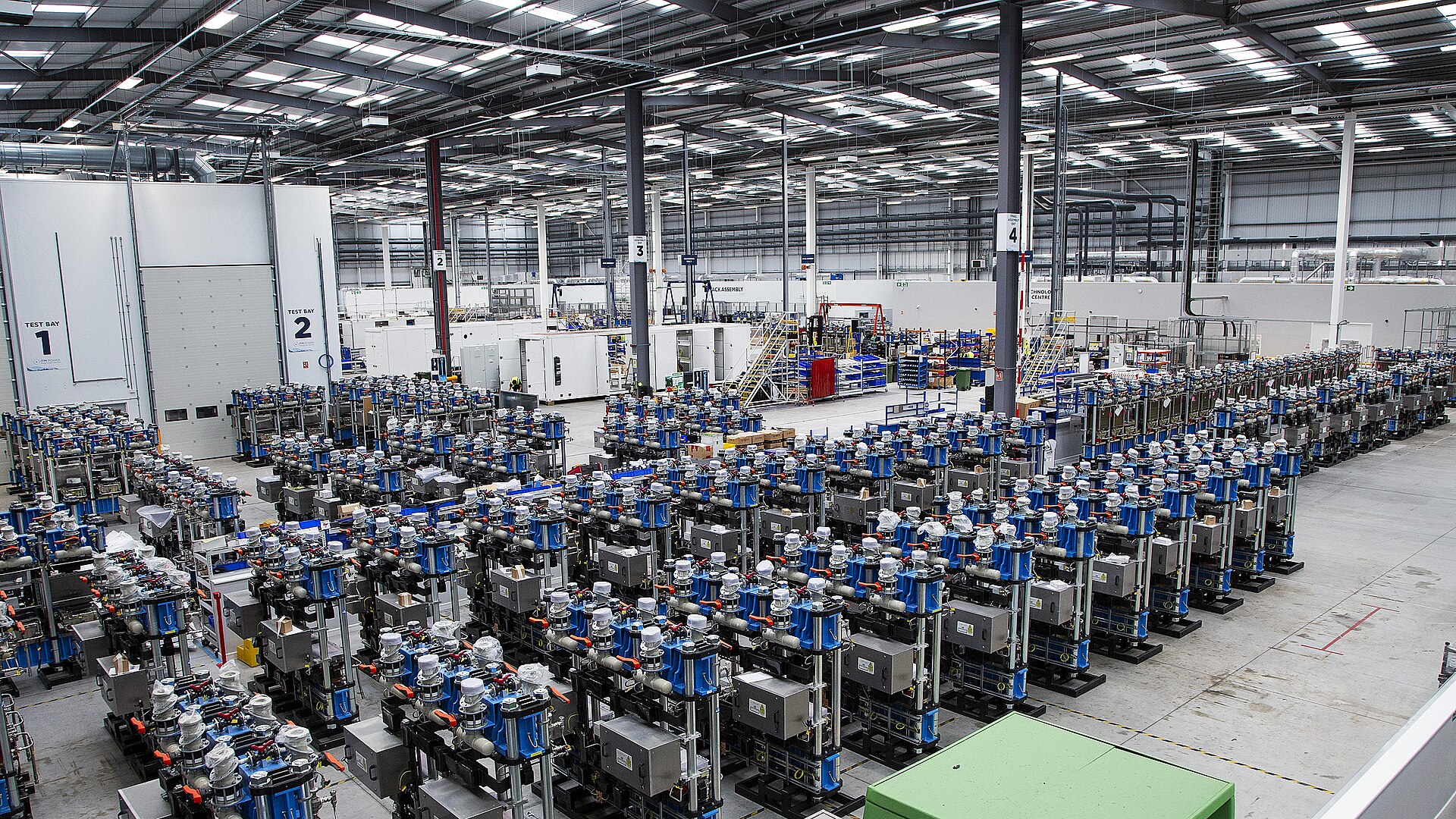


thyssenkrupp nucera has published preliminary figures for its 2025/26 fiscal year, and the headline is a group EBIT loss of €136 million. That is below the range of €75 million to €105 million the company gave only three months earlier. The gap came from just under €40 million of extra costs in the fourth quarter, linked mainly to completing and commissioning green hydrogen plants and to defective components from suppliers.
One quarter of bad luck can happen to any engineering firm. What makes this result worth a closer look is the pattern behind it, and what that pattern tells customers who depend on electrolyser makers to deliver large, first-of-a-kind projects.
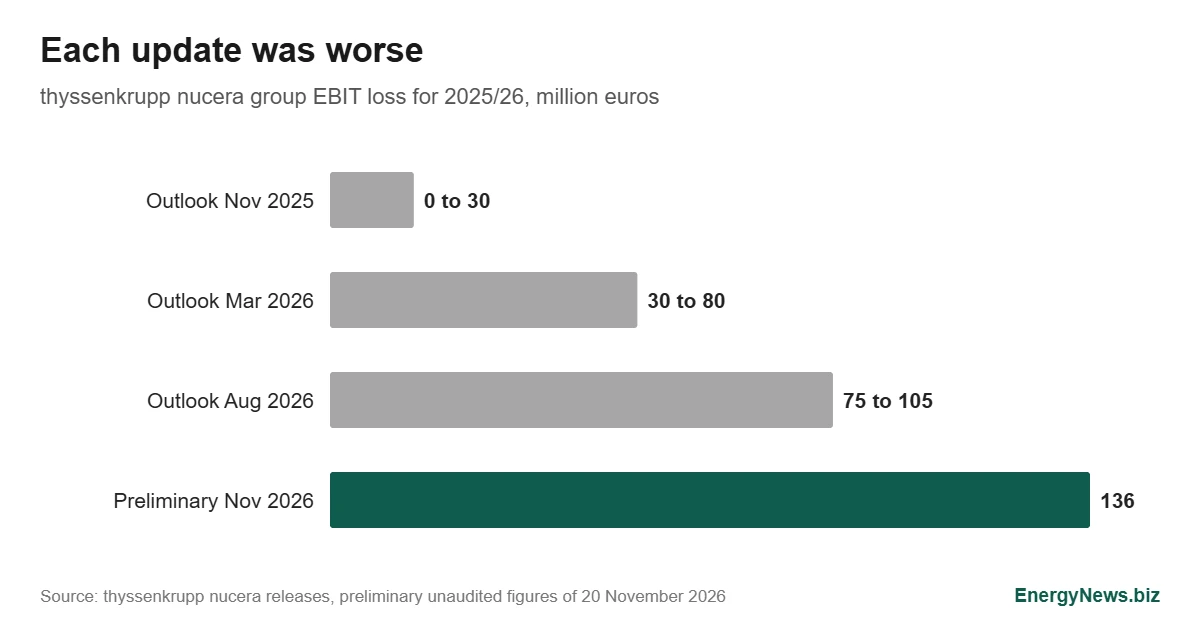
Four thyssenkrupp nucera forecasts, one direction
In November 2025, when the fiscal year began, the company expected group EBIT somewhere between a loss of €30 million and break-even, on sales of €500 million to €600 million. In March 2026 the range moved to a loss of €30 million to €80 million. In August, after deciding to drop its plans for solid oxide (SOEC) stack production, it moved again, to a loss of €75 million to €105 million. The preliminary result is €136 million.
Taking the midpoint of each range, the expected loss grew from about €15 million to €55 million, then €90 million, and finally landed at €136 million. That is roughly nine times the loss expected at the start of the year. Each update was presented with a specific reason: project costs, a cancelled US pilot, the SOEC write-down, supplier defects. Put together, the reasons describe a business where cost estimates for hydrogen plants have not held.
Two businesses inside one company
The split between the two segments is stark. The green hydrogen unit recorded sales of about €84 million, down from €459 million a year earlier, and an EBIT loss of €197 million. The chlor-alkali business, which sells electrolysis technology to the chemical industry, made €61 million of EBIT on sales of around €365 million.
That gives a simple comparison. In green hydrogen, thyssenkrupp nucera lost about €2.35 for every euro of sales. In chlor-alkali, it earned about 17 cents of operating profit per euro of sales. The older business is funding the newer one. Group revenue fell from €845 million to around €450 million, yet free cash flow stayed positive at €16 million, which shows the balance sheet is not the immediate concern. Execution is.
Why buyers should care
The company says it is executing around 3.5 GW of green hydrogen projects, and it won the electrolyser contract for Moeve’s 300 MW plant in Andalusia this year. Those customers are not exposed to the share price. They are exposed to delivery dates, performance guarantees and the willingness of a supplier to absorb cost overruns on fixed contracts.
Losses booked on commissioning usually mean the supplier is paying to fix problems on site. That can be good news for a customer in the short term, because the contractor carries the cost. Over time, it pushes suppliers to price risk into the next contract, ask for more milestone payments or narrow their guarantees. Developers negotiating supply agreements in 2027 should expect harder terms, not softer ones.
The same pressure is visible across the sector. Recent weeks also brought a storage company liquidation in the US. The common thread is that first projects at large scale cost more to finish than anyone planned.
What to check in a thyssenkrupp nucera contract
Three questions are worth asking any electrolyser supplier now. How much of the contract value is paid before performance tests? What happens to guarantees if a component from a sub-supplier fails? And does the supplier’s own reporting separate hydrogen results from other businesses, so that problems show up early? thyssenkrupp nucera does report the two segments separately, which is why this analysis is possible at all.
The audited annual figures and the outlook for 2026/27 are still to come. The number to watch is the green hydrogen EBIT guidance for next year. A loss well below €100 million would suggest the commissioning problems are behind it; anything close to this year’s €197 million would mean the project model itself needs repricing. Company releases are published on the thyssenkrupp nucera newsroom.
Add EnergyNews.biz as a preferred source on Google


