


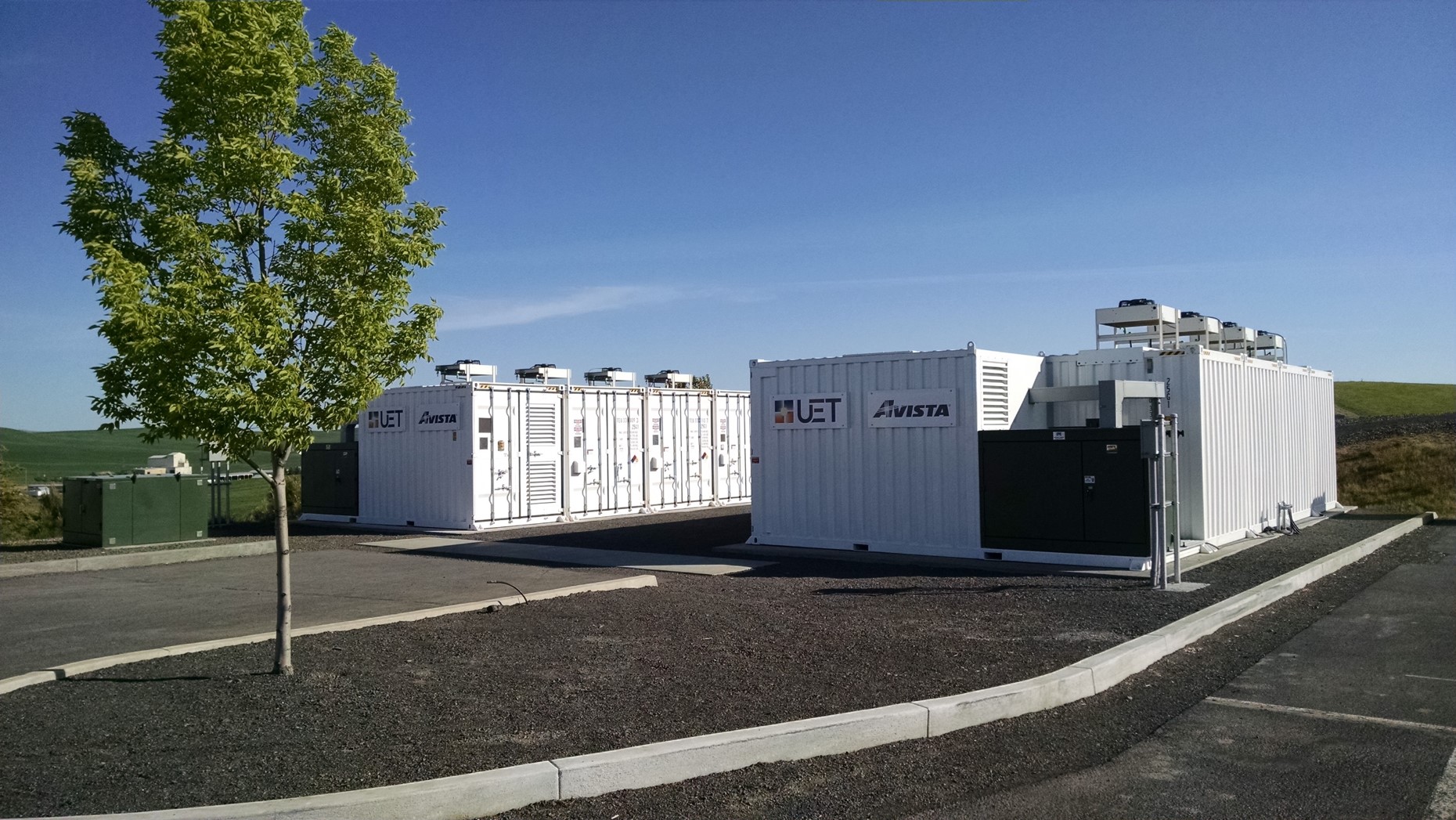


ESS Inc has stopped operating and filed for Chapter 7 bankruptcy, and Stem Inc has told investors there is substantial doubt about its ability to continue as a going concern. Both companies listed through SPAC mergers around 2021, when energy storage start-ups raced to public markets. Five years later, the class of 2021 is facing a reckoning that matters well beyond their shareholders.
For anyone who bought equipment, software or long service agreements from young storage suppliers, the question is no longer about share prices. It is about who will still be there to honour a warranty in year ten.
What happened to ESS Inc
ESS Inc filed a voluntary Chapter 7 petition in the US Bankruptcy Court for the District of Delaware on 13 November. Under Chapter 7 a trustee takes control of the assets and liquidates them to pay creditors; unlike Chapter 11, there is no plan to keep the business running. The company said it was unlikely that holders of its common stock would receive anything. It had already been delisted from Nasdaq in October.
Founded in 2011, ESS Inc spent more than a decade trying to commercialise an iron hybrid flow battery aimed at long-duration storage, then pivoted to sodium-ion systems over the past year. Its chief executive said earlier this year that the flow technology was not ready for commercialisation and that the company had gone public too early. Falling lithium-ion prices and slower demand for long-duration storage did the rest.
Stem by the numbers
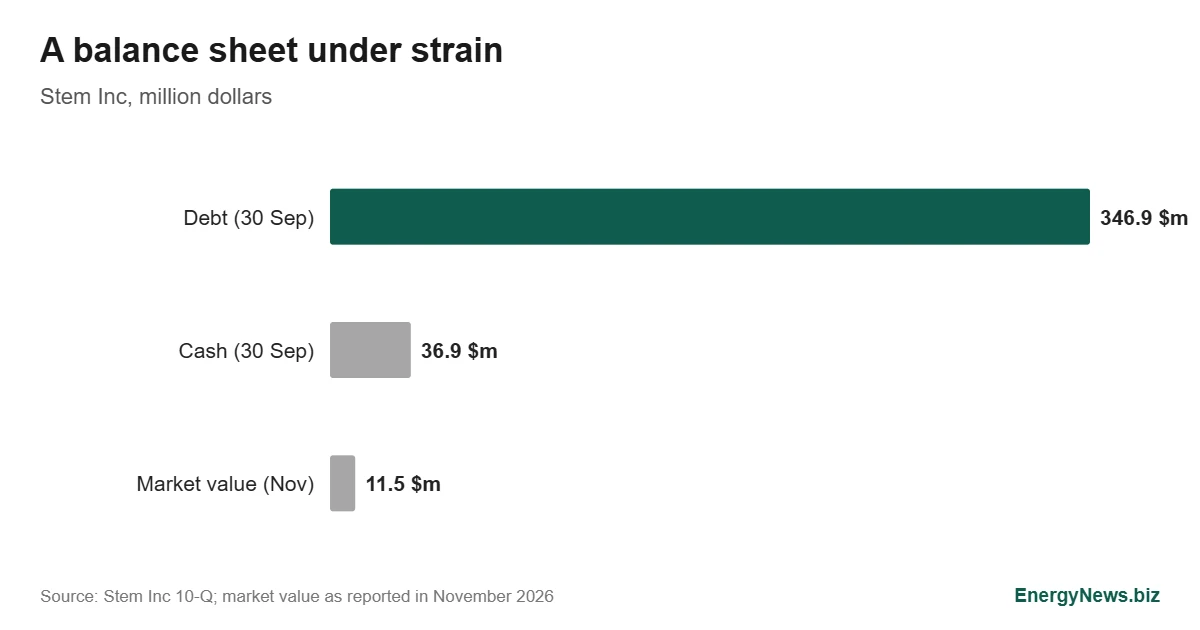
Stem Inc, a system integrator that pairs lithium-ion batteries with software and services, reported cash of $36.9 million and debt of $346.9 million at 30 September, with a loss of $47.9 million over the first nine months of the year. A calculation from those figures puts its debt at about 9.4 times its cash. Set against a market value of roughly $11.5 million in November, the debt is about 30 times what the equity market thinks the whole company is worth.
Stem has also sold Athena, its battery optimisation platform and one of its core assets, to Voltus, which raised $10 million in cash. That is about 27% of Stem’s cash at the end of September. The sale buys time, but it cuts against Stem’s own strategy of moving away from hardware towards software and services.
What buyers of ESS Inc and Stem products should check
The practical risk sits with asset owners. A battery fleet is built to run for fifteen to twenty years, and its revenue depends on software, spare parts and performance guarantees from the supplier. When a supplier liquidates, warranties can become unenforceable claims in a bankruptcy estate, and a proprietary control platform can stop receiving updates.
Owners can reduce that exposure in three ways: escrow arrangements for source code and design files, parent or bank guarantees backing long-term service agreements, and contracts that allow a third party to take over operations and maintenance. Lenders are already asking for these terms, and the cases of ESS Inc and Stem will make them standard. The wider market keeps growing, with US installations up 20% year on year, as covered in the report on the 200 GWh milestone, but growth does not protect individual suppliers.
The signal for the sector
The lesson is not that storage is failing; deployments are at records. It is that the market rewards scale, bankable supply chains and proven chemistry, and punishes companies that went public before their technology or business model was ready. Large integrators backed by cell makers and utilities are taking share, as long-term deals such as the e-Storage agreement with X-Elio show.
The number to watch is Stem’s next quarterly filing: whether cash holds above its quarterly burn rate, or whether a restructuring follows. Company filings for both firms are available through the US Securities and Exchange Commission’s EDGAR database.
Add EnergyNews.biz as a preferred source on Google


