




South Africa nuclear expansion has taken a concrete step. Energy Minister Kgosientsho Ramokgopa said his department is preparing to put the case for an additional 5.2 GW of nuclear capacity before the public and will consider submissions on their merits. State utility Eskom has submitted its feasibility report for the new capacity, which the 2025 Integrated Resource Plan schedules to be on stream by 2039.
The minister said the department is preparing a proposed determination for public participation, adding that publication of the determination is the statutory trigger for procurement. The aim is a final determination by the end of April 2027, after which the process of building 5.2 GW of nuclear would start, he said.
How big the South Africa nuclear plan is
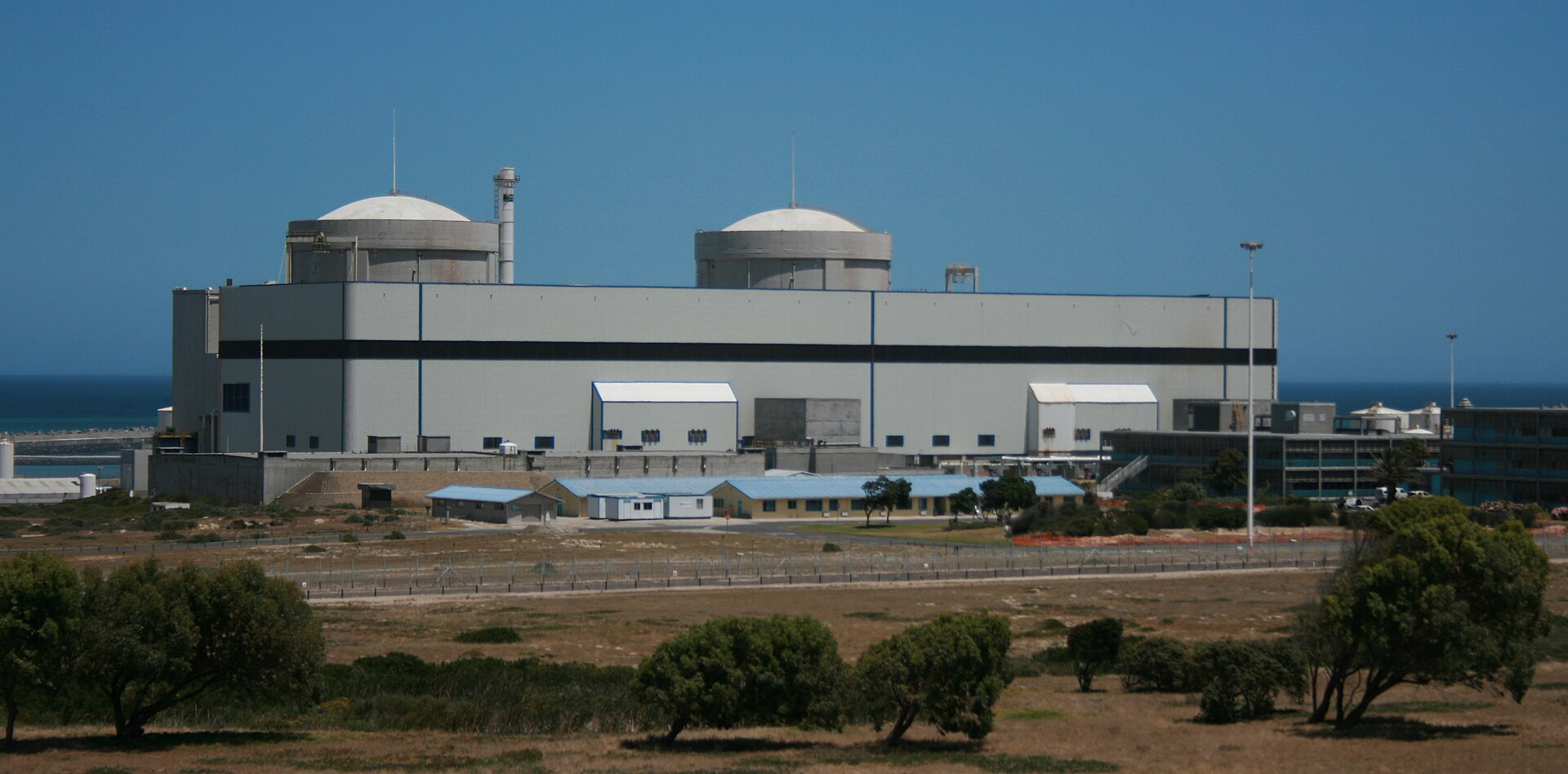
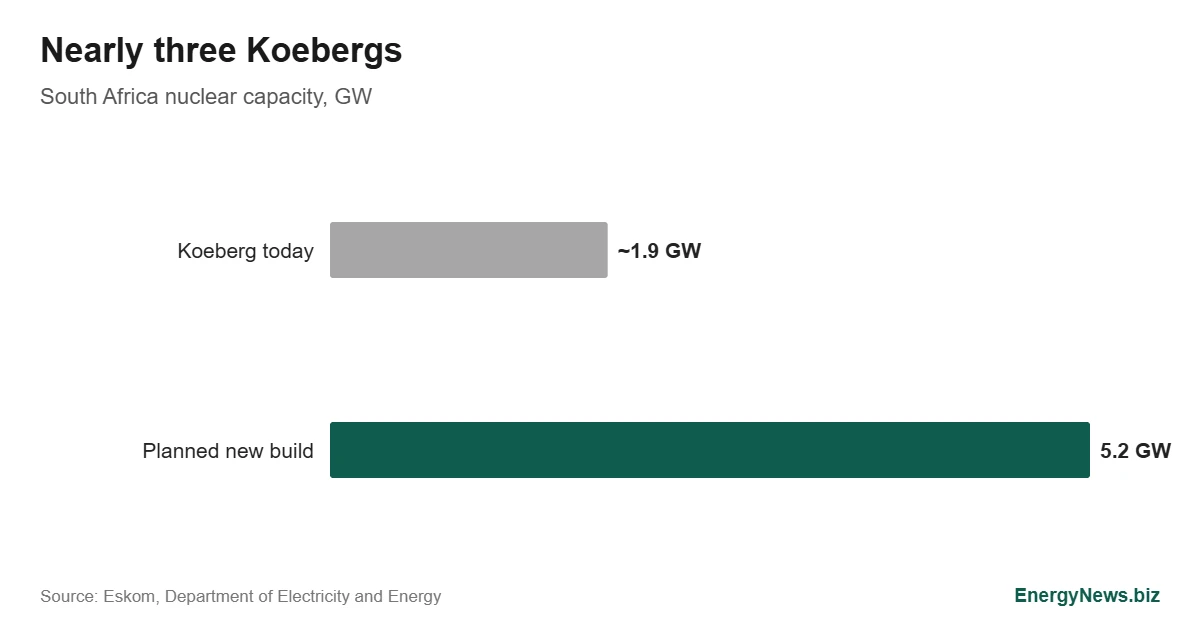
South Africa has one nuclear plant today: Koeberg near Cape Town, with two units totalling about 1.9 GW. An ENB calculation shows that the planned 5.2 GW is about 2.7 times that size. From a final determination in 2027 to the 2039 target leaves about twelve years to procure, license, finance and build, which is tight for a country that has not built a reactor in decades but realistic if large units are ordered in series.
The minister acknowledged that gap directly. He said one of the biggest risks is that the country has not built a nuclear power plant in the past 50 years or so, and that while Koeberg staff know how to run an existing station, South Africa lacks people who have built one.
Small reactors and local industry
Ramokgopa said small modular reactors have a place, but that the first question is which industrial users have a heat or power requirement that can support a project of that scale. He said the department will assess the economics of first units separately from those assumed for a mature production line, and establish licensing and fuel requirements for the designs under consideration.
A socio-economic impact and cost-benefit study is under way to inform a Nuclear Industrialisation Plan. The minister expects it to identify procurement packages that South African companies can supply, the firms already able to compete and the capabilities that must be developed before tenders are issued. Global interest in new build is high, as the analysis of 90 GW of nuclear construction worldwide shows.
Fuel cycle and PBMR legacy
The South African Nuclear Energy Corporation, Necsa, welcomed the South Africa nuclear decision and said it is working to re-establish uranium conversion, enrichment and fuel fabrication in the country. Necsa is also reviewing intellectual property from the Pebble Bed Modular Reactor programme, a high-temperature gas-cooled design abandoned in 2010, and plans to develop high-temperature reactor fuel from laboratory to pilot scale. Earlier this year it launched an expression of interest to find technology partners for a small reactor design.
For international suppliers eyeing the South Africa nuclear tender, the timeline matters more than the headline. Vendors will watch the draft determination for clues on reactor size, financing model and local content rules. Bangladesh, which received its first nuclear power this month from Rooppur Unit 1, shows how long the road from decision to grid can be for a newcomer, though South Africa starts with an operating fleet and a regulator.
Why South Africa nuclear matters for the grid
South Africa’s power system has relied heavily on ageing coal plants and has suffered long periods of rolling blackouts in recent years. Solar and storage are being added quickly, but large industrial users such as mines and smelters need firm supply around the clock. South Africa nuclear capacity is meant to fill part of that gap from the late 2030s, alongside renewables and transmission upgrades.
Financing will decide the pace. A programme of 5.2 GW could cost tens of billions of dollars, and the government will have to choose between state funding, vendor financing, export credit or partnerships with private investors. The determination process is where those choices start to take shape.
What comes next for South Africa nuclear
The next milestone is publication of the draft determination for public comment, followed by the final determination targeted for April 2027. Only then can a formal procurement start. Updates are published by the Department of Electricity and Energy and by Eskom.
Add EnergyNews.biz as a preferred source on Google


