


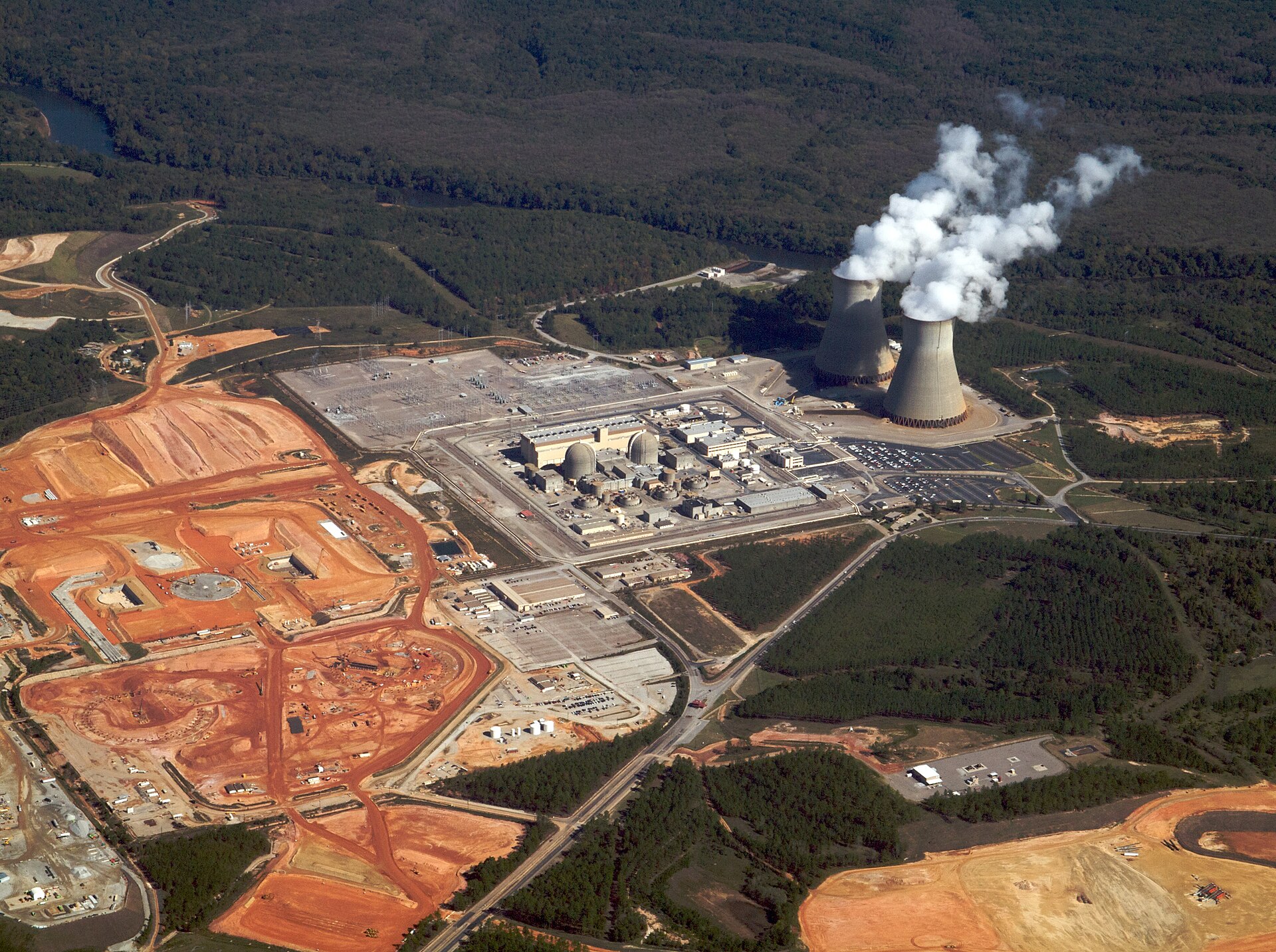


Nuclear construction worldwide has reached about 90 GW of capacity, the highest level in more than 35 years, according to the International Energy Agency’s World Energy Outlook 2026. More than 50 countries now have plans to build or expand nuclear power.
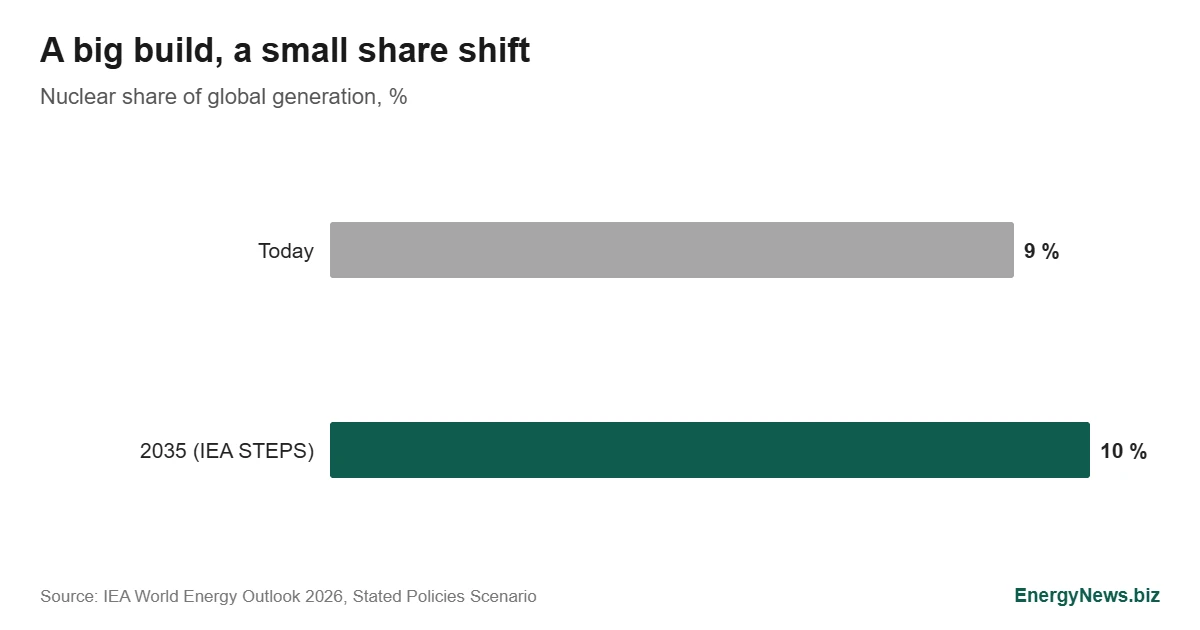
The same outlook contains a sobering counterpoint. In the Stated Policies Scenario, the share of nuclear in global electricity generation edges up only from about 9% today to about 10% by 2035. The build is real, but electricity demand is growing so fast that even a revival of this size barely changes the mix.
What 90 GW of nuclear construction delivers
Nuclear plants run at high utilisation. At a 90% capacity factor, 90 GW of reactors would produce about 710 TWh a year once all are online, more than the annual electricity consumption of Germany. That is a substantial volume of firm, low-carbon power.
Set against demand, though, the figure shrinks. The IEA expects global electricity use to rise by more than 10,000 TWh over the next decade. The plants under construction today would cover about 7% of that growth. Solar, wind and other sources have to supply the rest, which is why the nuclear share rises by only about one percentage point.
Where nuclear construction is happening
Most of the reactors being built are large designs in China, India, Russia and a few other countries with state-backed programmes. New entrants are also appearing: Bangladesh is close to bringing its first unit online, with the Rooppur plant nearing the grid. In Europe and North America, construction remains slower, though several projects are moving toward final investment decisions.
Small modular reactors attract most of the attention in Western markets, but they make up a small fraction of the capacity actually under construction. Billions of dollars are committed to developers and fuel supply chains, while few units are physically being built, as the analysis of the small modular reactor wave set out. Fuel is another constraint: advanced designs need high-assay low-enriched uranium, and supply is only starting to be built, as with Urenco’s HALEU plans.
Why the share barely moves
Three factors explain the modest share gain. Construction times for large reactors are long, often seven to ten years outside China, so capacity started now mostly arrives in the 2030s. A significant part of the existing fleet is ageing, and retirements offset part of the new build unless operating licences are extended. And demand growth is so strong that every source must expand quickly just to hold its share.
Lifetime extensions are therefore the cheapest nuclear capacity available, and they matter as much as new nuclear construction for the share. Keeping an existing reactor running for another twenty years costs a fraction of building a new one, and many governments are now taking that route. In the IEA’s accelerated scenarios, nuclear construction rises further and the share climbs faster, but those cases depend on cost control that the industry has rarely achieved outside Asia. Standardised designs built in series, as in South Korea and China, are the main reason nuclear construction there costs less and finishes sooner than in Europe or the United States.
The number to watch
The figure that will decide nuclear’s role in the 2030s is not the level of nuclear construction but capacity connected to the grid each year. A high construction number with slow completions means rising costs and delayed carbon cuts. If annual grid connections climb toward 15 GW or more, the share can rise faster than the outlook assumes. The scenarios and assumptions are set out in the IEA World Energy Outlook 2026.
Add EnergyNews.biz as a preferred source on Google


