


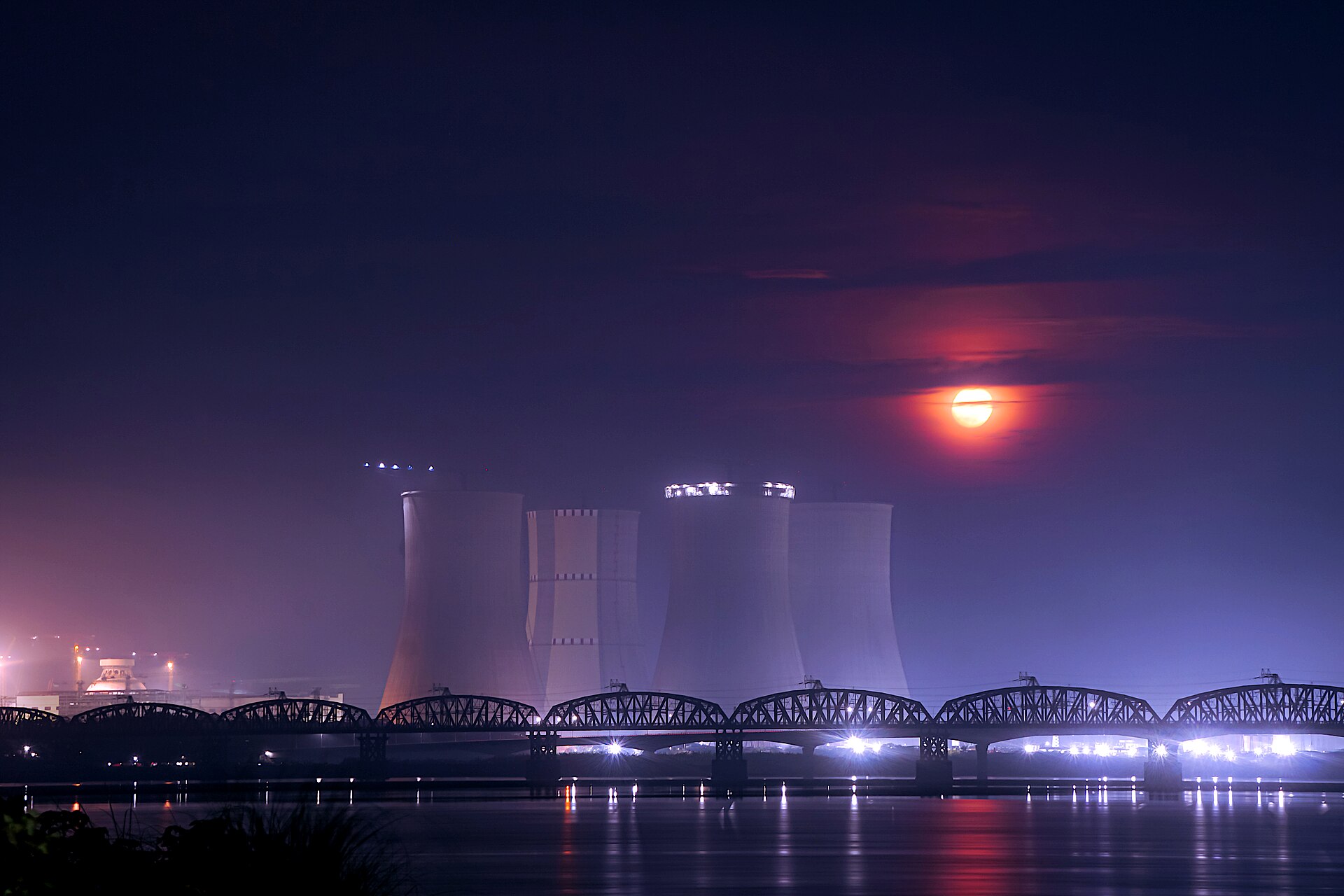


The Rooppur nuclear power plant is in its final steps before sending power to Bangladesh’s national grid. Unit 1, a Russian-designed VVER-1200 reactor built by Rosatom at Pabna, about 160 km northwest of Dhaka, is going through grid synchronisation tests this week. Once it supplies the grid, Bangladesh will become the 33rd country in the world to produce nuclear power.
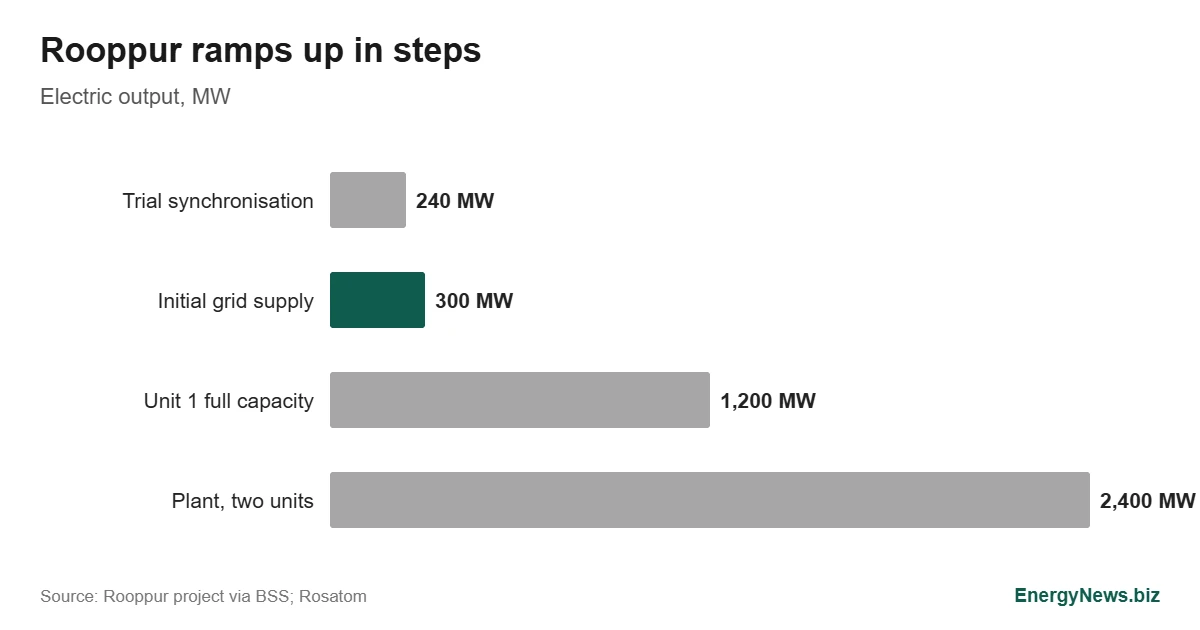
According to project sources quoted by the state news agency BSS, a trial connection will feed up to 240 MW to the national grid for a few hours. The unit will then be disconnected for further tests. The goal is a final grid connection on 21 November, with an initial supply of around 300 MW subject to approval from the Bangladesh Atomic Energy Regulatory Authority.
Rooppur nuclear unit 1: the path to full power
Fuel loading began on 28 April 2026. The reactor reached first criticality in October, and power start-up began at the end of that month, with electricity first used for the plant’s own needs. One more regulatory certificate was required before grid supply.
Project officials expect another five to six months before unit 1 reaches its full 1,200 MW. Unit 2 is scheduled to follow, with Rosatom aiming to start its commissioning in 2027. The full plant is designed for 2,400 MW, with a design life of 60 years that can be extended by 20 more.
An ENB calculation: what 300 MW means
An ENB calculation shows the scale of each step. The 240 MW trial equals 20% of unit 1’s capacity and the 300 MW initial supply equals 25%. Full output from both units would make Rooppur one of the largest single power stations in Bangladesh, providing firm power to a grid that has relied heavily on imported LNG and fuel oil.
The schedule has slipped repeatedly. A contractor schedule cited in parliament earlier this year pointed to first grid connection by the end of August 2026. Revised agreements set a completion deadline of 31 December 2026 for the first unit. Commercial operation, and a final electricity tariff, are still about a year away according to local reports.
The cost is large for a country of Bangladesh’s size. The plant is reported to cost about $12.65 billion, most of it financed by a Russian state credit. Construction of unit 1 began in November 2017 and unit 2 in July 2018, which means the first unit has taken about nine years from first concrete to grid supply, longer than the original plan but within the range seen for first plants in newcomer countries.
Rooppur nuclear and the newcomer countries
Rooppur is the first export VVER-1200 in South Asia and a key reference project for Rosatom, which builds the majority of reactors for nuclear newcomer countries. Its progress will be watched by other governments weighing first plants, from Southeast Asia to Africa. Western vendors are competing for the same customers with large reactors and SMRs, but face their own cost and schedule problems, as shown by the recent Darlington SMR delay in Canada.
For Bangladesh, the immediate test is grid integration. A 1,200 MW unit is large relative to the national system, which means grid operators need fast reserves ready in case the unit trips. The national load dispatch centre has been integrating the plant into its SCADA and energy management systems ahead of connection.
For the region, Rooppur is also a test case for how a first nuclear plant can be financed, licensed and connected in South Asia, where India and Pakistan are so far the only nuclear power producers.
Once the final connection on 21 November succeeds, the Rooppur nuclear plant will move into a long period of staged power increases, tests and regulatory hold points before it reaches commercial operation.
Updates from the operator side are published by Rosatom, while grid timing comes from the Bangladesh project office through BSS.
Add EnergyNews.biz as a preferred source on Google


