


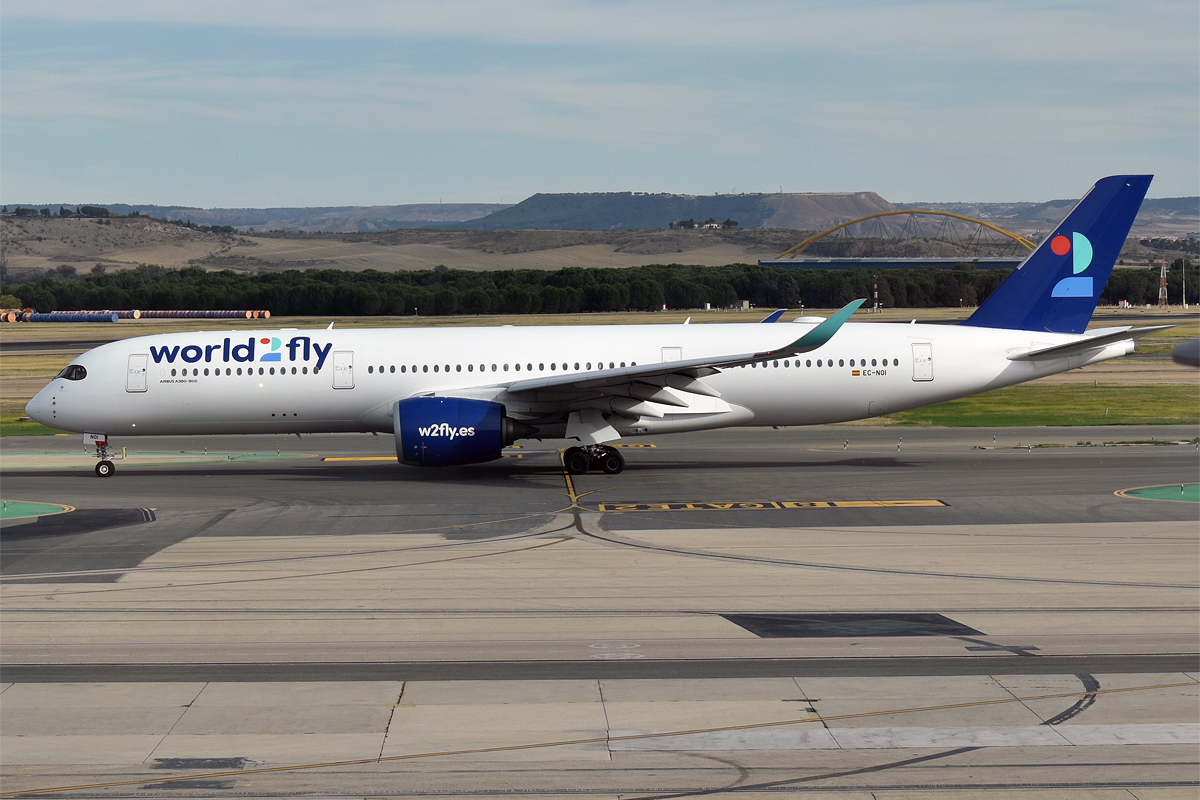


Moeve and the Spanish airline World2Fly have operated a passenger flight from Madrid to Lisbon using a blend that included synthetic e-SAF made from renewable hydrogen and captured carbon dioxide. The flight on 23 November carried 1.2% e-SAF and 4.8% sustainable aviation fuel of biological origin, with conventional kerosene making up the rest. Both renewable components were certified by independent laboratories for aviation use.
World2Fly is the airline of World2Meet, the travel division of the Iberostar Group. The blend moved through the existing supply chain operated by Exolum, the fuel logistics company.
How the e-SAF was made
The e-SAF was produced in an initiative coordinated by Moeve’s Innovation Center in Alcalá de Henares, near Madrid. It used renewable hydrogen from electrolysis and residual CO2 captured on site, processed through the Fischer-Tropsch route into synthetic kerosene. Moeve worked with the Institute of Chemical Technology, a joint centre of the Spanish research council CSIC and the Polytechnic University of Valencia, and with Finland’s VTT Technical Research Centre.
The biological SAF came from Moeve’s San Roque Energy Park in Cádiz. It was made from circular feedstocks and waste that do not compete with food, including used cooking oil collected from Iberostar Group hotels in Andalusia and Catalonia.
Why 1.2% e-SAF matters
The blend was not chosen at random. Under the EU’s ReFuelEU Aviation regulation, from 2030 at least 6% of the fuel supplied at EU airports must be sustainable aviation fuel, and at least 1.2% must be synthetic fuel such as e-SAF. The Moeve flight used exactly those shares: 4.8% plus 1.2% makes 6%.
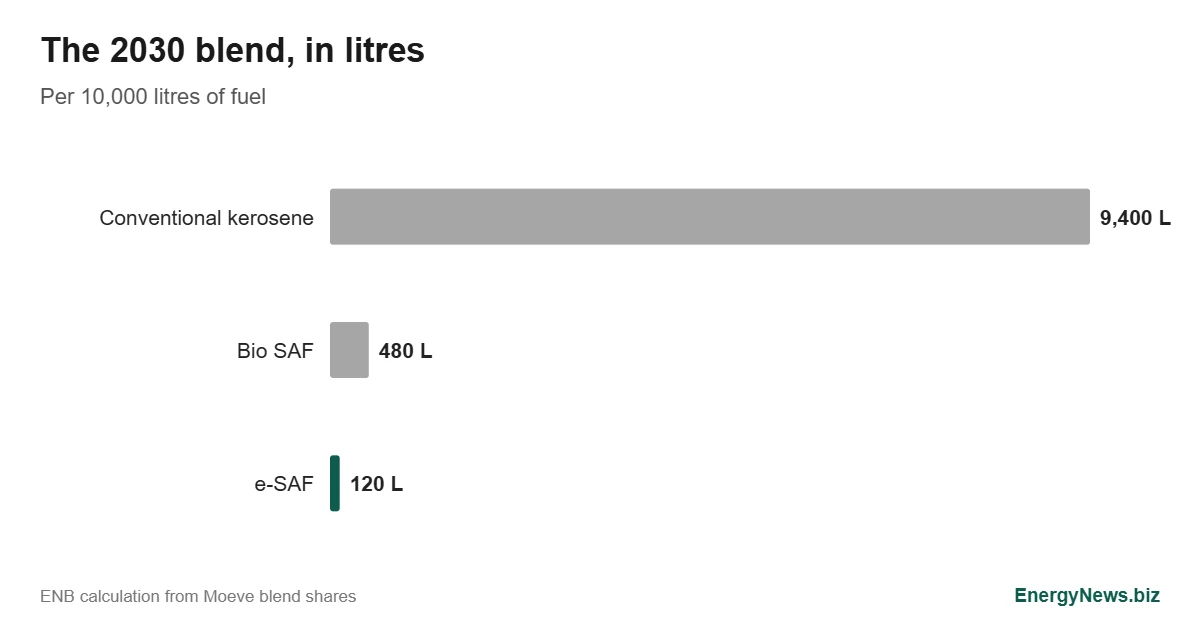
ENB converted the shares into volumes. For every 10,000 litres of fuel, the blend contains 120 litres of e-SAF, 480 litres of biological SAF and 9,400 litres of kerosene. That puts the scale problem in perspective. When KLM flew to Hamburg on a recent flight with a 5% e-SAF blend, it could only secure about 200 litres of the synthetic fuel. The 2030 requirement applies to all fuel supplied across the EU every year, not to single flights.
One flight therefore proves that the blend can move through normal fuel logistics and power a commercial aircraft without changes. It does not show that suppliers can already produce 2030 volumes. That will need large plants, which in turn need green hydrogen at scale, such as the 300 MW electrolyser project Moeve is building in Andalusia.
The cost gap is the other open question. Synthetic fuels made from hydrogen and captured carbon are still several times more expensive than fossil kerosene, so airlines will pass part of the cost to passengers or rely on support schemes. The ReFuelEU obligation falls on fuel suppliers, who will need long-term offtake deals with airlines to finance new plants.
What Moeve and World2Fly said
Moeve chief executive Maarten Wetselaar stressed cooperation across the air transport value chain and argued that European renewable fuel production can reduce dependence on energy imports. He pointed to the Iberian Peninsula’s potential for renewable molecules, including second generation biofuels and green hydrogen. Gabriel Subías, chief executive of World2Meet, said the airline’s participation reflects its interest in bringing new energy solutions into commercial operations, especially for long-haul flights.
Moeve is also building a second generation biofuels plant with Apical in Palos de la Frontera, Huelva, an investment of €1.2 billion. Hydrogen-based fuels are drawing interest from other transport sectors too, as shown by new nuclear rules for shipping that point to a wider search for low-carbon fuels.
The number to watch
The number to watch is how many tonnes of e-SAF Moeve and other Spanish producers contract for delivery in 2030. A single plant of meaningful size would need hundreds of megawatts of electrolysers. Details of the EU rules are published by the European Commission.
Add EnergyNews.biz as a preferred source on Google


