


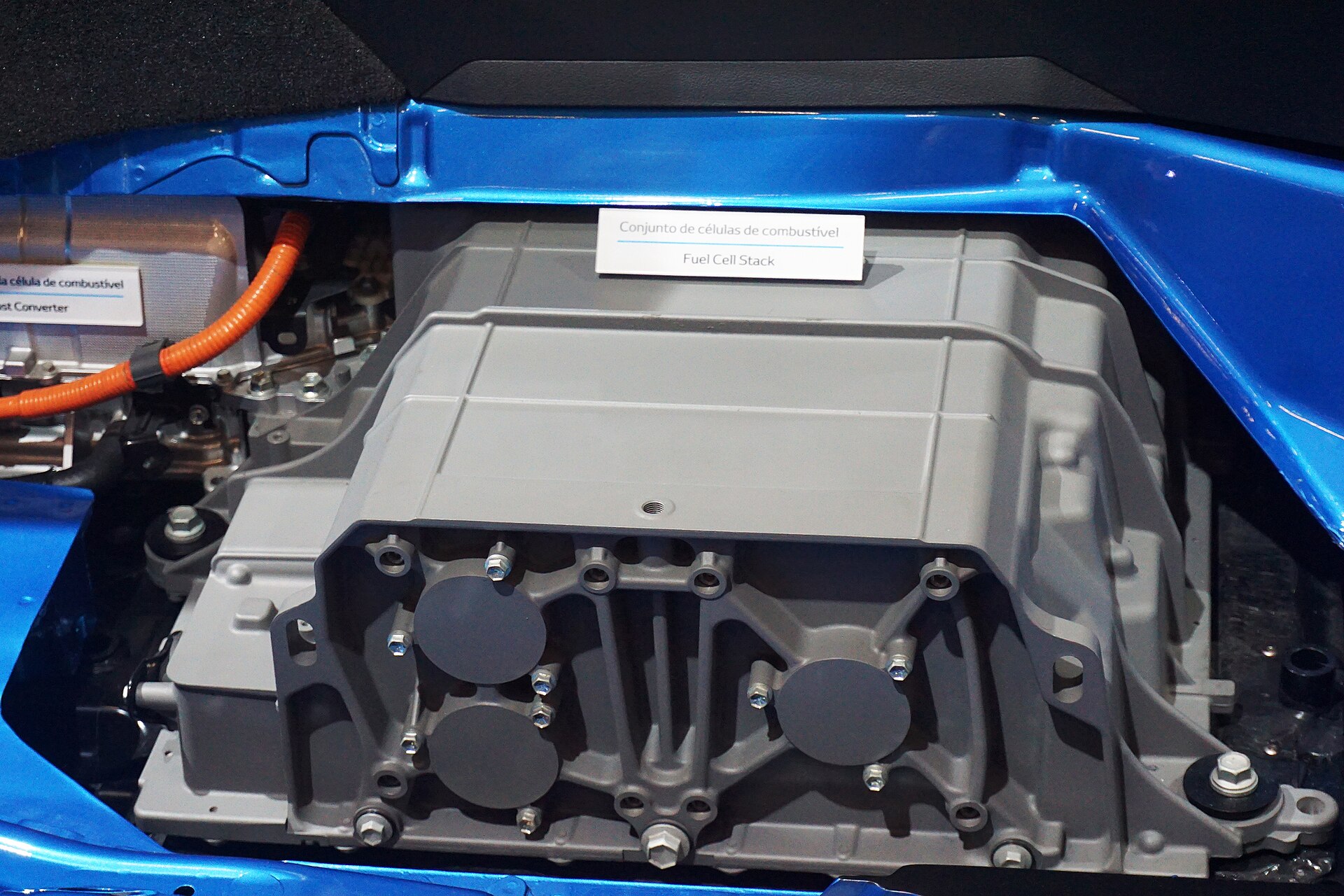


PowerCell Group has signed its largest order to date. Through its US subsidiary, the Swedish fuel cell maker agreed a SEK 440 million contract, about $43 million, with an established electric cooperative in the southern United States. The installation will be built on PowerCell’s containerised PowerPod 3000 platform, with 27 MW of installed fuel cell capacity delivering 20 MW of rated power. Delivery is expected over 18 to 24 months.
The cooperative plans to use surplus solar electricity to produce green hydrogen, store it, and convert it back into electricity with PowerCell’s PEM fuel cells at night, when solar output is low, or when extra power is needed. The order is also notable because the system will recover water from the fuel cell process.
What the PowerCell order costs per megawatt
Dividing the contract value by capacity gives a useful benchmark. SEK 440 million for 20 MW of rated power is SEK 22 million per MW, or about $2.15 million per rated MW. Measured against the 27 MW of installed capacity, it is about $1.59 million per MW.
The difference between the two numbers is deliberate. The installed capacity is 35% higher than the rated output, which allows the system to keep delivering 20 MW while some units are offline for maintenance and to manage stack wear over time. For buyers, the rated figure is the one that matters, because it is the power they can count on.
It is also important to be clear about what this price does not include. The order covers the fuel cell side only. The electrolysers that make the hydrogen, the compressors and storage tanks, and the solar plant itself are separate costs. A full solar to hydrogen to power system will cost considerably more per MW than the fuel cells alone.
Why a cooperative would choose hydrogen
Lithium-ion batteries are cheaper for shifting energy by a few hours. Hydrogen makes sense when storage needs to last longer, from many hours to days or seasons, because adding more tanks is cheaper than adding more battery cells. A cooperative serving rural load in the southern US may also value the ability to provide power during long cloudy spells or grid emergencies without burning fuel on site.
The economics depend on how often the system runs. A fuel cell plant used only in emergencies spreads its cost over few megawatt hours; one used every night spreads it widely. The same question applies to seasonal hydrogen storage projects in other markets.
A step change for PowerCell
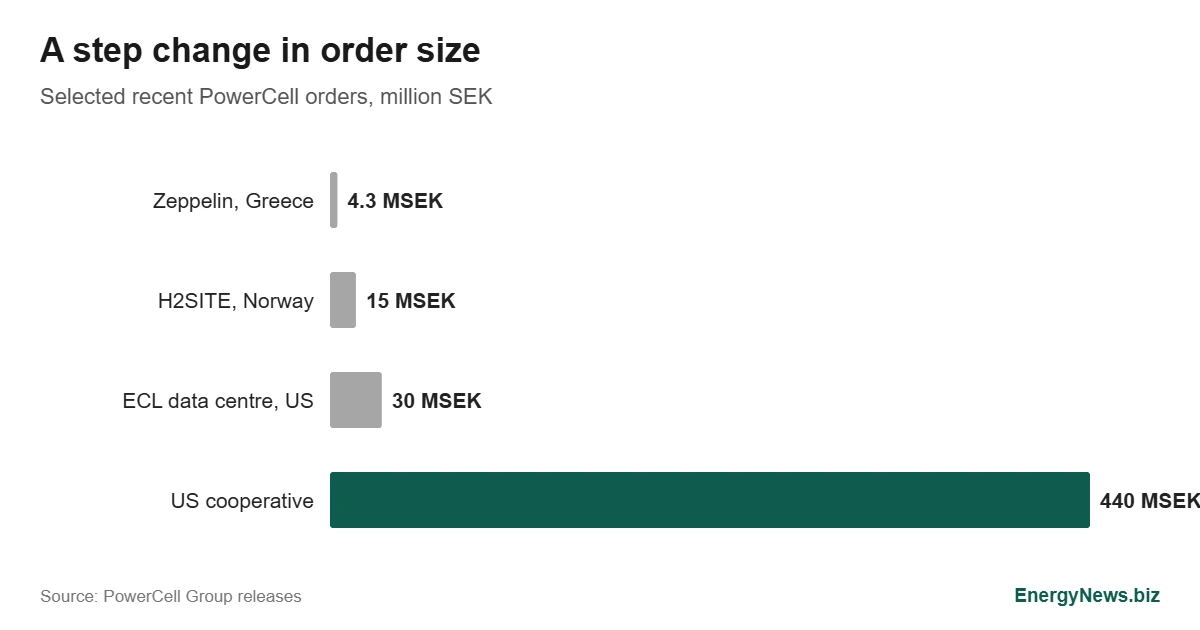
Until now, PowerCell’s power generation orders were small. Recent orders included SEK 4.3 million from Zeppelin Power Systems for a project in Greece, SEK 15 million from H2SITE for an ammonia to power project in Norway, and SEK 30 million from ECL for a data centre campus in California. The cooperative order is almost 15 times the size of the ECL contract. The company says it marks an important step in building power generation into a second major segment next to marine.
For other utilities, the value of this order is as a reference. Once a 20 MW system has run for a year, there will be real data on availability, efficiency and maintenance costs, which is what planners need before they consider hydrogen for firm capacity.
The number to watch
The number to watch is the round trip efficiency the cooperative reports once the system runs, meaning how much of the original solar electricity comes back out of the fuel cells. Results below 35% would keep hydrogen in a niche role; better figures would strengthen the case for long-duration use. PowerCell publishes updates in its investor releases.
Add EnergyNews.biz as a preferred source on Google


