


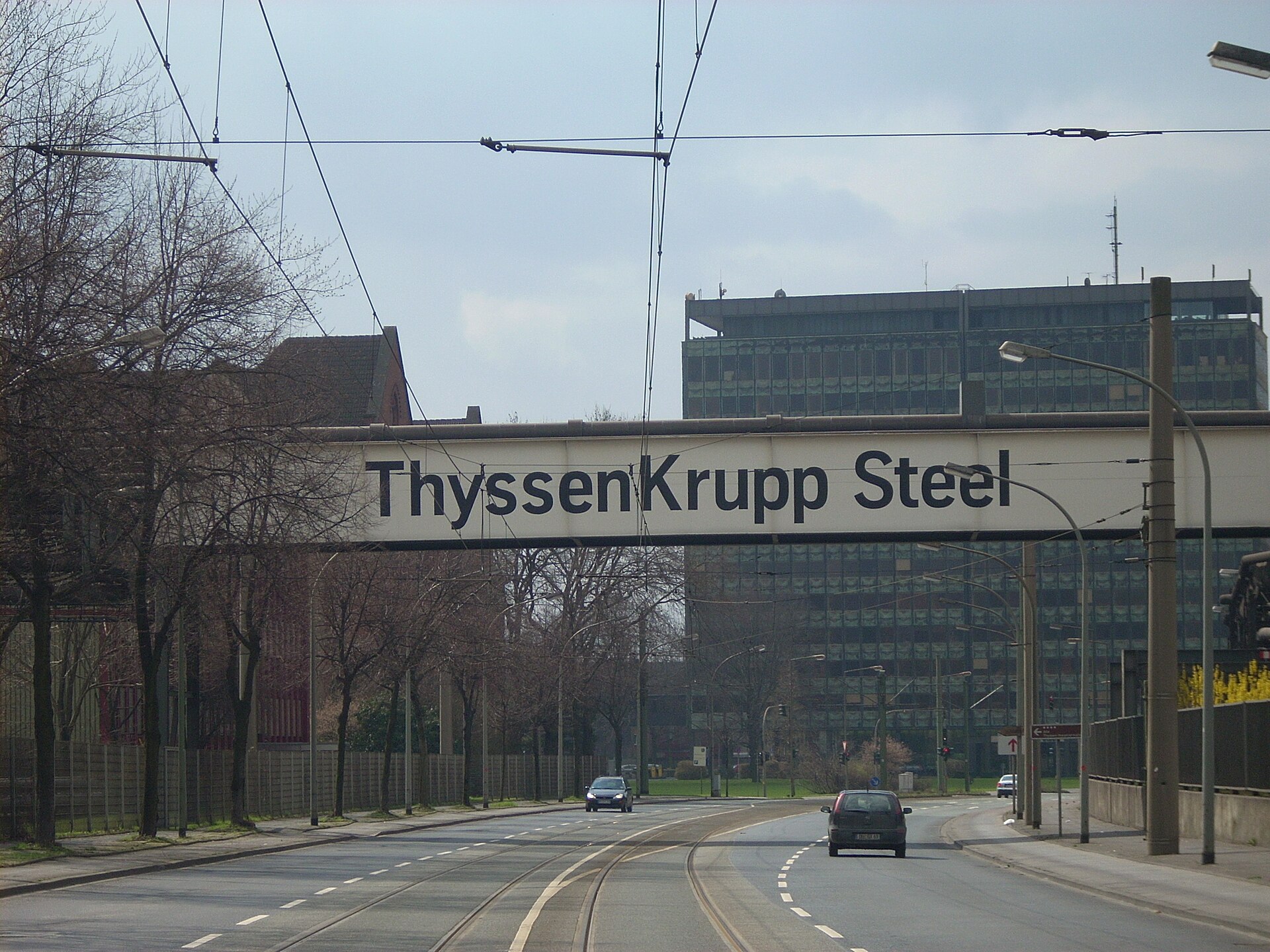


thyssenkrupp Steel has launched a new hydrogen tender to supply the direct reduction plant it is building in Duisburg. The first procurement tranche is expected to cover about 20,000 to 40,000 tonnes of hydrogen a year, with deliveries starting in 2031. Interested suppliers can register until 17 December 2026, after which the bidding phase begins. The final volume will depend on the bids received, mainly on their commercial terms.
The tender is listed on the German public procurement portal DTVP and on Tenders Electronic Daily, the EU’s procurement journal, under notice 807654-2026.
A phased hydrogen tender
The plant is designed to produce 2.5 million tonnes of direct reduced iron a year, which two downstream melters with a combined capacity of 2.3 million tonnes of hot metal a year will process. It will be integrated into Europe’s largest steelworks, leaving the downstream steelmaking unchanged. The investment is about €3 billion, supported by around €2 billion of public funding from the German government and North Rhine-Westphalia.
The plant will first run on natural gas, which already cuts CO2 emissions by more than 50% compared with the blast furnace route. Hydrogen will be introduced from 2031, initially replacing part of the gas, with full hydrogen operation planned later. Running fully on hydrogen, it could avoid about 3.5 million tonnes of CO2 a year. A revised grant decision from Berlin and Düsseldorf now allows this gradual approach, in line with EU state aid rules.
The new hydrogen tender replaces an earlier process. The revised terms tie the ramp-up to hydrogen availability, economic viability and customer demand. The start of the plant itself has moved to 2029 from 2027.
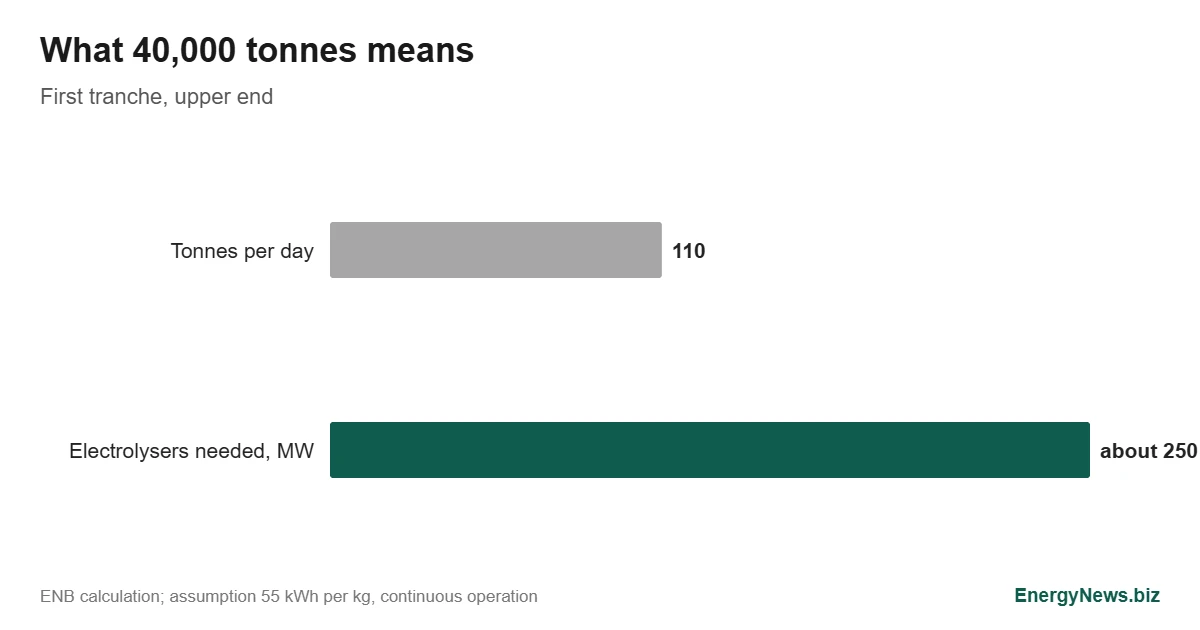
What 40,000 tonnes means
ENB converted the upper end of the tranche into supply terms. 40,000 tonnes a year is about 110 tonnes a day, or 4.6 tonnes every hour of the year. If that hydrogen came from electrolysis using about 55 kWh of electricity per kilogram, a typical figure for today’s systems including losses, producing it would need roughly 250 MW of electrolysers running around the clock. Real plants do not run continuously on renewable power, so the installed capacity behind such a contract would likely be higher.
That puts the tender in the same size class as the largest electrolyser projects now under construction in Europe, such as RWE’s 200 MW plant in Lingen. It also explains why the first tranche is a fraction of full demand. Supplying the whole plant on hydrogen will need much larger volumes and a connection to the planned German core hydrogen network.
Price will decide the outcome. Green hydrogen in Europe still costs several times more than hydrogen made from natural gas, and steel competes in a global market. That is why the hydrogen tender allows the volume to depend on the commercial terms offered, and why the plant can run on gas until hydrogen becomes affordable.
Who can bid in the hydrogen tender
The tender is open to producers and traders who can deliver by pipeline or other means from 2031. Projects linked to the German core network, import terminals in the Netherlands and Belgium, and domestic electrolysis projects in North Rhine-Westphalia are the natural candidates. The bids will also show what price suppliers can offer for long-term contracts, a figure the industry has struggled to publish. Other buyers are testing new supply models too, such as a Japanese project that stores summer solar as hydrogen.
The number to watch is the volume finally awarded. A contract near 40,000 tonnes would signal that suppliers can meet a steelmaker’s price; a volume near the lower end would show the gap remains wide. The notice can be found on Tenders Electronic Daily.
Add EnergyNews.biz as a preferred source on Google


