


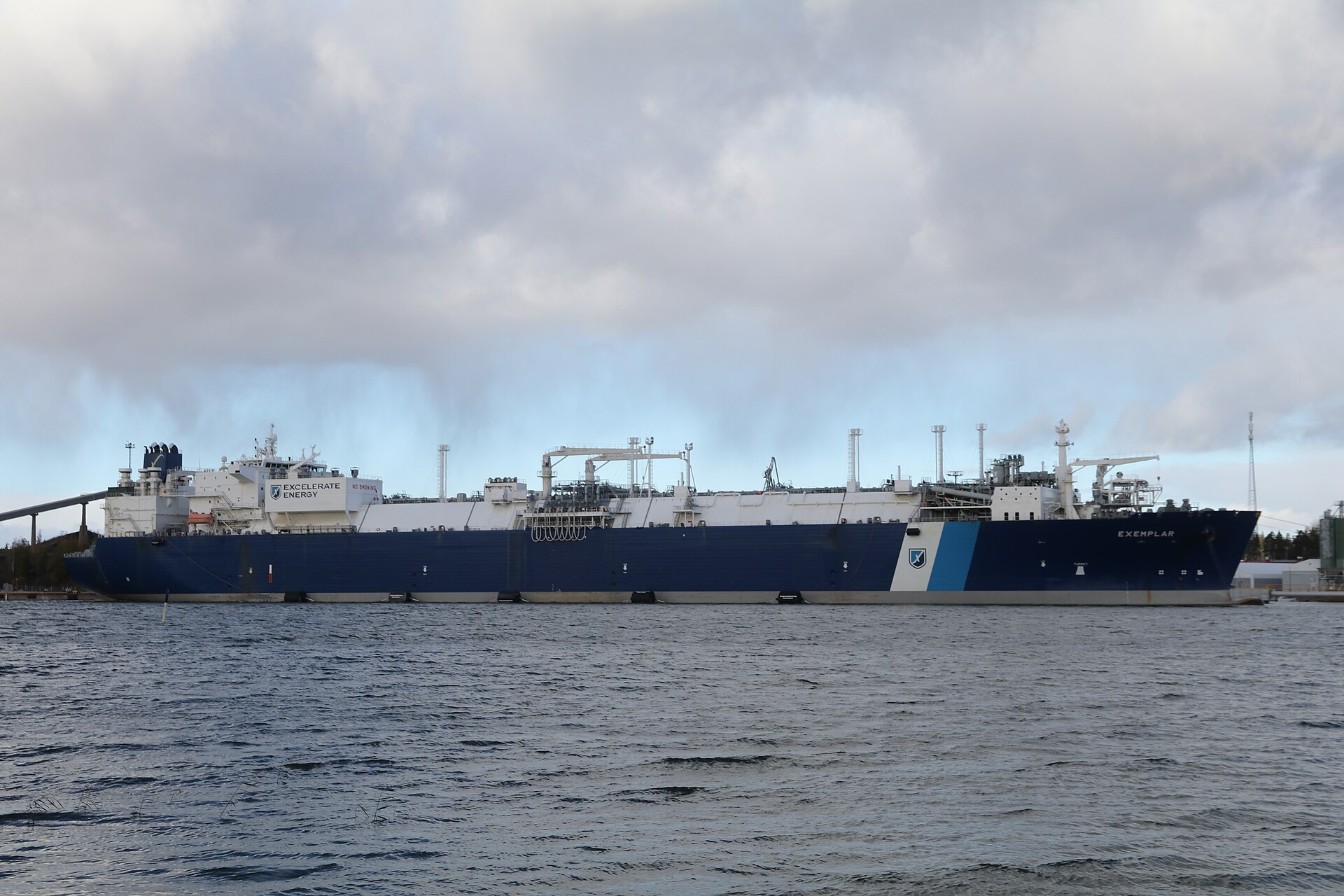


Elenger received another LNG cargo from the United States at the Inkoo LNG terminal in Finland on 25 November to support winter demand across Finland and the Baltic region, CEEnergyNews reported, citing the company. The shipment will help replenish reserves at Latvia’s underground gas storage facility.
The Inkoo LNG winter plan
Elenger plans to deliver one more LNG vessel before the end of the year, followed by two to three vessels early next year. Each tanker carries roughly 1 TWh of gas. Added up, the cargo that arrived this week and the planned shipments amount to about 4 to 5 TWh over the winter.
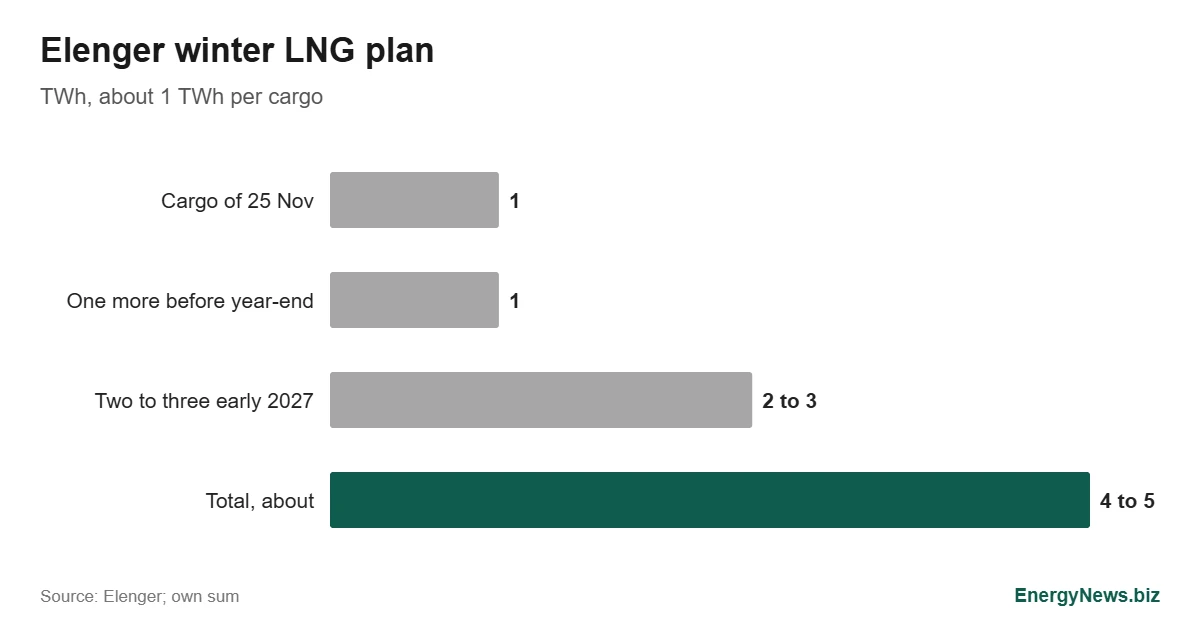
One TWh of gas is about 0.09 billion cubic metres. For context, the Baltic states and Finland together use several tens of TWh of gas a year, so each cargo covers a meaningful slice of winter demand, especially in cold weeks.
How Inkoo LNG reaches Latvian storage
The floating storage and regasification unit at Inkoo connects to the Finnish grid, which links to Estonia through the Balticconnector pipeline. From there, gas flows through Estonia into Latvia, where the Inčukalns underground storage serves the whole region. Gas landed at Inkoo in autumn can be injected into Inčukalns and withdrawn later in winter, which gives the region a buffer against cold spells and supply disruptions.
That route became critical after Finland and the Baltic states stopped buying Russian pipeline gas in 2022. The region now relies on LNG through Inkoo and the Klaipėda terminal in Lithuania, plus the GIPL pipeline to Poland. Damage to the Balticconnector pipeline in October 2023 showed how exposed that system can be; it took months to repair.
Why US LNG
US cargoes have become the main source for many European buyers since 2022, and the share grew in 2026 as Middle East supply was disrupted. The Dutch TTF gas price rose above €100 per MWh at the end of October for the first time since December 2022, which raised the value of gas held in storage. Securing cargoes early for winter protects buyers against further price spikes in cold weeks.
Long-term contracts are also back in Europe. Recent deals, such as Equinor’s 15.3 TWh a year contract with VNG, show buyers locking in supply for many years rather than relying on spot cargoes alone.
Inkoo LNG and the price of security
Keeping a floating terminal at Inkoo costs money even in months with few cargoes. Finland leased the unit after 2022 as a security measure, and its use depends on regional demand and price spreads. Each cargo that Elenger or other shippers bring through Inkoo LNG spreads the fixed cost over more gas. A cold winter with high TTF prices tends to raise terminal use, while a mild winter leaves capacity idle.
Who is Elenger
Elenger is an Estonian energy group active in gas and electricity trading across Estonia, Latvia, Lithuania, Finland and Poland. It has been one of the main users of the Inkoo LNG terminal since it opened, bringing cargoes for its customers in the region.
What to watch
- Storage levels at Inčukalns through January and February, the coldest months.
- The source of the next cargoes, and whether all come from the US.
- Regional gas prices compared with TTF, which show whether the Baltic market is tight.
- Any disruption to Balticconnector or other subsea links, which would cut Inkoo LNG flows to the south.
For the region, Inkoo LNG has become a core part of winter security. Each 1 TWh cargo replaces gas that came by pipeline from Russia before 2022, and the planned four to five cargoes this winter show that LNG is now the default, not the emergency option.
Add EnergyNews.biz as a preferred source on Google


