


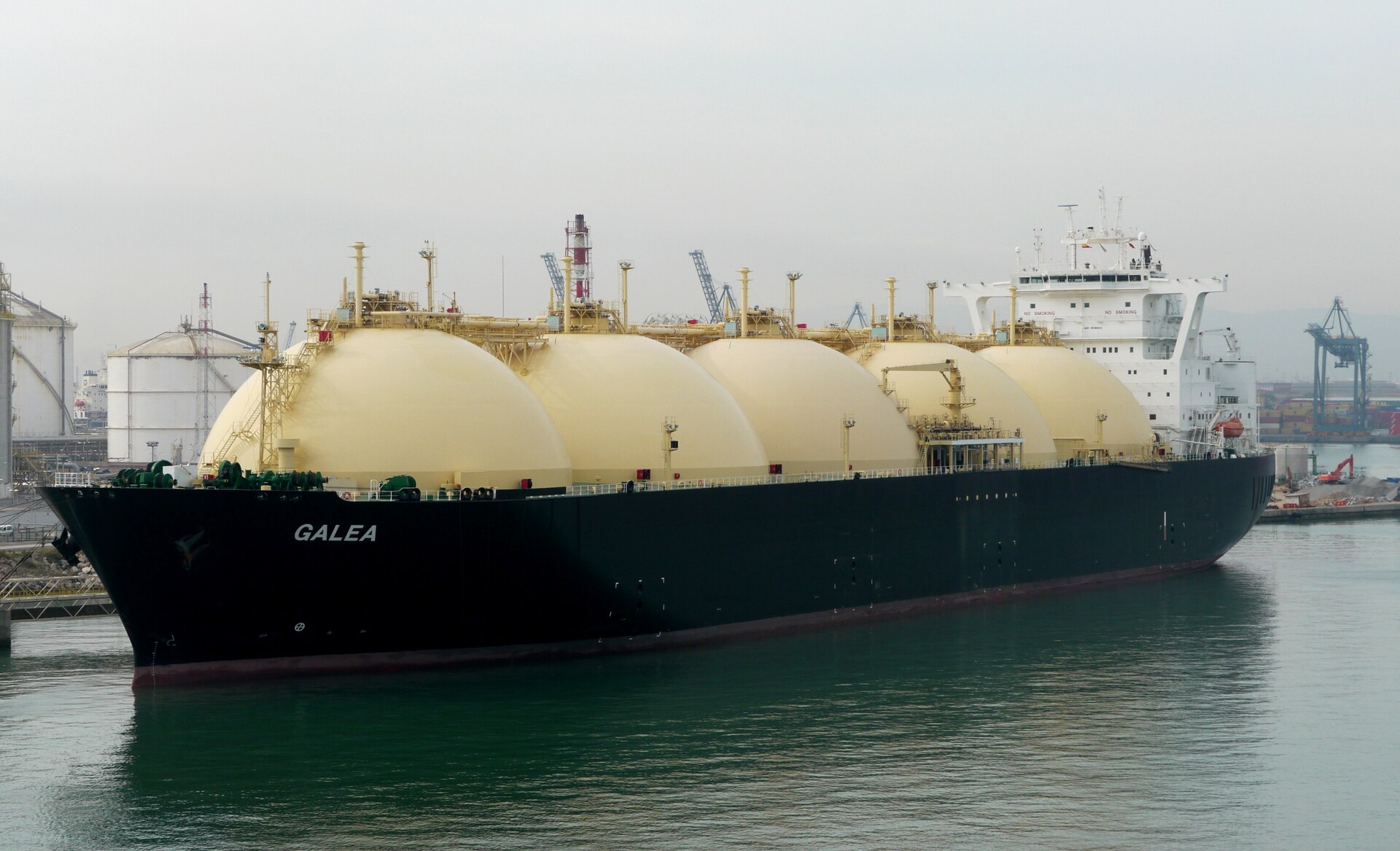


A nuclear LNG carrier has moved a step closer to the drawing board. South Korean shipbuilder Samsung Heavy Industries and US reactor developer Tesser Atomics have entered an exclusive collaboration on a demonstration project for a transatlantic nuclear-powered LNG carrier, under a memorandum of understanding signed in Norway on 19 November, World Nuclear News reported. Samsung Heavy becomes Tesser’s exclusive shipbuilder, and Tesser becomes Samsung Heavy’s exclusive reactor partner for the demonstrator.
The project grew out of NuProShip, a Norwegian research programme that evaluated reactor technologies for merchant ships, and continues in the Norwegian consortium SFI SAINT, led by the Norwegian University of Science and Technology (NTNU). Classification society DNV is involved in the Norwegian work.
The reactor behind the nuclear LNG carrier
Tesser’s Triton design pairs TRISO fuel, in which uranium is sealed in ceramic-coated particles, with a low-pressure molten salt coolant and online refuelling. The company says the module is small enough to fit the ship and powerful enough to propel it. Tesser was co-founded by Per Peterson, who also co-founded Kairos Power, which builds the same type of fluoride salt-cooled reactor for land-based grids.
Samsung Heavy is not new to the idea. In 2025 it won an approval in principle from the American Bureau of Shipping and the Liberian flag for a 174,000 m3 LNG carrier powered by a molten salt reactor, designed with the Korea Atomic Energy Research Institute. In July 2026 it signed a separate agreement with Sargent and Lundy to design a floating small modular reactor platform.
What one nuclear LNG carrier would save
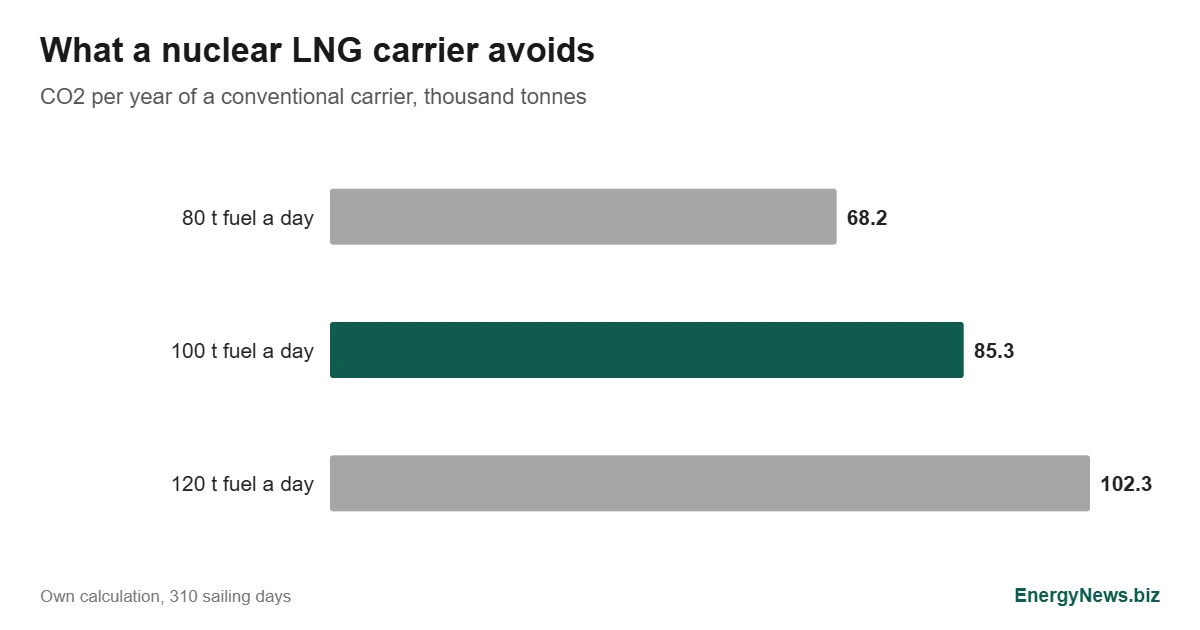
The companies have not published fuel or emissions figures, so the calculation below uses stated assumptions. A modern 174,000 m3 LNG carrier with dual-fuel engines burns roughly 80 to 120 tonnes of LNG a day at service speed, depending on speed, weather and engine type. On a route between the US Gulf Coast and Northern Europe, a ship can sail around 310 days a year.
- At 100 tonnes a day, that is about 31,000 tonnes of LNG burned a year.
- Each tonne of LNG burned releases about 2.75 tonnes of CO2, so the ship emits about 85,000 tonnes of CO2 a year.
- At 80 or 120 tonnes a day, the range is about 68,000 to 102,000 tonnes.
The figures exclude methane slip from engines, which adds climate impact, and the boil-off gas that a nuclear-powered ship would have to reliquefy or deliver instead of burning. A nuclear LNG carrier would also deliver more cargo, since the boil-off normally used as fuel stays in the tanks.
Why the transatlantic route
US LNG exports to Europe have become a core part of European supply since 2022, as shown by long-term deals such as Equinor’s new contract with VNG on the pipeline side. A fixed shuttle between a few terminals suits nuclear shipping: it limits the number of ports that must accept a reactor-powered vessel and the number of regulators involved.
Port access remains the hardest problem. Norway has experience with nuclear-powered naval visits, according to NTNU’s Hans Petter Hildre, quoted by World Nuclear News. Commercial vessels face a different legal regime, insurance questions and public acceptance in each port.
The cost side of a nuclear LNG carrier
A reactor removes the fuel bill but adds capital cost, a nuclear-qualified crew and decommissioning. No price has been published for the Triton module. The economics depend on how many years the ship can run without refuelling and on the value of carbon savings under EU rules. A nuclear LNG carrier that sails 25 years on one shuttle route spreads those fixed costs over a long life.
What to watch
- Whether a shipowner or charterer joins the demonstrator, since no buyer has been named.
- Progress on IMO rules for nuclear merchant ships, which date from the 1980s and need updating.
- Licensing of the Triton reactor, which has not yet been approved by any regulator.
- Insurance terms, which will decide whether the economics work even if the technology does.
The nuclear LNG carrier would replace a fuel bill and an emissions bill with a reactor and its fuel. At about 31,000 tonnes of LNG a year, the fuel bill alone is in the tens of millions of dollars per ship, and EU carbon rules now apply to most of the emissions on voyages to European ports.
Add EnergyNews.biz as a preferred source on Google


