


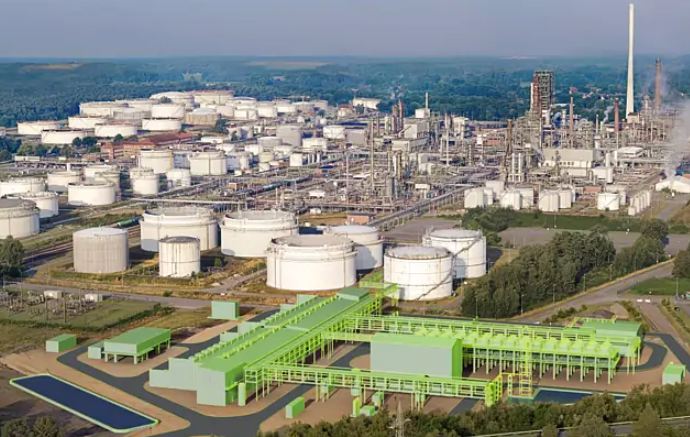

Germany’s green hydrogen pipeline continues to move selectively from strategy papers to steel in the ground, with bp confirming a 100 megawatt electrolyzer project that, once commissioned in 2027, is expected to produce up to 11,000 metric tons of green hydrogen annually. The contract awarded to Bilfinger, as part of a consortium responsible for prefabrication, assembly, and installation of key plant components, provides a window into how large energy companies are now prioritizing execution capacity over headline ambition.
At 100 megawatts, the project is positioned at the upper end of electrolyzer installations currently under construction in Germany. While several larger projects have been announced across Europe, many remain tied to uncertain power sourcing agreements, permitting timelines, or offtake structures. bp’s decision to fully own and operate the facility marks a notable deviation from joint venture-heavy models that have dominated early hydrogen development, suggesting a tighter integration with existing industrial assets and balance sheet control.
The expected output of 11,000 tons per year implies utilization assumptions that depend heavily on access to competitively priced renewable electricity. In Germany’s increasingly constrained power market, this remains a critical variable. Wholesale electricity prices have shown volatility driven by weather patterns, grid congestion, and the pace of renewable expansion, all of which directly affect hydrogen production costs. Without long term power purchase agreements at stable prices, the economic profile of a 100 megawatt electrolyzer remains sensitive, even before accounting for capital expenditure and operational complexity.
Bilfinger’s role focuses on the less visible but often risk defining aspects of hydrogen projects. Piping systems, insulation, and HVAC installations are central to safety, efficiency, and long term operability, particularly at this scale. Hydrogen’s material compatibility requirements and leak sensitivity raise execution standards well above those of conventional industrial plants. The involvement of more than 200 specialists during peak construction phases underscores the labor intensity and technical depth required, which in turn has implications for project timelines and cost control across Germany’s emerging hydrogen buildout.
The project’s planned connection to the hydrogen core network is strategically significant but not without uncertainty. Germany’s hydrogen backbone is still under phased development, with rollout schedules and capacity constraints varying by region. While network access is often cited as a pathway to diversified industrial offtake, delays or limited initial capacity could restrict early volumes, pushing more hydrogen toward captive use in bp’s neighboring refinery. That application aligns with current market realities, where refinery decarbonization remains one of the few segments capable of absorbing higher cost green hydrogen without immediate exposure to fully competitive markets.
Statements framing the project as a milestone for Germany’s hydrogen infrastructure reflect broader industry narratives, but the underlying test will be replication. A single 100 megawatt plant, even if delivered on time, does not resolve the structural challenges facing green hydrogen in Germany, including power price competitiveness, permitting timelines, and demand side willingness to absorb premium fuels. What it does demonstrate is a gradual shift toward fewer, larger, and more tightly integrated projects that emphasize industrial feasibility over volume of announcements.
As commissioning approaches in 2027, the bp project will serve as a reference point for whether Germany’s hydrogen strategy can translate policy support and infrastructure planning into operational assets with predictable performance. The outcome will matter not just for bp and its contractors, but for a market still balancing long term decarbonization targets against near term economic and grid realities.


