


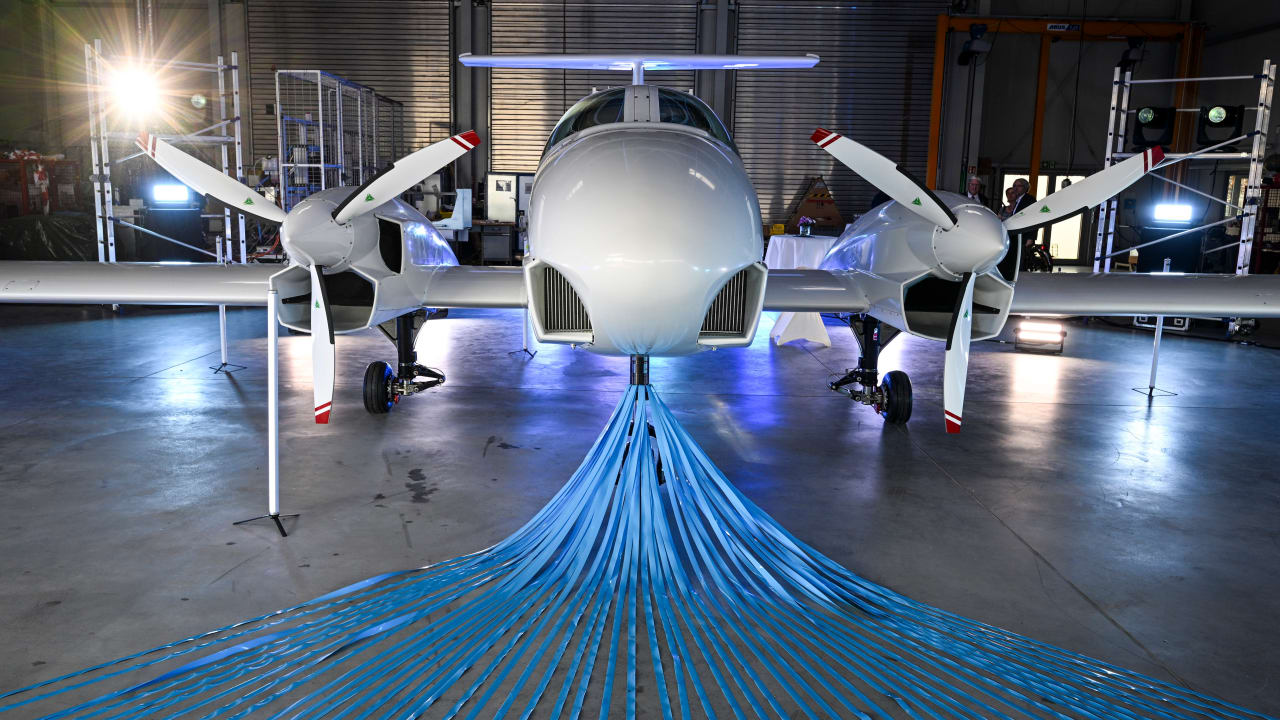


The four-seater aircraft by manufacturer Apus is powered by hydrogen, designed to cover up to 900 kilometers and reach speeds of 300 kilometers per hour.
Hydrogen-Powered Aircraft
In an innovative design, the wings contain tanks for gaseous hydrogen. Two fuel cells in the nose generate electricity by reacting hydrogen with oxygen. This electricity drives two motors; the only emission produced is water vapor.
Unique Wing Design
CEO Phillip Scheffel explained the aircraft’s unique wing design. It features a straight middle section to accommodate the hydrogen tanks. The wing profile is thicker to carry more hydrogen. The nose of the aircraft is also larger to fit all necessary systems.
Development Timeline
The prototype took three years to build and ten years of research. It is now ready for its first real test. Hydrogen power is heavier than traditional systems, and its energy storage density is inferior to fossil fuels. Due to the lack of operational experience, reliability remains uncertain.
Upcoming Tests
Ground and taxi tests will be conducted over the next three months, with the first flight scheduled for early 2025.
Economic and Environmental Goals
The emissions-free plane aims to be environmentally friendly and economically competitive with fossil-fuel-powered private jets.
Efficiency and Cost Considerations
This can be achieved through longer operational lifespans. Both electric motors and fuel cells have longer lifespans. If hydrogen prices drop below six euros per kilogram, the hydrogen-powered plane could be cheaper than its fossil fuel counterparts. Its speed and range are already competitive. Plans include models with up to 19 seats.
Potential and Future Plans
The innovative hydrogen aircraft is poised to revolutionize air travel, balancing environmental sustainability and cost-efficiency. As technology advances, larger models and greater capabilities are on the horizon.
Add EnergyNews.biz as a preferred source on Google


