


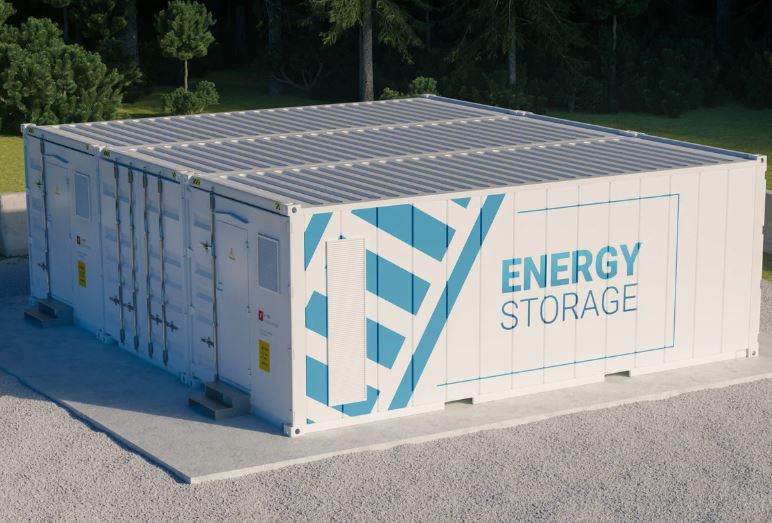

California’s approval of a 500 MW energy storage project capable of delivering power continuously for up to eight hours underscores how rapidly long duration storage is moving from modeling exercise to permitting reality.
The California Energy Commission has issued its final permit for Hydrostor’s 500 MW 4 GWh Willow Rock Energy Storage Center in Kern County, a decision that aligns with state estimates showing California may need up to 37 GW of long duration storage to fully replace gas fired generation by 2045.
Willow Rock is notable not just for its scale but for the technology pathway it represents. Hydrostor’s advanced compressed air energy storage system stores electricity by compressing air into purpose built underground caverns while capturing the heat generated during compression in a thermal storage system. When electricity is needed, the stored air is released, reheated using the captured thermal energy, and expanded through turbines to generate power. By avoiding fossil fuel combustion during discharge, the system addresses a long standing drawback of conventional compressed air storage and positions itself as a zero emission firming resource for renewable heavy grids.
The project will occupy 89 acres of private land in a sparsely populated area of Kern County, historically associated with oil and gas production. It will interconnect to Southern California Edison’s Whirlwind Substation through a new 230 kilovolt transmission line stretching roughly 19 miles. The facility design includes four power turbine trains, each with independent electric drivetrains and generators, sharing a common thermal storage system and air cavern infrastructure. This modular architecture is intended to support scalability while maintaining operational redundancy.
Hydrostor expects to break ground in mid 2026, although the company has until December 2030 to begin construction before requiring an extension from the CEC. The long permitting runway reflects both the complexity of subsurface infrastructure and the cautious pace at which regulators are approaching novel storage technologies. For California, the approval sends a signal that alternatives to lithium ion batteries are being actively integrated into long term system planning rather than treated as speculative options.
Cost competitiveness remains central to whether projects like Willow Rock can scale. Hydrostor has previously indicated installed costs of roughly $3,000 per kilowatt for a ten hour system, with incremental costs of about $50 per kilowatt hour for additional duration. While higher than short duration lithium ion batteries on a per kilowatt basis, these figures compare more favorably when stacked against the rising costs of new gas fired generation. Independent analysis has shown recent quotes for combined cycle gas turbines often exceeding $2,000 per kilowatt, narrowing the historical cost gap between firm thermal capacity and long duration storage.
Operational track record is still limited. Hydrostor has operated a small 1.75 MW 7 MWh commercial reference facility in Ontario since 2019, but Willow Rock would be among its first projects to reach true utility scale operation, alongside the 200 MW 1.6 GWh Silver City project in New South Wales that recently secured key permits. The leap from demonstration scale to hundreds of megawatts will be closely watched by utilities, financiers, and regulators evaluating whether compressed air can complement or eventually displace gas for reliability services.
Beyond California, Hydrostor reports more than 6 GW of projects in earlier development stages across Australia, the United Kingdom, and the southwestern United States, with multiple 500 MW proposals in Nevada, Arizona, New York, and additional sites in California. The common thread across these regions is high renewable penetration and growing curtailment risk, conditions where multi hour and multi day storage becomes more valuable than short duration systems.
For California’s grid planners, Willow Rock highlights a broader shift in thinking. As renewable generation continues to expand, reliability challenges are increasingly defined by duration rather than instantaneous power.


