





Chile’s ambition to become one of the world’s leading green hydrogen exporters has reached a significant regulatory milestone with the environmental approval of the $2.5 billion Volta green hydrogen and green ammonia project in Mejillones.
The decision marks one of the most substantial advances for the country’s hydrogen sector at a time when many large-scale projects globally continue to face financing, permitting, and demand-side challenges.
The approval comes as governments and developers worldwide attempt to bridge the gap between ambitious hydrogen strategies and commercial reality. While hundreds of green hydrogen projects have been announced over the past five years, only a limited number have progressed beyond early development stages. Rising capital costs, uncertainty surrounding offtake agreements, and slower-than-expected industrial demand have led to delays across several major markets, making regulatory approvals increasingly important indicators of project maturity.
Chile has long been viewed as a strong candidate for large-scale green hydrogen production due to its exceptional renewable energy resources. The country’s northern regions benefit from some of the world’s highest solar irradiation levels, providing an opportunity to generate low-cost renewable electricity, which remains the most critical factor in reducing green hydrogen production costs.
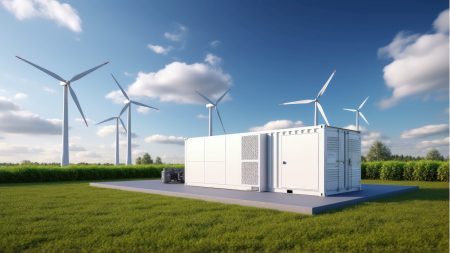
The Volta project, developed by MAE and located at the port of Mejillones, is designed as a fully integrated green hydrogen and green ammonia facility. According to project plans, the development will include a 600 MW photovoltaic power plant supported by four energy storage units. The renewable electricity generated by the facility will be used to produce hydrogen through electrolysis, with the hydrogen subsequently converted into green ammonia for storage, transportation, and export.
The project is expected to produce approximately 620,000 metric tons of green ammonia annually once operational. If achieved, that level of production would place the facility among the larger green ammonia developments currently under construction or development globally and strengthen Chile’s position within emerging international hydrogen trade corridors.
The emphasis on ammonia reflects broader market realities. While hydrogen is increasingly viewed as a critical component of industrial decarbonization strategies, transporting pure hydrogen over long distances remains technically complex and expensive. Ammonia offers a more practical export pathway because it can utilize existing shipping infrastructure and established global commodity markets. As a result, many of the world’s largest hydrogen projects are prioritizing ammonia production as a means of accessing international demand.
However, environmental approval represents only one phase of project development. Across the global hydrogen industry, securing financing and long-term customer commitments has become the primary bottleneck. Developers must demonstrate that green ammonia can compete economically against conventional ammonia produced from natural gas, particularly in regions where carbon pricing mechanisms remain limited or inconsistent.
The scale of the Volta project also highlights the growing importance of renewable energy integration and energy storage. Producing hydrogen at industrial volumes requires reliable electricity supply, yet solar generation is inherently variable. The inclusion of dedicated storage infrastructure suggests recognition that maintaining stable electrolyzer operations will be essential to achieving targeted production volumes and improving overall project economics.
For Chile, the approval aligns with broader industrial policy objectives aimed at diversifying exports beyond traditional mining activities. The country has promoted green hydrogen as a future growth sector capable of leveraging existing renewable energy advantages while creating new industrial value chains. Success, however, will depend on whether projects can move beyond regulatory milestones and achieve commercial operation at competitive costs.
The Committee of Ministers’ approval package extended beyond hydrogen. Authorities also approved the Pudahuel Urbanya Phase I residential development project, representing an investment of more than $203 million and including plans for 1,183 housing units. Additionally, environmental authorization was granted for the Ciclón-Exploradora underground polymetallic mining project, a development recently acquired by Australia’s Norfolk Metals as part of a transaction valued at $50 million and supported by a broader investment plan estimated at $125 million.
While these projects span different sectors, the Volta development attracted particular attention because it addresses a central question facing the global energy transition: whether large-scale green hydrogen production can move from policy ambition to industrial deployment. Chile’s abundant renewable resources provide favorable conditions, but the project’s long-term significance will ultimately depend on execution, cost competitiveness, and the emergence of sufficient global demand for green ammonia and other low-carbon fuels.