




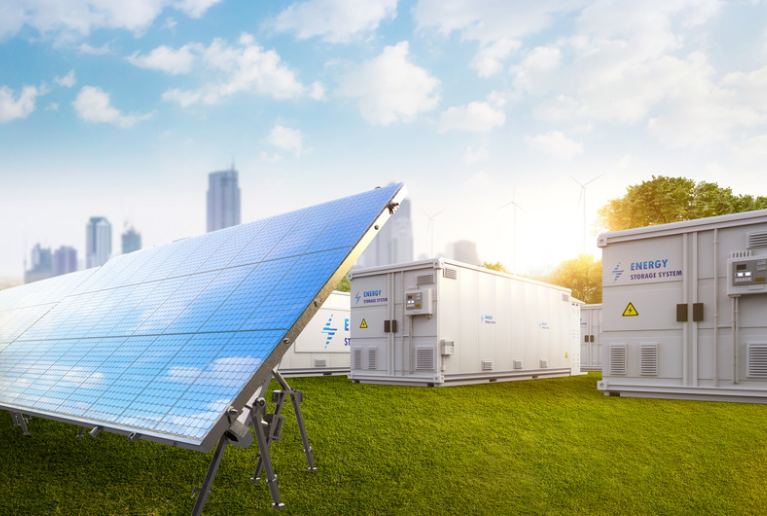
California’s growing electricity demand and renewable integration challenges are increasing the importance of hybrid solar and battery storage projects capable of delivering both clean energy and grid flexibility. The BigBeau Solar+Storage Project in Kern County is the latest example of this shift, with EDF power solutions North America and Abu Dhabi Future Energy Company, Masdar, securing 15 year power purchase agreements covering output from the 128 MWac solar facility and its 40 MW/160 MWh battery energy storage system.
The agreements, which began delivering electricity to Southern California Edison (SCE) on February 1, 2026, highlight the changing structure of renewable energy procurement in the United States. Utilities are increasingly moving beyond standalone renewable generation contracts and prioritizing projects that combine clean electricity production with storage capabilities to better manage variability and support grid reliability.
The BigBeau project has been operational since December 2022 and represents one element of a broader partnership between EDF power solutions and Masdar. The two companies have agreed to develop seven projects with a combined capacity of approximately 1.1 GW, reflecting the increasing scale of utility and commercial demand for renewable energy assets paired with storage.
The inclusion of battery storage is central to the project’s value proposition. Solar generation typically peaks during daylight hours, while electricity demand often rises later in the day when solar output declines. Battery systems allow renewable power generated during periods of high production to be shifted into higher demand periods, reducing pressure on the grid and improving renewable energy utilization.
The BigBeau battery system, rated at 40 MW with 160 MWh of storage capacity, provides four hours of energy duration. This configuration aligns with the growing preference for longer duration storage projects in markets where grid operators require more flexibility to balance renewable generation and demand patterns.
California has been one of the most active markets for battery storage deployment because of its aggressive clean energy targets and rapidly increasing renewable generation capacity. However, the state’s transition has also exposed operational challenges, including periods of excess solar generation during midday hours and increased demand for electricity after sunset. Storage has become a key mechanism for addressing these mismatches.
The long term contracts with SCE provide revenue certainty for the project while supporting the utility’s clean energy procurement strategy. For developers, agreements of this length are increasingly important because large scale renewable and storage projects require substantial upfront investment and depend on predictable cash flows.
For Masdar, the project expands its presence in the US renewable energy market. The company entered the US market in 2019 and has focused on building a portfolio of clean energy assets designed to support rising electricity demand while improving energy resilience. The company has stated ambitions to develop up to 25 GW of renewable energy capacity in the United States over the next decade.
The investment interest from international energy companies reflects a broader shift in global capital flows toward US renewable infrastructure. The combination of electricity demand growth, industrial electrification, data center expansion, and state level climate policies has created strong demand for new generation capacity.
At the same time, renewable energy developers face a more complex operating environment. Projects must increasingly address not only generation costs but also grid connection constraints, transmission availability, storage requirements, and market participation strategies. As renewable penetration increases, the ability to provide predictable energy delivery becomes increasingly valuable.