






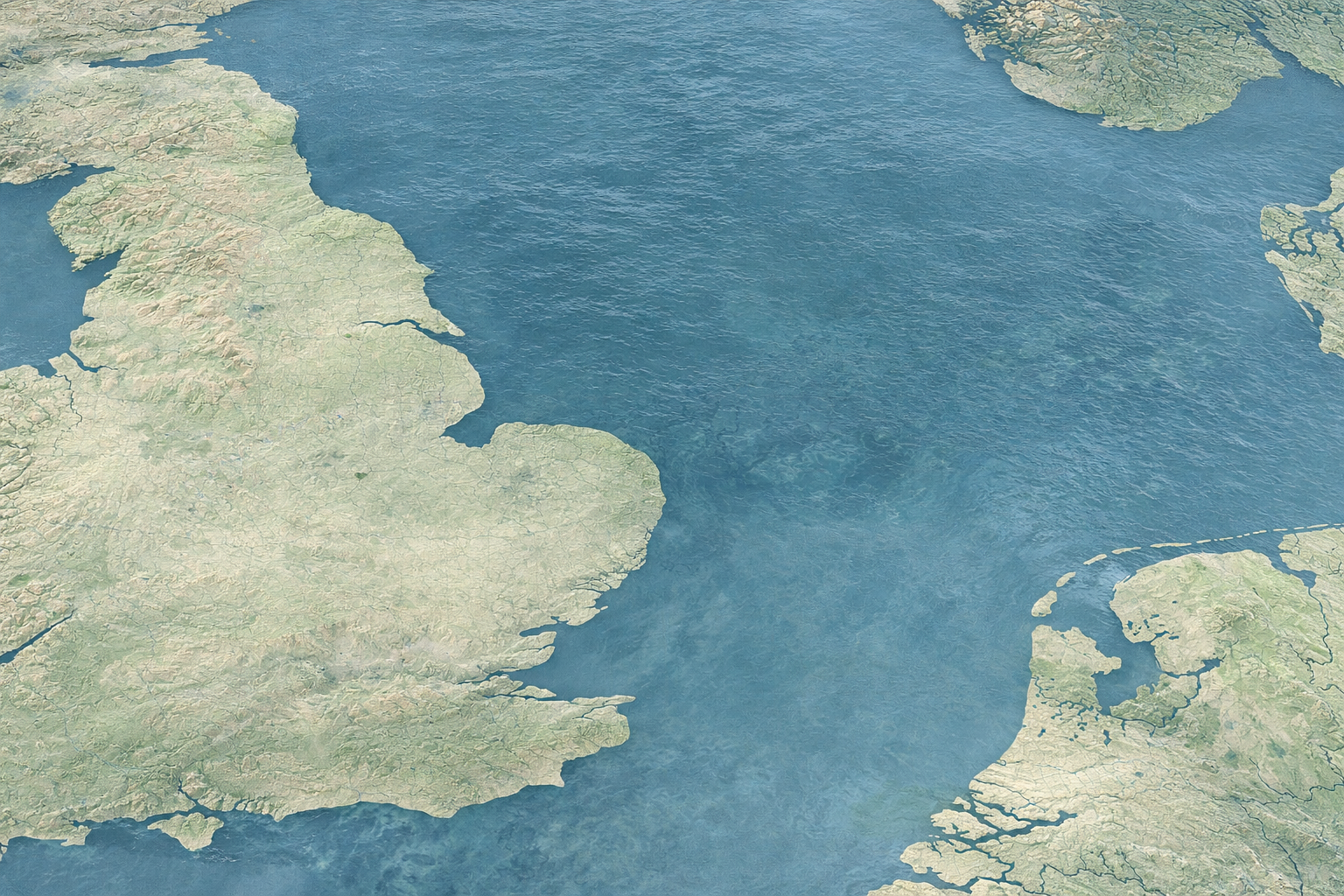
Norway expects to receive approximately $78 billion from its oil and gas sector this year in the form of taxes and dividends, derived from a fiscal regime that charges Equinor 78% in effective tax on Norwegian Continental Shelf profits and in which the state owns 67% of the company. The UK, operating the same geology on the other side of the median line, has averaged approximately £2.5 billion per year in oil and gas tax receipts over the past decade, a period that included both a Conservative government that slashed sector taxes to stabilise production and a windfall tax imposed after Russia invaded Ukraine temporarily pushed prices high enough to collect meaningful revenue. The gap between these two outcomes is not primarily geological. It is the product of fiscal and regulatory instability that has made the UK continental shelf a uniquely unattractive long-term investment environment by the standards of comparable hydrocarbon provinces.
This is the context in which the UK political debate about North Sea drilling is being conducted, and it is a context that most of the debate ignores in favour of more emotionally resonant framings. Proponents of resuming North Sea exploration emphasise energy security and price reduction. Opponents emphasise climate leadership. Both sets of claims require scrutiny against the actual data, which is less flattering to either side than the political discourse typically acknowledges.
What More Drilling Would Actually Produce
The North Sea Transition Authority projects a dramatic and inevitable decline in UK Continental Shelf output even if new licences are issued. The difference between the NSTA baseline projection and the more optimistic forecast from Offshore Energies UK amounts to approximately 10 million tonnes of oil equivalent per year by 2035. Annual gas demand across Europe, including both EU and non-EU markets, is around 50 times that figure. The claim that extracting additional output from a declining resource on the UK shelf would meaningfully push down UK gas prices is not supported by the arithmetic of European gas market integration.
The UK is connected to continental European gas markets through multiple pipelines, and to Norway through infrastructure that transmits price signals efficiently across the continent. Any reduction in UK production costs would be absorbed into the European price equilibrium rather than producing a distinct UK price discount. The same applies to fracking: the best available estimate of how much fracked gas could be produced in the UK is another 10 million tonnes of oil equivalent per year over 30 years, a volume that similarly falls well below the threshold required to move European prices.
The resilience argument for increased domestic production is marginally stronger but still limited. Gas delivered by domestic pipeline is more insulated from spot price volatility in global LNG markets than imported cargoes, and in an extreme supply disruption scenario a government retains the option of requisitioning and managing domestic production. But there is no feasible scenario in which the UK can insulate itself from global energy markets through domestic production levels alone, and the resilience benefit of producing 10 additional million tonnes of oil equivalent per year needs to be weighed against the policy and capital costs of achieving it.
The Climate Arithmetic That Both Sides Get Wrong
On the climate question, both dominant positions in the UK debate misstate the relevant numbers in ways that serve their political arguments.
Offshore Energies UK argues that liquefied natural gas imported from countries such as the United States generates four times the carbon emissions of UK-produced North Sea gas. This figure isolates liquefaction, shipping, and regasification emissions while ignoring combustion, which accounts for the overwhelming majority of lifecycle emissions from natural gas consumption. When combustion is included, US LNG is approximately 14% more carbon-intensive than UK domestic gas, not 400%. The industry’s framing is calculated to create the impression that reducing LNG imports has a climate benefit roughly 30 times larger than the data supports.
The opponents of drilling are not on firmer ground. The UK is responsible for less than 1% of total global emissions. Decisions about North Sea extraction by one mid-sized European economy have negligible direct climate impact. The strongest version of the anti-drilling argument relies on signalling effects: the UK has historically been among the most credible climate actors internationally, and a reversal of its no-new-licences position would reduce its moral authority to press other governments toward more ambitious action. This is a legitimate concern, but it requires an empirical case that UK signalling translates into changes in other countries’ behaviour that are large enough to justify the domestic political and economic costs of maintaining the policy. That case has not been made rigorously.
Using gas from the UK continental shelf would reduce lifecycle emissions by up to 18% compared to importing LNG from the United States and by more compared to some other sources. This is a genuine reduction, though a modest one in absolute terms, and it does not change the fundamental reality that burning any natural gas releases CO2 regardless of where it was produced.
The Norway Lesson That Nobody in UK Politics Wants to Learn
Equinor CEO Anders Opedal’s explanation of why the company continues investing in the Norwegian continental shelf despite a 78% effective tax rate is the most instructive part of the North Sea debate and the part most conspicuously absent from UK political discourse. The answer is not that the tax rate is attractive. It is that the framework has been stable and predictable across multiple election cycles, allowing the multi-decade investment planning that offshore hydrocarbon development requires.
In Norway, bipartisan political consensus on energy policy has persisted for decades, with consistent acreage allocation, stable fiscal terms, and a state ownership model that aligns the government’s financial interests with the sector’s performance. The result is that Norway receives $78 billion per year from a 78% tax on an industry that continues to invest heavily in new production precisely because the tax rate is known, stable, and priced into investment decisions rather than subject to reversal in the next electoral cycle.
The UK has provided none of that consistency. Oil and gas taxes have oscillated between breaks designed to stimulate production and windfall levies designed to capture price upside, within cycles short enough that no company can rely on the fiscal framework surviving the investment horizon of a major offshore project. The Energy Secretary in 2024 claimed that opening the North Sea would generate £50 billion in tax over five years, a figure of around £10 billion per year that bears no relationship to the sector’s actual average tax contribution. A more defensible estimate of £2.5 billion per year, which is the average of the past decade including windfall tax receipts, would cover less than 0.2% of annual UK government expenditure.
The Equinor comparison also illustrates a structural difference in who captures the benefit. Norway owns 67% of Equinor, meaning the state receives not only tax revenue but the majority of dividends, and the accumulated surplus funds one of the world’s largest sovereign wealth funds. The primary beneficiaries of UK North Sea production have been the shareholders of Shell, BP, and other international operators, including UK pension funds but also a broad base of global investors. The difference in outcome is not a consequence of different geology, as Opedal explicitly confirms that the Norwegian and UK continental shelves share the same geological characteristics and production potential. It is a consequence of different ownership structures and different fiscal frameworks maintained by governments with different levels of political stability on energy policy.
The debate in the UK is currently structured around a binary choice between opening the North Sea and closing it, framed as a contest between energy security and climate responsibility. Neither framing engages with the question of how the UK might extract greater public value from whatever production it does license, or how it might provide sufficient long-term policy stability to attract the investment that would make that production possible. Norway answered both questions decades ago and is collecting $78 billion this year as a result.