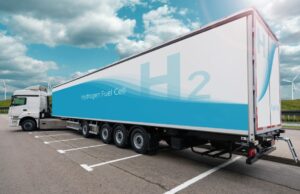





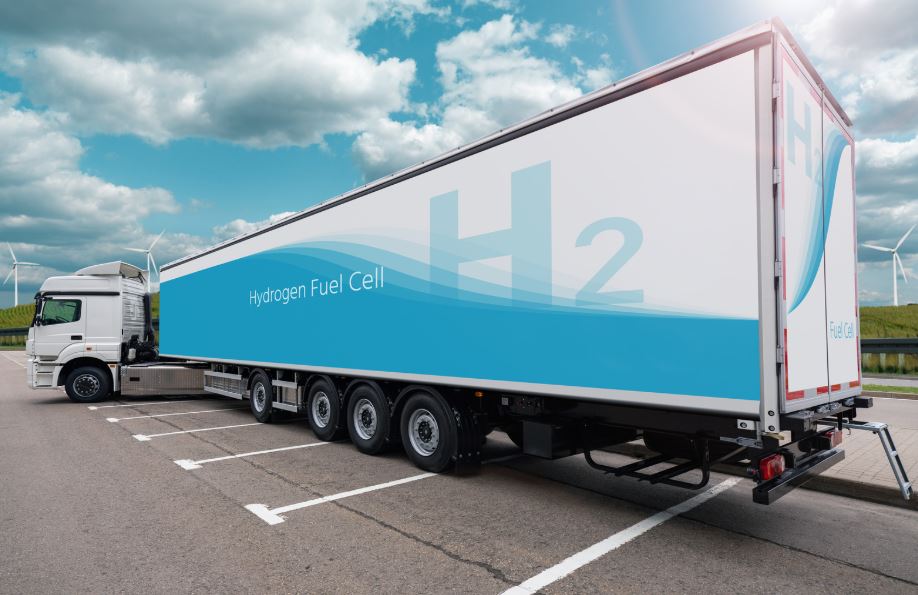
Europe’s public hydrogen refueling station count barely moved between 2023 and May 2026, rising from 178 to 179 sites, even as the underlying network was almost entirely rebuilt. Stations built for passenger cars at 700 bar collapsed from 108 to 32 over the same period, while dual-pressure sites designed for trucks rose from 50 to 129. The coalition of Daimler Truck, Volvo, Toyota, Bosch, Air Liquide, TotalEnergies, Teal Mobility and MB Energy, set to detail its refueling network plans in Hanover on September 15, is proposing to build on top of a market that has already gone through one expensive failure.
Germany’s H2 Mobility, the country’s largest hydrogen station operator, closed 22 of its roughly 100 public 700-bar sites across 2025, eleven by the end of March and eleven more by June, citing uneconomic utilization at stations built more than a decade earlier when forecasts assumed hundreds of thousands of fuel cell passenger cars would be on German roads by the 2020s. That never happened. Germany’s own National Organization Hydrogen and Fuel Cell Technology reported average station utilization hovering around just 20% before the closures, a rate that leaves fixed costs, compressor maintenance, chiller servicing, and safety inspections largely uncovered regardless of whether one car or fifty visits a site on a given day. The operator has since pivoted toward larger, dual-pressure sites intended to serve trucks and buses, but a station-level dataset compiled from European Hydrogen Observatory records shows the continent’s total station count essentially unchanged, meaning the network has been reconfigured internally rather than meaningfully expanded. One recent industry assessment of that pattern concluded plainly: “Europe already funded one 700-bar network that the market did not use. The next one should have to prove its customers first.”
Daimler Truck’s own recent history illustrates why that sequencing matters to the specific companies now announcing a new coalition. At its Capital Markets Day in July 2025, the company disclosed that serial production of its hydrogen fuel cell trucks had slipped from an expected end-of-decade start to the early 2030s, and it attributed the delay explicitly to slower-than-expected deployment of hydrogen refueling infrastructure. That is the same infrastructure gap the company is now co-announcing a coalition to address, more than a year after identifying it as the direct cause of its own program’s delay, without evidence in the interim that the underlying gap had closed. Daimler’s limited-series Mercedes-Benz NextGenH2 Truck, built on the GenH2 platform with cellcentric fuel cells and liquid hydrogen storage, is targeting 100 vehicles in customer operation from late 2026, but the first disclosed deployment, with German logistics group DACHSER, begins with three trucks specifically tied to proximity to existing liquid hydrogen infrastructure near Daimler’s Wörth plant. Even Daimler’s own most advanced customer rollout remains geographically anchored to pre-existing refueling access rather than demonstrating operation across a broader network, the exact gap the September announcement is meant to close.
The participant list also reveals a narrower technical alignment than eight independent companies might suggest. Cellcentric, the fuel cell manufacturer the source material identifies as central to the initiative, was originally a joint venture between Daimler Truck and Volvo Group. Toyota’s involvement traces to a separate corporate event, the merger of Daimler subsidiary Fuso with Toyota’s Hino, which brought Toyota into Cellcentric as a third joint venture partner. Cellcentric launched an updated fuel cell, the BZA375, in April 2026, succeeding the BZA150 currently used in Daimler’s limited-series trucks. Three of the coalition’s most prominent vehicle makers therefore already share a single fuel cell supply chain rather than representing three independently competing hydrogen powertrain approaches, which affects how much genuine technical diversification the broader coalition actually adds versus how much it functions as an extension of an existing joint venture’s commercial interests into the infrastructure layer.
The one concrete precedent for making hydrogen refueling economically viable for trucks, rather than repeating the passenger car network’s utilization problem, already exists and points toward a specific mechanism the new coalition’s public framing has not yet addressed. H2 Mobility’s partnership with leasing company Hylane delivers hydrogen at approximately 8 euros per kilogram from January 2026, a price the companies say makes fuel cell trucks cost-competitive with diesel, but that price is achievable specifically because it rests on contractually secured offtake volumes agreed in advance between the fuel supplier and the fleet operator. That sequencing, contracted demand first, infrastructure sized to match it second, is the opposite of how Germany’s original 700-bar passenger car network was built, and it is the specific fix the CleanTechnica assessment of Europe’s hydrogen station history recommends for future public funding: tying support to contracted demand and utilization thresholds rather than building capacity and waiting for a vehicle market to appear. The source material’s own description of the September coalition, emphasizing infrastructure and price-oriented offerings without yet specifying contracted truck volumes, does not yet indicate whether the companies involved have adopted that lesson or are preparing to repeat the sequencing that left much of the previous decade’s hydrogen station investment underused.