


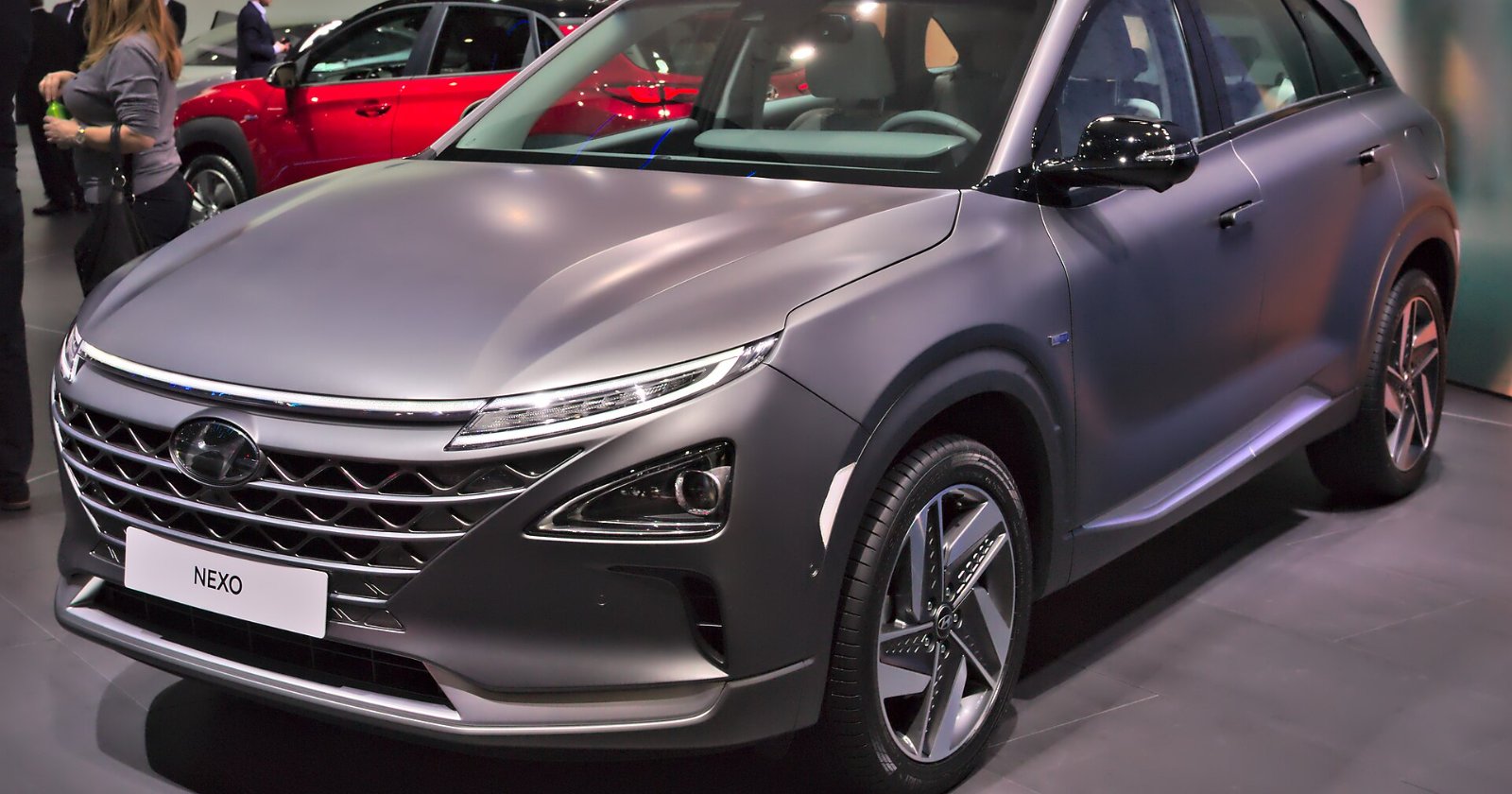


A fuel cell end plate contract with no disclosed value is an unusual headline, but the supply window is not: 2029 to 2034. DYP, listed on KOSPI as 092780, disclosed on 26 October that Hyundai Motor selected it to supply two types of fuel cell end plate for the 100 kW class hydrogen fuel cell systems used in Hyundai passenger vehicles. The selection notice reached DYP on 23 October.
What the fuel cell end plate filing says and omits
The filing names the customer, the component and the period. It does not state a contract value, a share of revenue or volumes. DYP adds that the terms may change depending on the customer’s requests and on future progress. For an investor reading the Korean regulatory disclosure system, that means the order is a sourcing decision rather than a booked backlog figure.
End plates clamp and seal the fuel cell stack and carry reactant and coolant connections at its ends, which makes them structural parts of the stack rather than electrochemical ones. A start in 2029, four years from now, suggests sourcing for a later generation of the system, although the filing does not say so.
The scale of DYP against the order
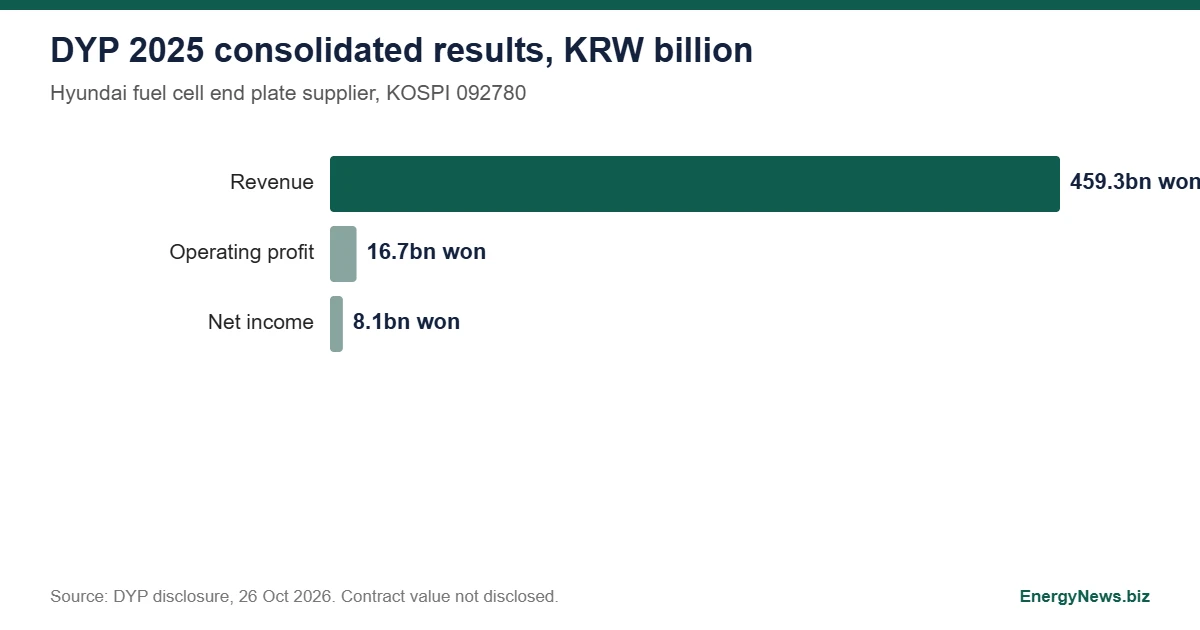
DYP’s consolidated revenue for 2025 was 459.3 billion won, with operating profit of 16.7 billion won and net income of 8.1 billion won. That is an operating margin of about 3.6 percent and a net margin of about 1.8 percent, calculated from the reported figures. A supplier on those margins has limited headroom to absorb volume risk, which is why a multi year frame matters more than a single large number.
Demand behind the fuel cell end plate order
Industry data reported on 26 October put cumulative domestic fuel cell vehicle sales in Korea at 50,262 units through September 2026, eight years after the Nexo launched in 2018. The milestones reported were 10,000 units in 2020, 20,000 in 2022 and 30,000 in 2023. The cumulative total averages about 6,300 vehicles a year since the Nexo launch, a calculation from those two figures.
The new Nexo range was reported to rise from 609 km to as much as 720 km, with domestic localisation of core parts above 90 percent across more than 60 suppliers. Those supplier numbers are attributed to Hyundai and could not be checked against a company document.
Volume is the problem, sourcing is the answer
The difficulty for any fuel cell component maker is that annual vehicle volumes are small relative to conventional powertrains, so component orders are only as large as vehicle demand. Locking in a supplier for six years is the usual response: it gives Hyundai a secure domestic source and gives DYP a planning horizon, without fixing quantities.
Hydrogen mobility volumes depend heavily on policy and infrastructure timing, as the delays on Daejeon’s hydrogen tram line 2 illustrate. The fuel cell end plate order will only convert into revenue if vehicle output in 2029 and after reaches the levels Hyundai plans, and the filing leaves those levels open.
Add EnergyNews.biz as a preferred source on Google


