


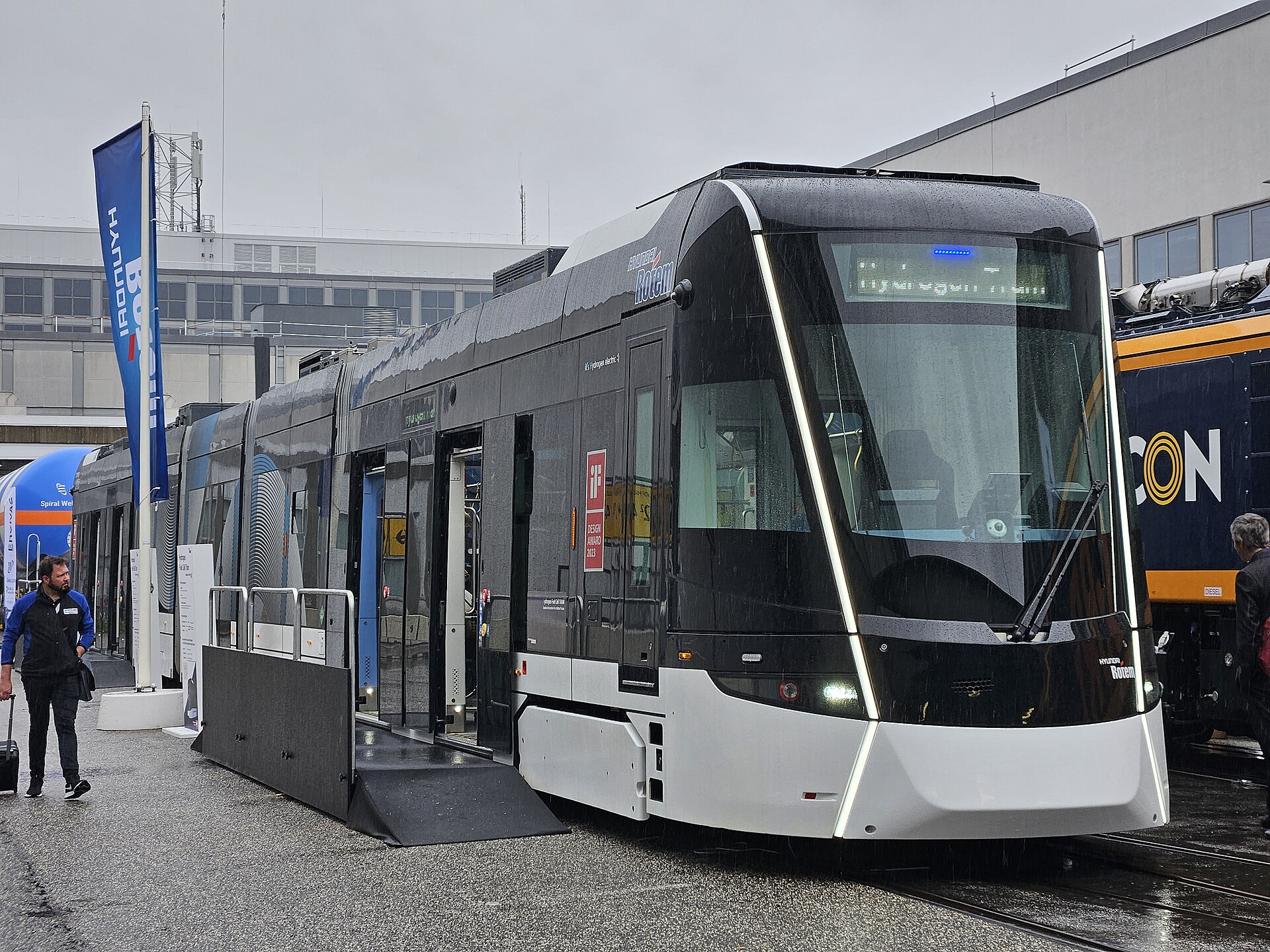


Daejeon’s hydrogen tram, a 38.8 km line that its builder calls the longest catenary free route in the world, is now expected to open in 2030, two years after the 2028 date it was sold on. The delay does more than move a date. It changes which of Korea’s two hydrogen tram projects proves the technology first, and it leaves the hydrogen supply side of the line, the part the project still has to build, as the least discussed risk.
Hydrogen tram: two explanations for two lost years
A report of 17 October says the 2030 date follows from construction under the Seodaejeon underpass of the Honam railway line and from the reconstruction of the Daedeok Bridge. The city said the bridge works start on 19 October, that they are meant to finish in May 2029, and that the bridge is the main road link between the Daedeok research zone and Dunsan, so heavy congestion is expected during the work. Once the bridge is done, the city says it will run trial operation so that the Line 2 opening in 2030 is not disrupted.
The city’s mayor has given a different reason to the city council: the tram was delayed because the power supply method was changed to hydrogen under the previous administration, even though nothing required it, and a city audit is examining whether that switch was appropriate. The two accounts can both be true, but they point to different lessons. One is about civil works coordination, and the other is about the technology choice itself.
What the numbers cover
| Item | Figure |
|---|---|
| Line length and stops | 38.8 km, 45 stops, circular route |
| Project cost (2024 figure) | About ₩1.5 trillion |
| Vehicle contract (July 2024) | ₩293.4 billion for 34 Hyundai Rotem hydrogen trams |
| Cost per tram | About ₩8.6 billion |
| Vehicles as a share of project cost | About 19.6 percent |
| Project cost per kilometre | About ₩38.7 billion |
The arithmetic matters for the delay. With the trams about a fifth of the budget, most of the exposure sits in the civil works, track and stations, which is where the time was lost. The 2024 contract reports scheduled the 34 trams for delivery from the first half of 2026 to mid 2028, and the cost figure predates the delay: a council member has since asked the mayor about the reasons for a cost increase. Neither the current delivery schedule nor the current cost has been published in the material reviewed.
Ulsan now goes first
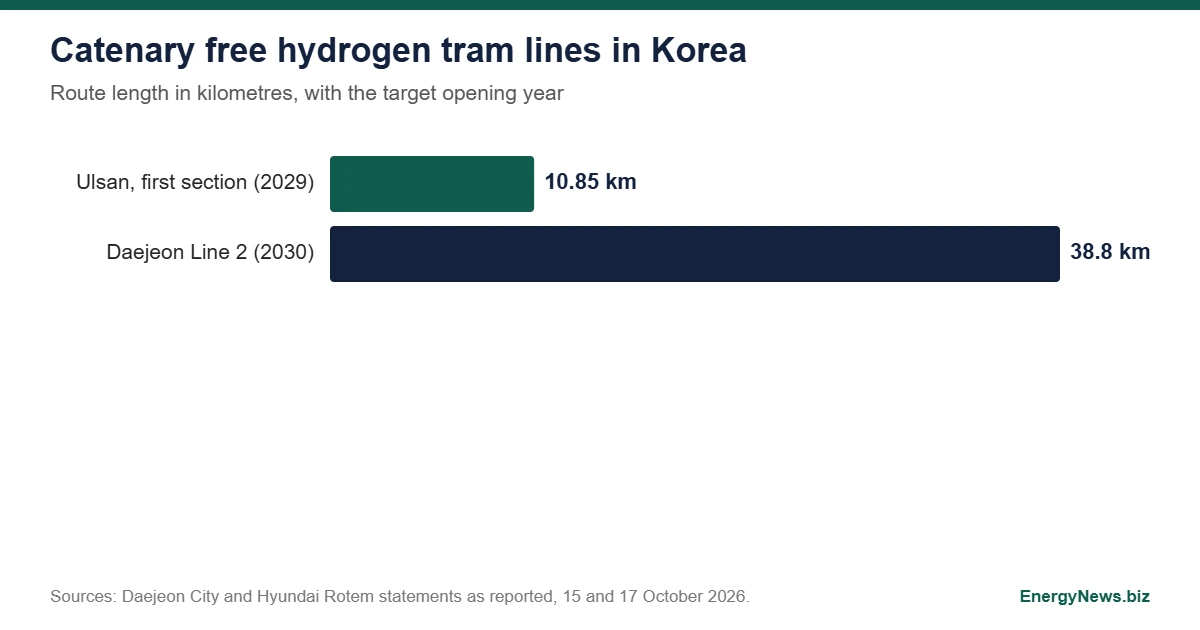
Ulsan’s line, from Taehwagang Station to the Sinbok intersection, is 10.85 km and is targeted for 2029. That is 28 percent of the length of the Daejeon route. If both dates hold, the first operating evidence for hydrogen trams in regular service comes from a section about a quarter the length of the project that gets the headline, a year before the longer one opens. Hyundai Rotem itself said the project’s credibility will depend on whether the Ulsan and Daejeon lines open.
That matters outside Korea. On 7 October Hyundai Rotem signed a memorandum of understanding with Egypt’s National Authority for Tunnels on a hydrogen electric tram system for the New Administrative Capital, at a Korea and Egypt business roundtable attended by Egypt’s transport minister and Korea’s trade, industry and energy minister. A memorandum is a statement of intent, and a reference line in service is what turns it into an order.
The testing window, and the stations
The bridge is due in May 2029 and the line in 2030, so the test period runs from about 8 months, if the opening comes in January 2030, to about 19 months if it comes in December 2030. The earlier plan assumed a six month test run. A longer window leaves room for the work the report says is hardest: hydrogen refuelling stations and the method of charging the trams, the ancillary facilities that the same report expects to be difficult to build. The line also needs a continuous hydrogen supply for 34 trams, and no station capacity or supply contract for it appears in the material reviewed.
The checks are dated: the start of the Daedeok Bridge works on 19 October 2026, bridge completion in May 2029, Ulsan’s opening in 2029 and Daejeon’s in 2030. For another hydrogen mobility project judged against its own schedule, see Toyota’s new Sora fuel cell bus. Sources: report of 17 October 2026 on the Daejeon hydrogen tram; Hyundai Rotem announcement of the Egypt memorandum; Daejeon City statements and the 2024 contract reports.
Add EnergyNews.biz as a preferred source on Google


