


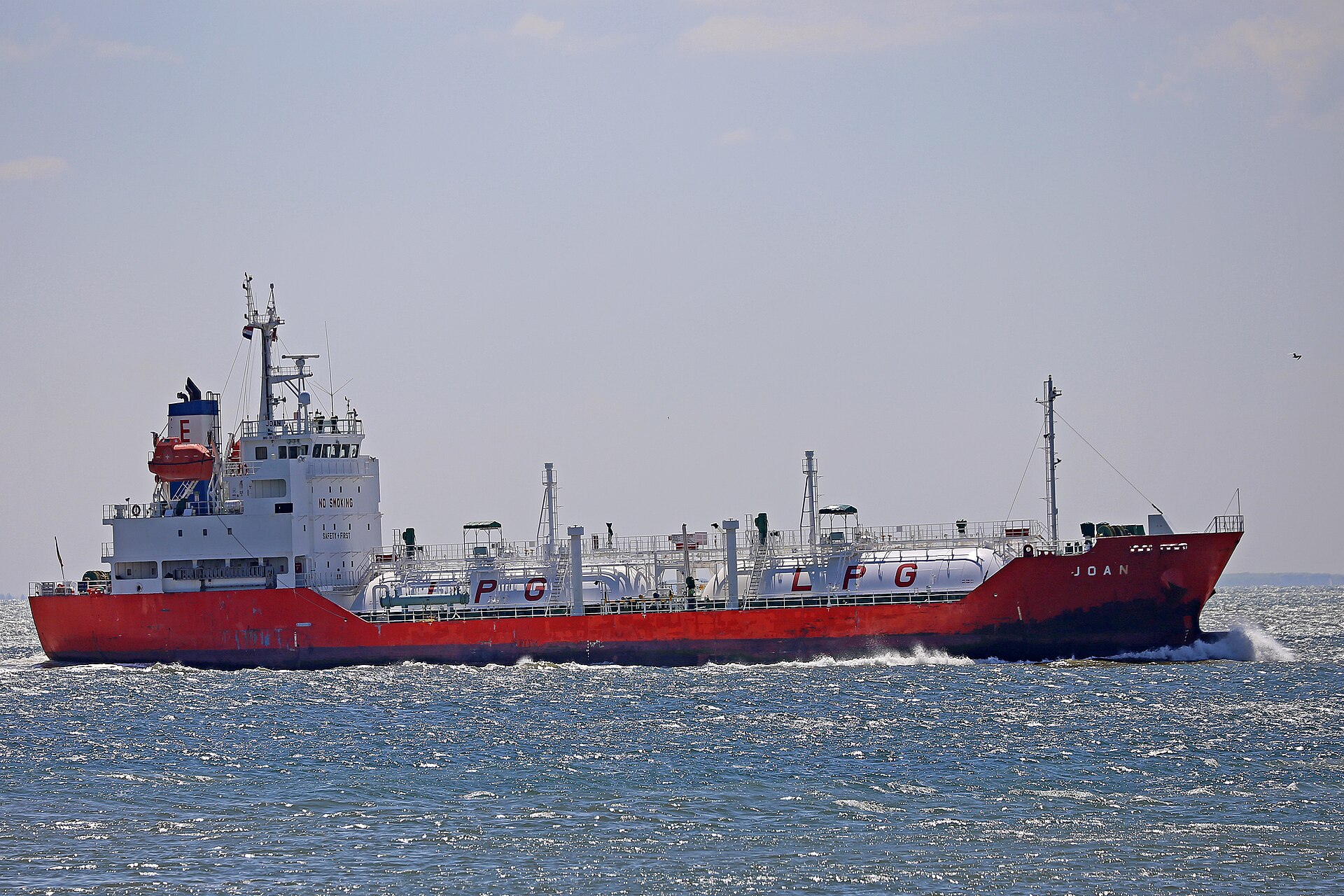


Maersk Tankers says its RIPPLE project, a conversion of very large ammonia carriers to burn ammonia in dual fuel engines, is one of 77 projects the European Commission selected on 19 October 2026 for €3.4 billion from the EU Innovation Fund. The selection is not an award. Grant agreements are still being drafted with the executive agency CINEA, with results due in the first quarter of 2027, and no grant amount for the Maersk ammonia carriers has been published. For the Maersk ammonia carriers the selection is a first step, not a payment.
The Commission’s own release does not name RIPPLE. For another view of shipping decarbonisation data, see the earlier report on the shipping energy efficiency data gap. It lists three shipping projects: a battery electric retrofit of a container vessel run by A.P. Moller Maersk, an ammonia carrier retrofit by Ammonia Carriers of Denmark, and an offshore charger for electric service vessels from Stillstrom of Denmark. No separate shipping total is given, so the maritime share of the €3.4 billion cannot be read from the release.
What the Maersk ammonia carriers project converts
According to the project description as reported, Maersk Tankers plans to retrofit four very large ammonia carriers, and up to ten if customers commit. The company ordered ten of these ships from HD Hyundai Samho Heavy Industries, and Jane Maersk and Jessie Maersk were delivered in 2026, with two more due soon. The retrofit would fit two stroke dual fuel engines able to burn ammonia, and the project states a target of more than 1.2 million tonnes of CO2 equivalent avoided over ten years. The engine maker is not named, and the description gives no vessel dimensions.
ENB calculation from the stated target: 1.2 million tonnes over ten years is 120,000 tonnes a year. Spread over four ships that is 30,000 tonnes per ship per year; over ten ships it is 12,000. The description does not say which fleet size the target assumes, so both bounds are shown and neither is a Maersk figure.
How the Innovation Fund sorted 77 projects
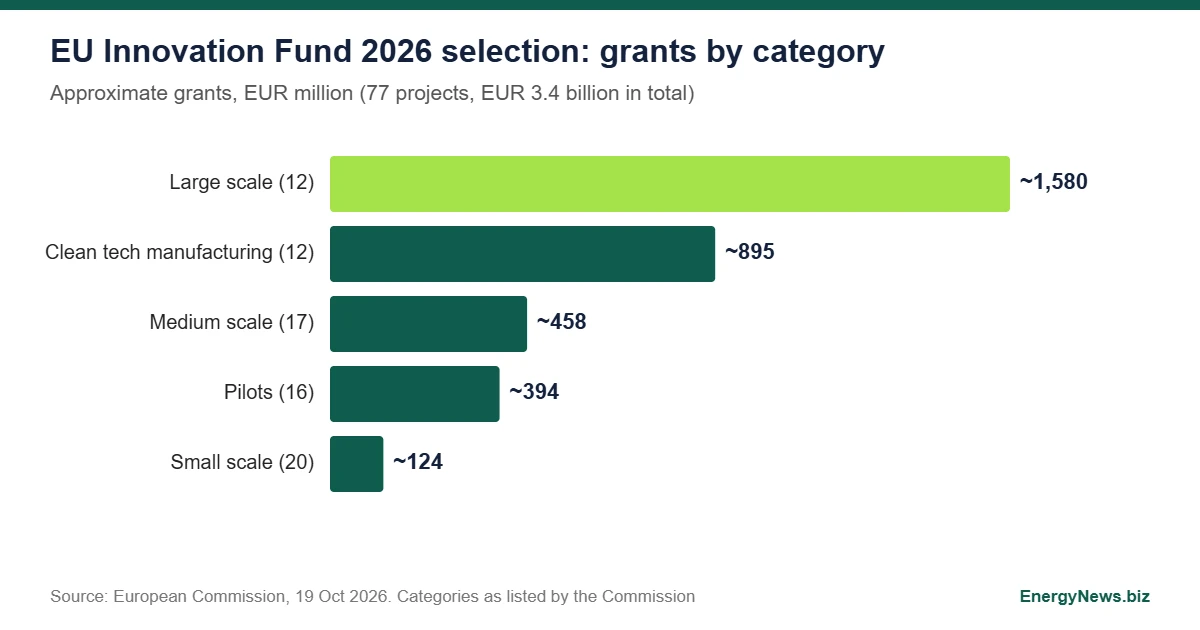
The call drew 358 applications requesting €17.5 billion. Seventy seven were funded, which is 21.5% of the applications, and the money granted equals about 19% of the money requested. Another 84 projects passed evaluation without funding. By size, 12 large scale projects with capital spending above €100 million take about €1.58 billion, 17 medium scale projects about €458 million and 20 small scale projects about €124 million, alongside 12 clean tech manufacturing projects at about €895 million and 16 pilots at about €394 million.
The topic split shows what the Maersk ammonia carriers compete with. Sixteen industrial carbon management projects receive close to €1.2 billion, about 35% of the total, and the Commission estimates they avoid 122 million tonnes of greenhouse gases over their first ten years. Eight projects producing fuels such as e-methane, methanol or hydrogen receive about €122 million, about 3.6%. Transport as a whole gets €1.3 billion across 27 projects, including five sustainable aviation fuel projects at €367 million. The Commission estimates about 290 million tonnes of CO2 avoided over the first decade, an estimate of its own and not a measured result.
What stays open for the Maersk ammonia carriers
The project description as reported says nothing about where ammonia fuel for the converted Maersk ammonia carriers would come from, and it gives no cost for the retrofit or the share a grant would cover. Without those two figures the 1.2 million tonne target cannot be tested against the money.
The portfolio now stands at about 320 projects and almost €17 billion committed, and 160 further proposals have been sent to the European Investment Bank for advisory support. The next call opens in early December 2026. For the Maersk ammonia carriers the decisive date is earlier and quieter: the grant agreement with CINEA, due by the first quarter of 2027, is the first point at which the amount, the ship count and the conditions become public.
Add EnergyNews.biz as a preferred source on Google


