


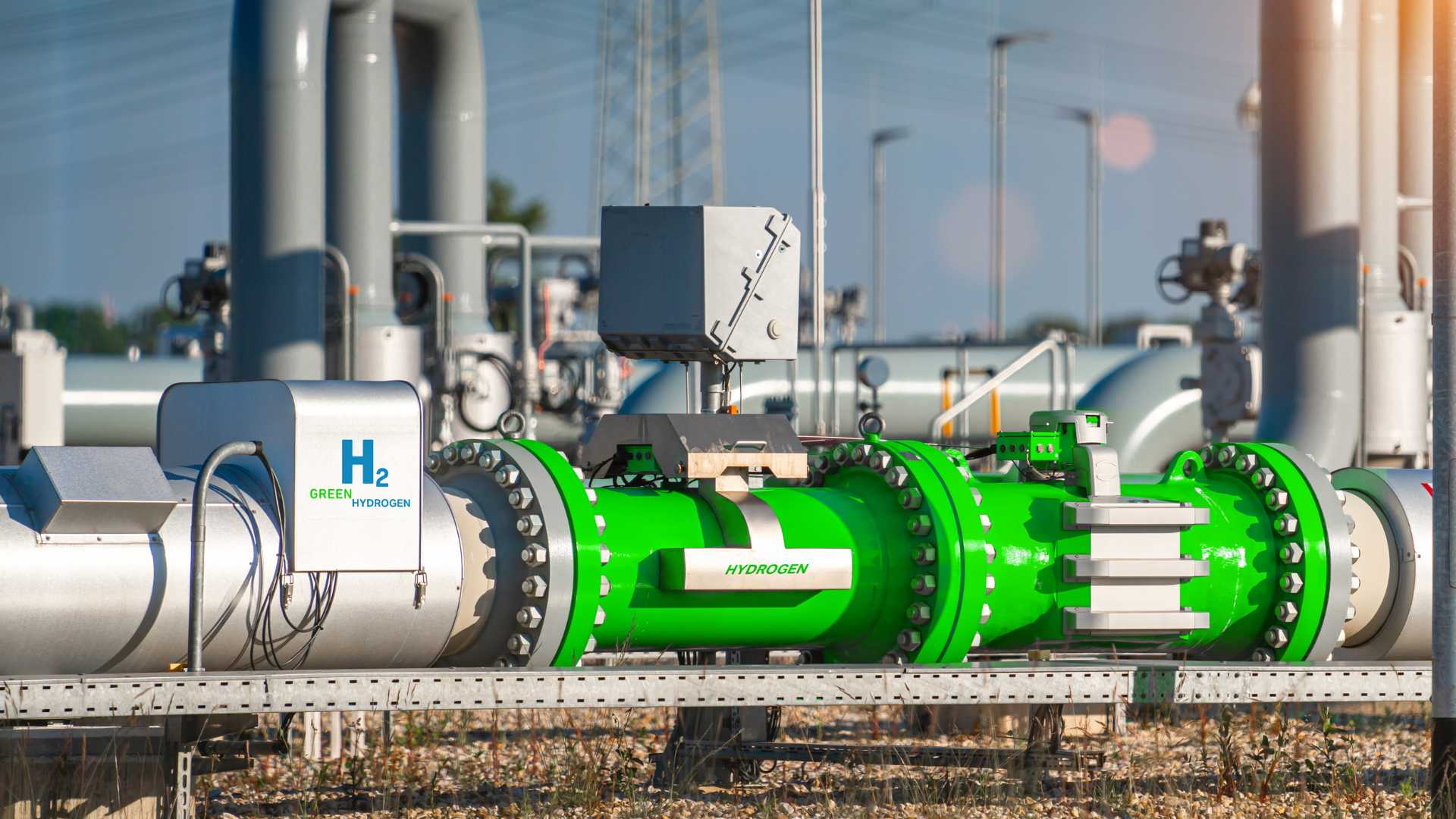

Austria has committed €275 million to four national flagship hydrogen projects and is actively developing the diplomatic groundwork for a southern corridor that would transport green hydrogen from North Africa through Italy to Central Europe. The announcement, made by Economics Minister Wolfgang Hattmannsdorfer at the UNIDO hydrogen conference in Vienna, positions Austria not as a terminal consumer of imported hydrogen but as a transit and distribution hub for the broader Central European market. The strategic framing is deliberate: a country with no significant domestic fossil fuel endowment and a recent history of acute exposure to Russian gas supply disruption is moving to ensure that its next energy dependency does not replicate the geographic concentration of the last one.
The industrial logic driving the hydrogen priority is equally direct. Austria’s most energy-intensive sectors, including steel, chemical, and glass production, cannot decarbonise through electrification alone at current or near-term technological readiness levels. High-temperature industrial processes and feedstock requirements in these industries create a structural demand for a clean energy carrier that can substitute for natural gas and coal without requiring fundamental redesign of production processes. Green hydrogen, produced via electrolysis powered by renewable electricity, is the primary candidate for that role, and the scale of Austria’s domestic industrial base means that imported supply will be a necessary complement to whatever can be produced nationally.
Algeria and the Southern Corridor Rationale
Algeria’s identification as the primary prospective partner for the southern corridor reflects a combination of geographic, resource, and infrastructural factors that make it a more credible near-term supplier candidate than many of the other North African and sub-Saharan origins that European hydrogen import strategies have discussed. The country sits at the northern end of the Saharan solar and wind resource belt, which offers among the highest renewable energy potential on the continent. It also possesses an established gas export infrastructure, including pipeline connections to Europe via Italy and Spain, that provides a basis for hydrogen transport either through dedicated new pipelines or, potentially, through hydrogen-natural gas blending in adapted existing infrastructure.
Hattmannsdorfer’s direct engagement with Nabil Kafi, Secretary General of the Algerian Ministry of Energy, on the sidelines of the UNIDO conference, and his planned ministerial visit to Algeria in the autumn, reflect an assessment that the bilateral relationship requires active diplomatic cultivation rather than passive commercial development. Algeria has engaged in parallel conversations with Germany, Italy, and other European energy importers about hydrogen cooperation, and the competition among European buyers for preferential supply access is likely to intensify as the market develops. Austria’s move to establish an early bilateral framework positions it ahead of the point at which supply commitments become commercially binding.
The routing via Italy is also strategically significant. Italy has established itself as a prospective gateway for North African energy into Europe, with the government in Rome advancing its own Mattei Plan for Africa, which includes energy cooperation as a central pillar. Austrian reliance on Italian transit infrastructure for the southern hydrogen corridor creates both an alignment of interests with a key EU partner and a dependency on the pace of Italian infrastructure development that Vienna does not fully control. The corridor’s viability depends not only on Algerian production capacity and Austrian distribution infrastructure but on the intermediate Italian pipeline and terminal network that connects the two.
Domestic Infrastructure Investment and the OMV Dimension
The €275 million national investment in flagship hydrogen projects provides the domestic infrastructure foundation that would be required for Austria to function as a distribution hub rather than simply a transit corridor. Hub status implies storage, blending, and redistribution capabilities, not merely pipeline throughput. The specific projects receiving funding have not been detailed in the available government communication, but the ministry has indicated that industrial decarbonisation applications in steel, chemicals, and glass are the primary use cases, suggesting that at least a portion of the investment is directed at demand-side infrastructure that would anchor domestic consumption and make import contracts commercially viable.
OMV, Austria’s largest energy company, is currently constructing one of the largest electrolysis facilities in Europe, a development that situates the national hydrogen strategy within a broader industrial mobilisation that extends beyond government capital allocation. Electrolysis capacity at scale is a prerequisite for domestic green hydrogen production and, potentially, for value-added processing of imported renewable electricity into hydrogen that can then be distributed to Central European industrial buyers. The combination of OMV’s production infrastructure and the government’s pipeline and corridor diplomacy reflects a division of roles in which the state establishes supply route access and the private sector develops the processing and distribution assets that give that access commercial value.
The Africa Strategy Context and Its Implications
The southern hydrogen corridor is embedded within Austria’s new Africa strategy, which frames the continent not primarily as a development assistance recipient but as a partner for joint investment in future technologies and infrastructure expansion. That framing is analytically consistent with the economic structure of the hydrogen cooperation being pursued: Algeria would provide the renewable resource base and production capacity, Austria would provide capital, technology, and a guaranteed offtake market, and the arrangement would generate economic value for both parties in a form that differs structurally from the extractive relationships that characterised earlier phases of European engagement with North African energy resources.
Whether that framing translates into genuinely equitable partnership terms will depend on the commercial structures of specific agreements, the distribution of value along the supply chain, and the extent to which Algerian industrial capacity is developed to capture processing and manufacturing value rather than simply exporting primary energy. These questions are not resolved by a ministerial announcement or a diplomatic framework; they are answered in project finance agreements, offtake contract terms, and technology licensing arrangements that have not yet been negotiated. The Africa strategy framing creates a stated intention; the economic content of that intention will be determined by negotiations that are at an early stage.
Geopolitical Drivers and the Diversification Imperative
The strategic urgency behind Austria’s hydrogen corridor push is inseparable from the geopolitical context that has reshaped European energy planning since 2022. Austria was among the European economies most exposed to the consequences of Russian gas supply disruption following the invasion of Ukraine, having maintained a higher dependence on Russian imports for longer than most of its EU peers. The current conflict in the Middle East, which has closed the Strait of Hormuz and sent oil prices above $100 per barrel, provides a second data point reinforcing the same structural lesson: concentration of energy supply in politically unstable or adversarially governed geographies creates economic vulnerability that outlasts any individual crisis.
Hydrogen from North Africa does not eliminate geopolitical supply risk; Algeria has its own internal political dynamics and regional relationships that introduce a different category of supply security considerations. But it does diversify the vector of that risk, reducing the specific exposure to Russian pipeline dependency and Middle Eastern oil market volatility that has repeatedly transmitted economic disruption into Austrian and Central European industrial activity. Hattmannsdorfer’s characterisation of hydrogen as key to making Europe more independent identifies the directional goal accurately, even as the practical path from the current state of corridor diplomacy to a functioning, commercially scaled supply relationship involves a decade or more of infrastructure development, policy coordination, and market building that has barely begun.
The timeline tension is one of the central analytical challenges in evaluating the southern corridor strategy. Austria’s industrial decarbonisation targets and the competitive pressures bearing on its steel and chemical sectors operate on a shorter horizon than the infrastructure development cycle for a new cross-continental hydrogen supply route. Bridging that gap will require interim solutions, potentially including blue hydrogen with carbon capture, hydrogen-natural gas blending in existing networks, and accelerated domestic electrolysis deployment, while the longer-term import infrastructure matures. The €275 million in flagship project investment represents a down payment on that transition, but the full capital requirement for a functioning Central European hydrogen market is several orders of magnitude larger, and the financing architecture for that build-out remains to be developed.


