


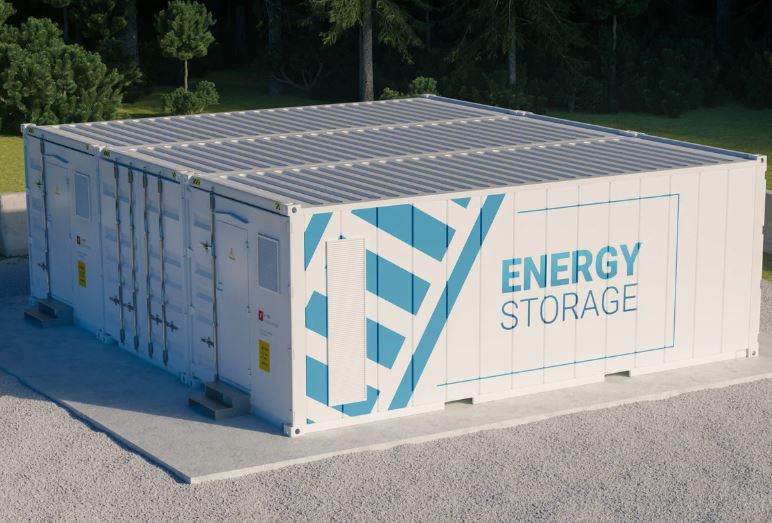

Hungary’s grid-scale battery buildout is moving into a more capital-intensive phase, with state-owned utility MVM committing roughly EUR 26 million to a 31 megawatt battery energy storage system at its Tiszaújváros site.
The project, sized at 62 megawatt-hours, reflects a growing recognition that balancing capacity is becoming a limiting factor as renewable generation increases, even in power systems that continue to rely heavily on gas-fired assets.
The investment is being financed through a combination of national funding and the European Union’s Recovery and Resilience Facility, with approximately EUR 11 million provided as non-repayable EU support. This funding structure highlights a broader trend across Central and Eastern Europe, where grid-scale storage economics remain closely tied to public financing mechanisms rather than merchant market revenues. At current cost levels, standalone battery projects in the region often struggle to achieve bankability without grants or regulated revenue frameworks.
MVM’s choice of a lithium-ion, containerized system aligns with the dominant technology deployed across Europe for short-duration storage. With a two-hour discharge profile, the Tiszaújváros facility is designed primarily for intraday balancing, frequency regulation, and short-term congestion management rather than seasonal energy shifting. These use cases are increasingly critical as solar generation expands and intraday price volatility rises, but they also limit the system’s ability to address longer-duration adequacy challenges.
The project’s co-location with a 1,000 megawatt gas turbine power plant under construction adds a strategic dimension. While the battery and gas facilities will operate independently, their parallel development underscores how storage is being positioned as a complement rather than a substitute for thermal capacity. Batteries can respond within milliseconds to grid fluctuations, smoothing renewable output and reducing ramping stress on gas units, but they do not eliminate the need for dispatchable generation during prolonged low-renewable periods.
From a system perspective, the integration of battery storage alongside gas generation reflects a pragmatic approach to energy transition constraints. Hungary’s renewable expansion has accelerated, but grid reinforcement and cross-border interconnection have not always kept pace. Battery systems offer a faster-to-deploy option for enhancing flexibility, particularly at sites where grid access and permitting are already in place, as is the case in Tiszaújváros.
Cost metrics provide additional context. At approximately EUR 840 per kilowatt of installed power and around EUR 420 per kilowatt-hour of storage capacity, the project sits within the typical range for European utility-scale lithium-ion systems supported by public funding. While prices have declined over the past decade, recent volatility in battery supply chains and raw material costs has slowed further reductions, reinforcing the role of subsidies in enabling deployment.
Construction is expected to be completed by June 30, 2026, with MVM stating that all technical and grid conditions are already secured. The presence of an existing smaller storage unit at the site suggests that operational experience is informing the scale-up, an important factor as utilities move from pilot installations toward assets that materially affect system operations.


