


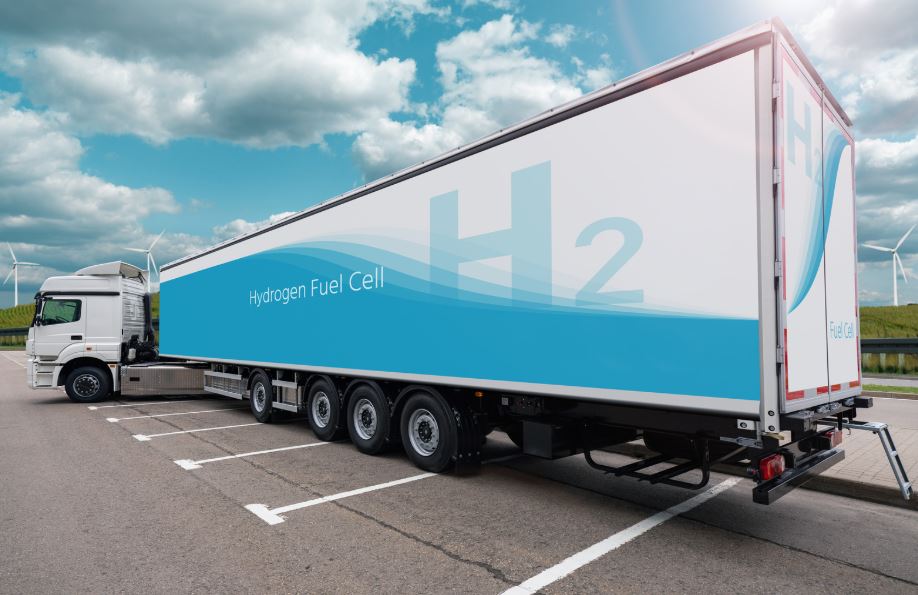

Rockcheck New Energy Group has placed 65 hydrogen powered heavy duty trucks into service across logistics and port operations in the Beijing Tianjin Hebei region, a scale that begins to test whether hydrogen mobility can function reliably outside subsidized pilots.
The deliveries split along two commercially defined use cases. Thirty trucks entered service with Tianjin HanDe Logistics, supporting equipment and materials transport for CNOOC across Beijing, Tianjin, Hebei, and Shandong. Another 35 vehicles were delivered to Tianjin Development Zone Xintianli Trading Company for container collection and port cargo movements at Tianjin Port. Both applications are characterized by predictable routes, centralized depots, and high vehicle utilization, conditions widely viewed as prerequisites for early hydrogen trucking viability.
The trucks were manufactured by Farizon Commercial Vehicle, but the more notable feature lies in their supply chain localization. Each vehicle integrates a 200 kilowatt fuel cell system from Rockcheck Hydrogen Power, a Type IV onboard hydrogen storage system from Tianhai, and a power battery supplied by MGL, all sourced from companies within the Beijing Tianjin Hebei industrial cluster. This regionalized configuration reflects a deliberate policy push to anchor hydrogen value chains locally, reducing dependence on imported components while aligning vehicle specifications with specific freight profiles.
Hydrogen truck economics remain challenging. Capital costs are still significantly higher than diesel equivalents, and fuel costs depend heavily on hydrogen pricing and availability. China’s approach has been to narrow the gap through concentrated deployment zones rather than nationwide rollout. Port logistics, refinery supply chains, and industrial corridors offer steady demand that can support refueling infrastructure utilization rates, a critical variable in hydrogen cost reduction.
Rockcheck positions itself not just as a vehicle integrator but as a full spectrum hydrogen energy operator. The company reports an operational footprint of 1,215 hydrogen fuel cell vehicles, 15 hydrogen refueling stations, and cumulative hydrogen consumption of 5,700 metric tons. According to the group, these vehicles have logged nearly 59.5 million kilometers and avoided approximately 56,000 metric tons of carbon dioxide emissions. While such figures depend on assumptions about displaced diesel use and hydrogen sourcing, they indicate a level of operational continuity uncommon outside a few global markets.
The Beijing Tianjin Hebei region has become a focal point for hydrogen mobility precisely because it combines heavy industry, dense logistics flows, and policy coordination across municipalities. Fuel cell trucks serving ports and energy companies align with regional decarbonization priorities while avoiding the long range infrastructure challenges faced in cross country freight.


