


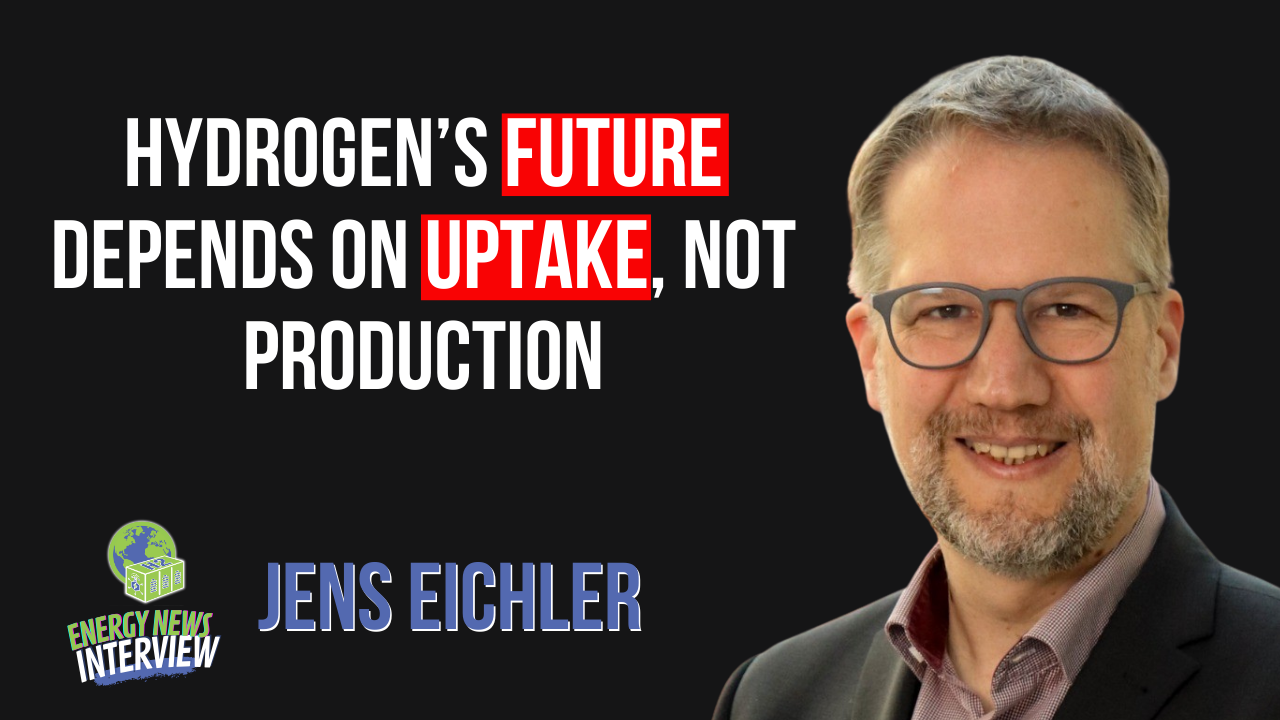

At H2 MEET, while electrolyzers, mobility platforms, and hydrogen infrastructure maps dominated the exhibition floor, 3M delivered a perspective that cut across the hype: hydrogen today does not face a technological barrier in production or transport. Its primary constraint is industrial uptake.
Dr. Jens Eichler, Hydrogen Technology Business Architect at 3M, emphasized that scaling hydrogen is less about building more electrolysers and pipelines, and more about ensuring consistent end-use demand. “The future of hydrogen depends on uptake,” Eichler said.
WATCH THE INTERVIEW HERE
Eichler highlighted a growing asymmetry in the hydrogen value chain. In Europe, production technologies such as alkaline and PEM electrolysis are scaling rapidly, aided by well-understood learning curves. Hydrogen transport infrastructure, particularly pipelines in Germany, is also progressing under national agreements for a hydrogen backbone. The underdeveloped segment, Eichler noted, is end-use. Mobility applications dominate public perception, but long-term industrial viability depends on hydrogen’s integration as a chemical reactant, reducing agent, or feedstock in sectors that are difficult to electrify.
While production cost remains a factor, it is not insurmountable. Eichler pointed to established learning-curve effects, noting that cost reductions tend to follow predictable trajectories as capacity scales. While learning rates vary by industry and are higher in sectors such as solar than in electrolyzers, similar cost declines can reasonably be expected as electrolyzer manufacturing expands, following patterns observed across other clean energy technologies. However, cost efficiency alone will not drive uptake. Regulatory frameworks are equally decisive. Clear definitions of “low-carbon hydrogen” or “green steel” determine whether industrial users can justify premium pricing. Without such clarity, the economic incentive to adopt hydrogen remains weak, regardless of technological progress. Decarbonization strategies must translate environmental performance into commercial advantage, or adoption will stall.
Eichler also stressed the local nature of hydrogen deployment. Regulatory frameworks, industrial readiness, and infrastructure maturity vary significantly by region. Europe benefits from a relatively unified regulatory approach, though implementation can be slow. China executes through centralized decision-making, enabling faster project deployment. Korea presents a unique landscape, with opportunities in shipbuilding and liquid hydrogen logistics. Successful hydrogen deployment requires harmonizing material science, infrastructure, and regulation to meet local industrial realities rather than relying on a universal model.
3M’s contributions illustrate the upstream, often invisible role of materials in hydrogen scalability. Operating across 49 technology platforms, 3M does not supply hydrogen systems directly, but its materials influence critical performance metrics. In liquid hydrogen storage, insulation quality directly affects boil-off and operational efficiency. In compressed hydrogen tanks, advanced resin systems reduce carbon fiber usage and lower costs. In PEM electrolysis, iridium catalyst efficiency impacts scalability and overall system performance. These are not minor optimizations; they define capex, opex, efficiency, and component lifetimes, all crucial to project viability beyond pilot phases.
When asked about future material breakthroughs, Eichler rejected the idea of a single “silver bullet.” Hydrogen systems require simultaneous improvements across production, storage, transport, and end-use. Performance gains, cost reductions, and durability improvements must compound, highlighting that materials science is a prerequisite for scaling, not an isolated solution. Eichler’s overarching point was clear: hydrogen adoption will ultimately depend on whether industry, regulation, and materials evolve in concert.


