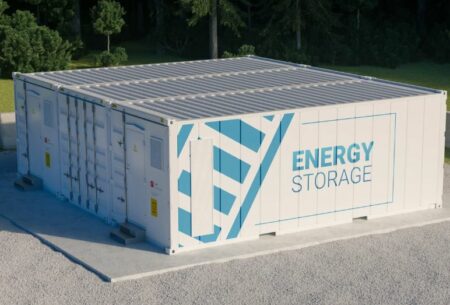
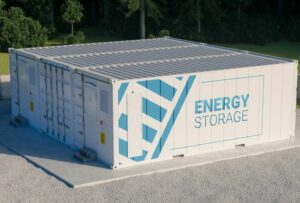




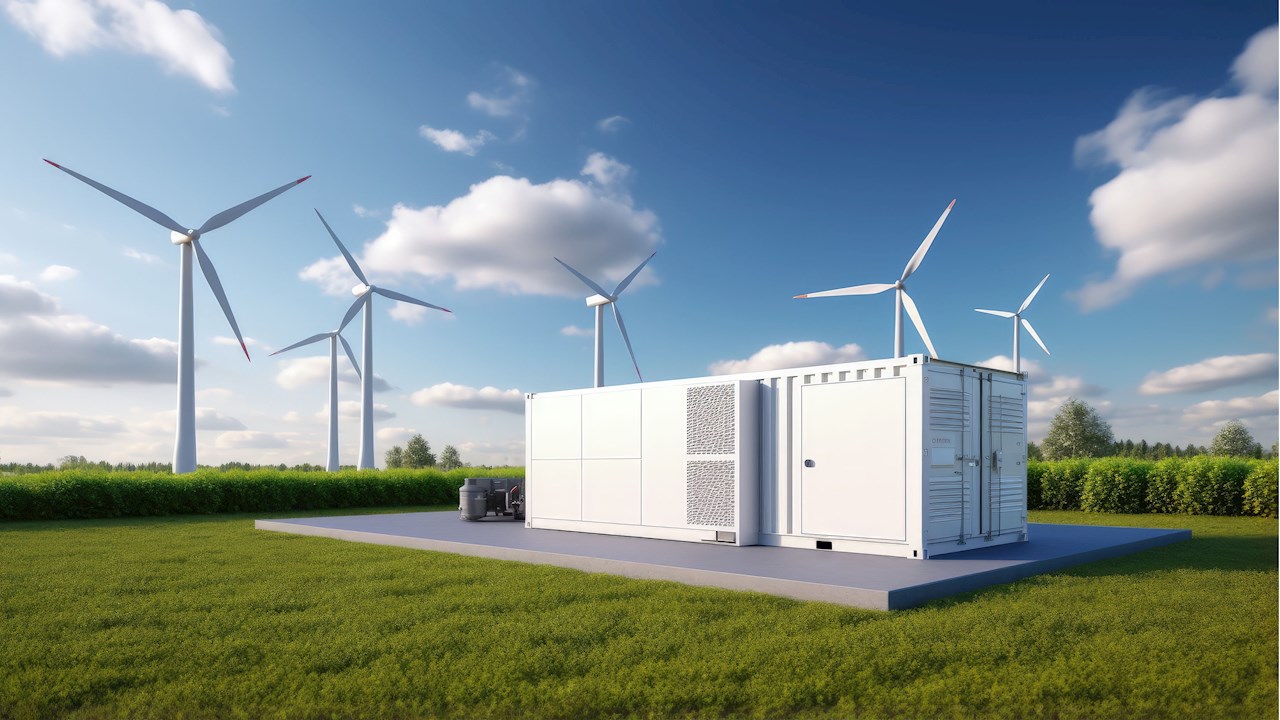
Statkraft has commissioned what it describes as Ireland’s first four-hour grid-scale Battery Energy Storage System at its Cushaling site in County Offaly, a move that targets curtailment economics as much as grid stability.
The 22.8 megawatt battery sits alongside the 55.8 megawatt Cushaling Wind Farm, allowing surplus wind generation to be captured during periods of low demand and discharged later when prices and system need are higher. In practical terms, the four-hour duration allows the asset to supply the equivalent of roughly 10,000 homes for a full evening peak after wind output has dropped, extending the role of batteries beyond frequency response into load shifting.
Response speed remains a core value proposition. According to the developer, the system can be activated by EirGrid in under 100 milliseconds. That performance matters in a system with one of Europe’s highest shares of variable renewables, where rapid ramps in wind output can stress balancing reserves. While fast response is now standard for lithium-ion storage, combining it with multi-hour duration changes how often and for what services the asset can be dispatched.
Until recently, Ireland’s grid-scale battery fleet has largely consisted of systems designed for 30 minutes to two hours of discharge, optimized for frequency containment and short-term balancing. Four-hour storage shifts that profile toward energy arbitrage and congestion management, narrowing the gap between renewable output and demand rather than simply smoothing second-by-second fluctuations. That distinction is central as Ireland targets deeper wind penetration without proportional increases in fossil backup.
The Cushaling installation is also notable for how it fits into a broader site strategy. The battery is located near the Edenderry power station, and Statkraft plans to add a large solar project at the same location. Co-locating wind, solar, and storage creates optionality, allowing the battery to absorb output from multiple generation profiles and increasing asset utilization. Hybridization of this kind aligns with policy discussions around green energy parks, but its economic success will depend on market rules that reward flexibility over installed capacity alone.
Claims that storage will reduce electricity prices over the long term hinge on that market design. Batteries can lower system costs by reducing curtailment, deferring grid upgrades, and displacing peaking generation, but those benefits materialize only if dispatch signals and revenue stacking are robust. Ireland’s evolving ancillary services and capacity mechanisms will therefore be as decisive as the technology itself in determining whether multi-hour storage scales quickly.
Statkraft’s broader investment footprint adds context. Since entering the Irish market in 2018, the company has committed more than €1 billion across wind, solar, storage, and grid services, signaling confidence that flexibility assets will play a growing role as renewable penetration rises. The Cushaling battery also includes a local sustainability fund, a relatively small but increasingly common feature as developers seek to anchor large infrastructure projects within host communities.