


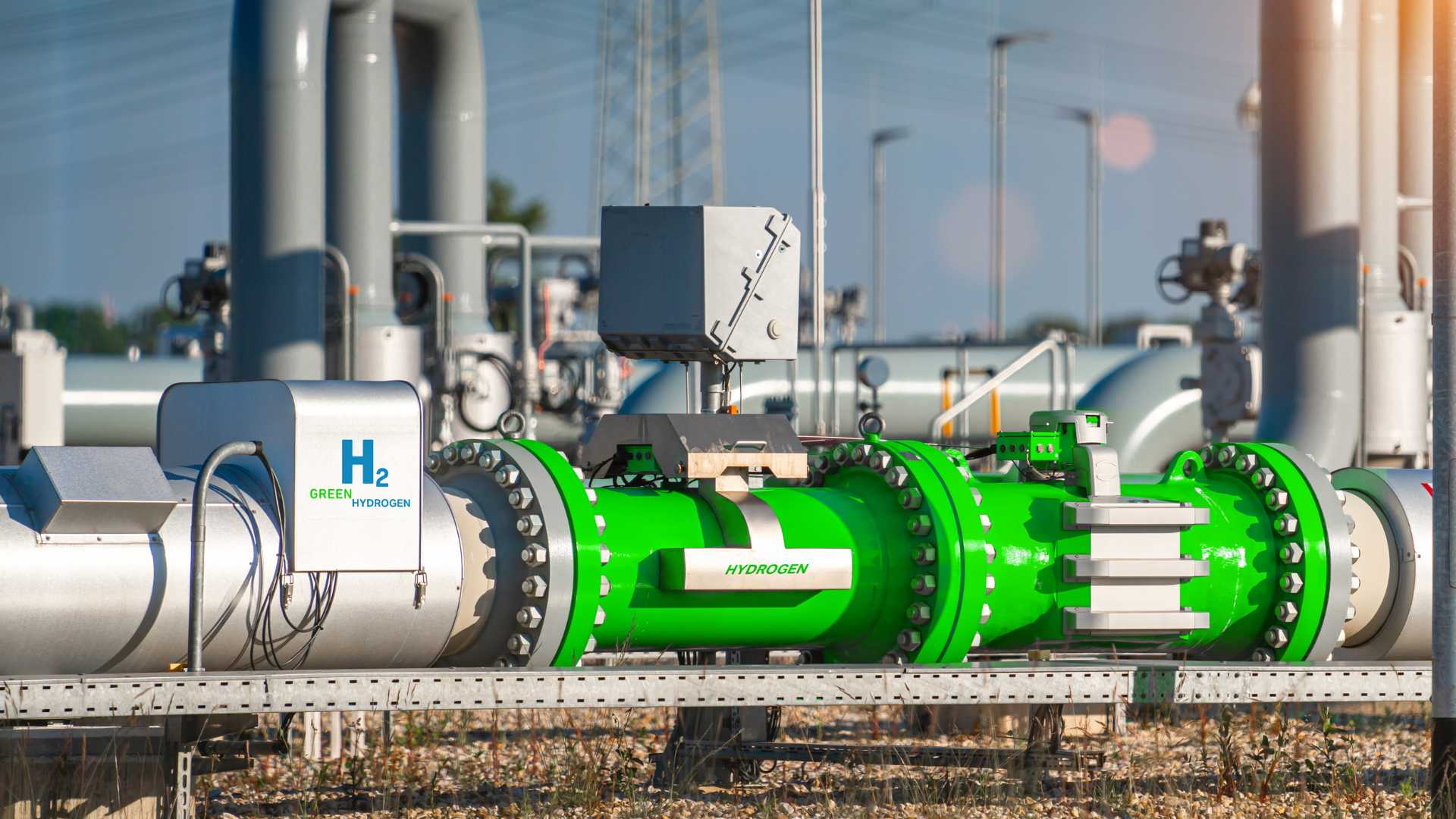

A consortium led by the Japanese shipping company Mitsui O.S.K. Lines has launched the Japan–New Zealand Hydrogen Corridor to examine the feasibility of producing green hydrogen in New Zealand and exporting it to Japan.
The project will begin feasibility studies in fiscal year 2026 and aims to assess the commercial, technical, and logistical requirements for establishing a long term hydrogen trade route between the two countries.
The consortium includes several major Japanese industrial firms with experience across construction, heavy engineering, and hydrogen technology development. Participants include Obayashi Corporation, Kawasaki Heavy Industries, and Chiyoda Corporation. Each brings different capabilities that could be required to develop a full hydrogen value chain, ranging from production infrastructure to transport systems and end use applications.
New Zealand’s energy mix is central to the project’s premise. The country already generates a large share of its electricity from renewable sources, particularly hydropower and geothermal energy. These resources provide relatively stable, low carbon electricity that could support large scale electrolysis operations. Electrolysers use electricity to split water into hydrogen and oxygen, creating what is widely described as green hydrogen when the electricity input comes from renewable generation.
For Japan, international hydrogen supply has become a critical part of long term decarbonization planning. Domestic renewable resources are limited compared with many other advanced economies, and large scale hydrogen production would require substantial electricity capacity expansion. Importing hydrogen or hydrogen derived fuels from countries with abundant renewable resources has therefore emerged as a central component of Japan’s energy strategy.
The concept of hydrogen corridors has gained traction as governments and industrial consortia attempt to replicate the global trade structures that already exist for liquefied natural gas. In these models, production occurs in resource rich regions while energy importing economies establish transport and distribution infrastructure to receive the fuel. Hydrogen, however, presents additional technical challenges related to storage, shipping, and energy density.
Transporting hydrogen across long distances requires conversion into more stable forms, such as liquefied hydrogen or hydrogen carriers like ammonia or liquid organic hydrogen carriers. These conversion processes add complexity and cost to the supply chain, making large scale export projects dependent on both technological development and supportive market conditions.
Shipping companies are increasingly involved in these initiatives because maritime transport will likely play a central role in global hydrogen trade. Mitsui O.S.K. Lines has been actively exploring alternative marine fuels and hydrogen transport technologies as the shipping sector faces mounting pressure to reduce greenhouse gas emissions. Hydrogen and hydrogen derived fuels such as ammonia are widely viewed as potential long term solutions for decarbonizing maritime transport, although commercial deployment remains at an early stage.
Demonstration projects are beginning to test the technical feasibility of hydrogen powered vessels. Japan launched a hydrogen powered tugboat in 2025 as part of a broader effort to evaluate hydrogen propulsion technologies for maritime applications. While these early projects remain experimental, they provide operational data that could inform future vessel design and fuel supply requirements.
The proposed corridor also reflects broader shifts in Asia Pacific energy cooperation. Countries such as Australia, New Zealand, and parts of Southeast Asia possess large renewable energy potential but relatively small domestic energy markets. Japan and South Korea, by contrast, are major energy importers with limited renewable resources and strong industrial demand for low carbon fuels. Hydrogen trade partnerships between these regions are therefore being explored as a mechanism to align supply potential with long term demand.


