






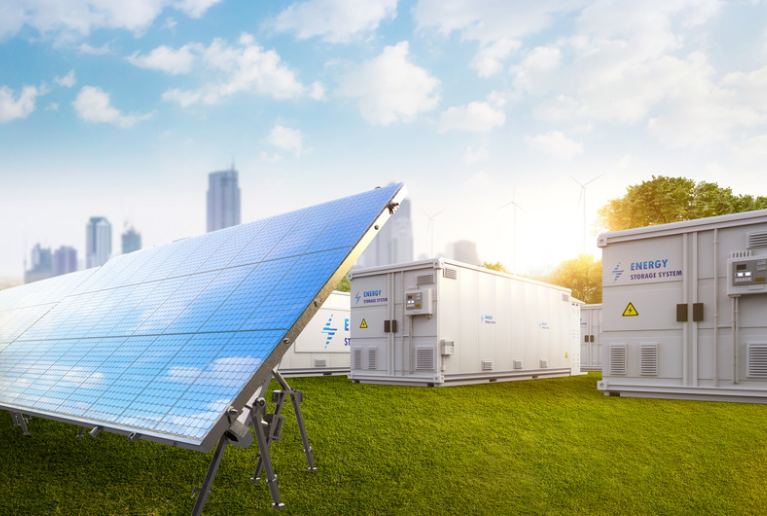
Moonwatt, a Netherlands-based energy storage developer, is addressing this challenge with a purpose-built sodium-ion battery energy storage system (BESS) engineered for hybrid solar applications.
Moonwatt’s modular “string battery” design combines sodium-ion NFPP cells in passive-cooled, hermetically sealed enclosures with hybrid inverters, enabling DC-coupled integration directly with solar panels. The architecture is scalable from kilowatts to gigawatts, providing flexibility for both new builds and retrofits while reducing land use and installation complexity. The BESS design eliminates active cooling and high-maintenance HVAC systems, lowering O&M costs and maintaining performance in extreme temperatures.
The solution leverages four core innovations: sodium-ion chemistry for thermal stability and long-term cycling resilience, advanced passive cooling for reliability and silent operation, distributed string architecture for modular scalability, and DC-coupling to maximize energy capture and reduce electrical balance-of-plant costs. By addressing CAPEX, OPEX, efficiency, and fire-safety concerns, Moonwatt aims to accelerate the adoption of firm solar power.
Moonwatt plans its first deployment at Cleantech Park Arnhem in 2026, in partnership with IPKW and Veolia. Recognizing the system’s potential to advance solar hybridization, the Dutch Business Agency (RVO) awarded Moonwatt a €1.15 million DEI+ grant to support ongoing development.
The deployment reflects a broader shift in the solar market toward integrated storage solutions that enhance flexibility, optimize generation, and mitigate grid constraints, critical factors as Europe scales renewable energy capacity to meet decarbonization targets.