




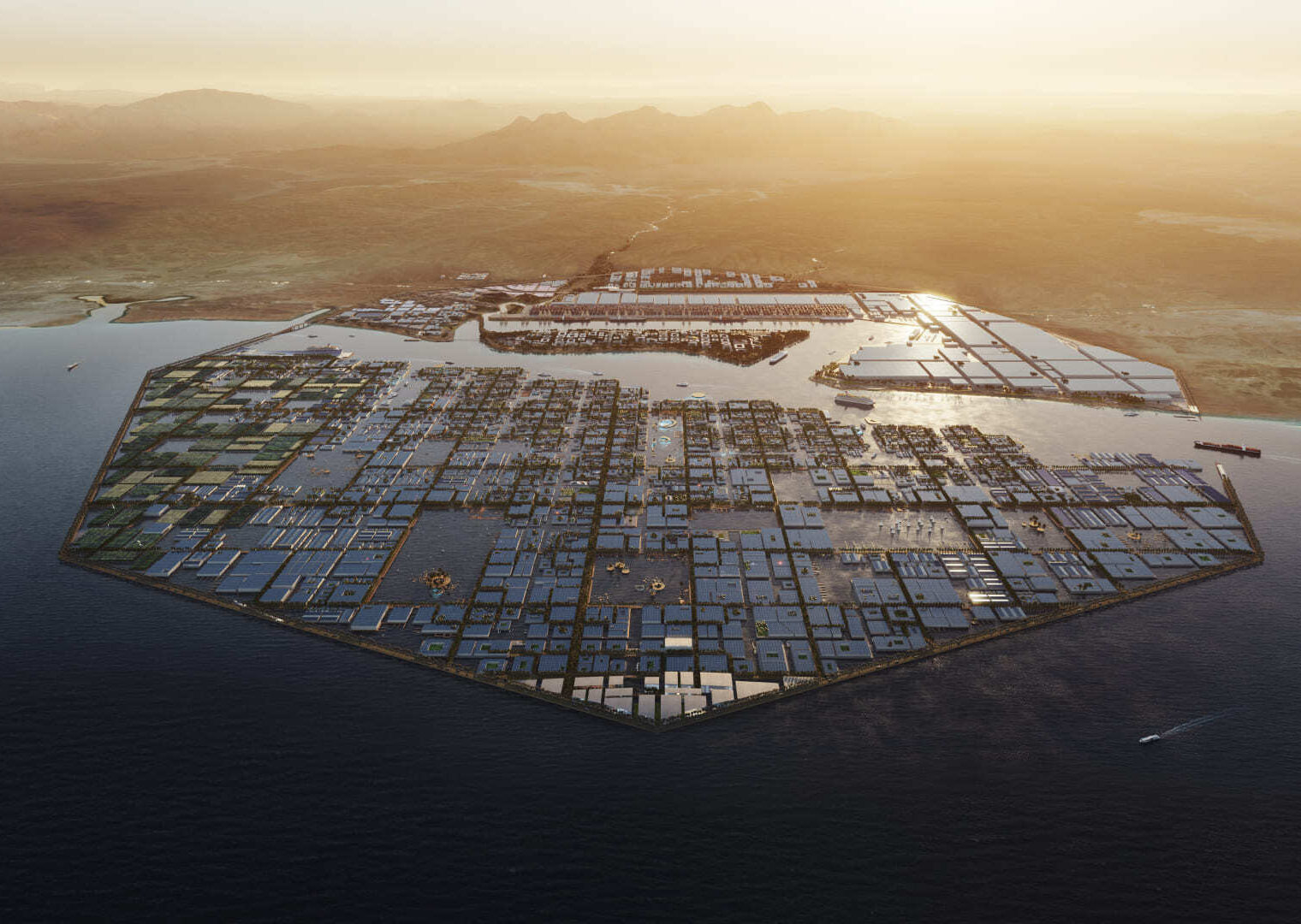
Saudi Arabia’s $9 billion NEOM green hydrogen project is becoming a test case for whether large-scale industrial developments can attract international capital by combining energy infrastructure, logistics, and investment incentives into a single platform.
Speaking at FII Priority Europe 2026, NEOM Deputy CEO Rayyan Fayez described the giga-project as a mechanism for bringing external investors into Saudi Arabia by providing the underlying infrastructure required for industrial expansion, including energy, water systems, digital connectivity, and commercial incentives.
“The enabling infrastructure” model reflects a broader shift in how major energy transition projects are being structured. Rather than relying solely on direct public investment, developers are attempting to reduce early-stage risks by building integrated ecosystems designed to attract private capital.
The NEOM green hydrogen project, developed by Air Products and ACWA Power in partnership with NEOM, has secured $6.2 billion in debt financing, with the remaining funding provided through equity contributions. The financing structure highlights the scale of capital required for hydrogen projects, where high upfront costs remain one of the main barriers to commercial deployment.
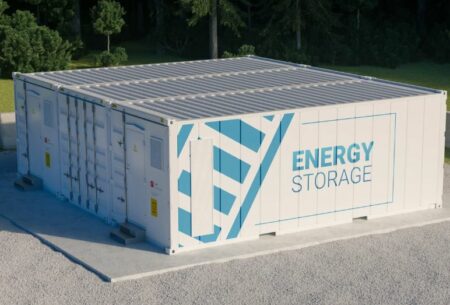
Large electrolyzer projects require not only renewable electricity generation but also supporting infrastructure for desalination, hydrogen processing, storage, and export. Integrating these elements into a single industrial zone is increasingly viewed as a way to improve project economics by reducing coordination challenges across multiple developers.
However, the investment model also faces wider market pressures affecting the global hydrogen sector. Green hydrogen projects continue to compete with uncertain demand, evolving regulatory frameworks, and questions around long-term pricing. While renewable electricity costs have declined in many regions, the total cost of producing, transporting, and storing hydrogen remains a key challenge for projects targeting international markets.
NEOM’s strategy is closely linked to its geographic position. Located along the Red Sea, the project is designed to connect energy production with international shipping routes. This location is also central to Saudi Arabia’s broader ambition to develop new trade corridors between Europe, Africa, Asia, and the Middle East.
In April, NEOM announced progress on a European multimodal land bridge intended to support freight movement from Europe through Egypt and into the Gulf region via the Port of NEOM. The logistics corridor is aimed at strengthening the role of the port as a regional cargo hub and supporting industrial supply chains connected to NEOM developments.
For hydrogen exports, logistics infrastructure will be a decisive factor. Hydrogen and its derivatives, such as ammonia, require specialized handling, storage, and transport networks. Ports capable of supporting these operations could become strategic assets as countries seek to establish international clean energy supply chains.
The NEOM project also reflects Saudi Arabia’s wider economic diversification agenda under Saudi Vision 2030, where large infrastructure projects are intended to attract foreign investment beyond traditional oil and gas sectors.