



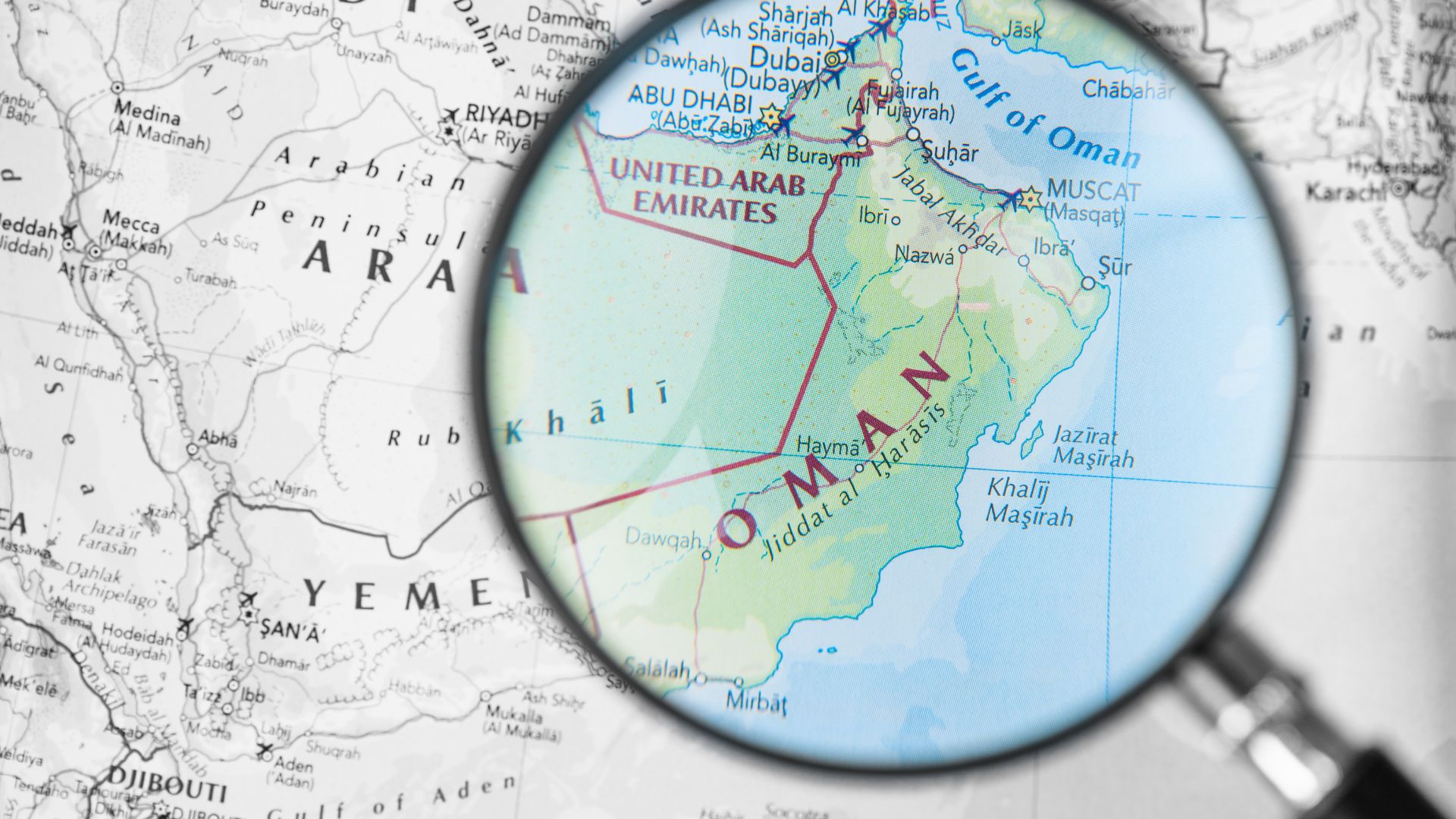
Oman’s green hydrogen sector is moving from strategy development toward large scale industrial deployment, with India based ACME Group committing approximately $4.2 billion to expand its green hydrogen and green ammonia project in the Special Economic Zone at Duqm.
The investment adds momentum to Oman’s ambition of becoming a major exporter of hydrogen based fuels, while also highlighting the challenges of building competitive supply chains in an emerging global market.
The expansion, coordinated through Hydrogen Oman (Hydrom), includes the second and third phases of ACME’s planned green hydrogen and green ammonia complex. Project Development and Usufruct Agreements signed with Hydrom and the Public Authority for Special Economic Zones and Free Zones (OPAZ) formally integrate the development into Oman’s national hydrogen framework.
The agreements provide a structured pathway for project execution, but the scale of investment also reflects the broader challenge facing green hydrogen developers: transforming renewable energy potential into commercially viable industrial infrastructure.
ACME’s expanded development will cover approximately 80 square kilometers in Duqm, with each of the second and third phases expected to produce around 71,000 tonnes of green hydrogen annually and approximately 400,000 tonnes of green ammonia per year.
The expansion builds on the first phase of the project, currently under construction, which is designed to produce 100,000 tonnes of green ammonia annually. Once all three phases are completed, the facility is expected to reach total green ammonia production capacity of approximately 900,000 tonnes per year.
This scale positions the project among the larger green ammonia developments planned in the Middle East, a region increasingly viewed as a potential supplier of renewable hydrogen derivatives to international markets.
Green ammonia has become a central focus of hydrogen export strategies because it offers advantages in storage and transportation compared with pure hydrogen. However, its commercial competitiveness depends on several factors, including renewable electricity costs, electrolyzer performance, infrastructure availability and long term buyer commitments.
The ACME investment is part of a broader effort by Oman to establish a hydrogen industry linked to renewable power generation, industrial production and international exports.
Hydrom has stated that awarded green hydrogen projects across Al Wusta and Dhofar Governorates represent more than $50 billion in planned investments. These projects are expected to involve nearly 35 GW of renewable energy capacity and target around 1.5 million tonnes of green hydrogen production annually by 2030.
The scale of Oman’s project pipeline reflects growing international interest in countries with strong renewable energy resources and available land for large scale developments. However, the transition from announced projects to operational assets remains dependent on financing conditions, infrastructure development and demand certainty.
Globally, green hydrogen projects have faced delays as developers and investors reassess costs and market conditions. Many projects require significant upfront capital before reliable revenue streams are established, making long term offtake agreements increasingly important.
Oman’s hydrogen plans are closely connected to economic diversification objectives. Rather than focusing only on renewable energy exports, the country aims to develop a broader industrial ecosystem around hydrogen production.
The Duqm project could support downstream industries including ammonia production, renewable powered manufacturing and potentially other hydrogen based industrial applications. The Special Economic Zone’s existing infrastructure and location along major maritime trade routes are considered strategic advantages for export oriented projects.
The economic impact, however, will depend on how much domestic value is created. Large scale hydrogen developments can generate construction activity and infrastructure investment, but long term benefits depend on supply chain development, local industrial participation and workforce development.
Oman is entering a market where several countries are pursuing similar export strategies. Regions with abundant renewable resources, including parts of the Middle East, North Africa, Australia and Latin America, are competing to supply future demand for green hydrogen and ammonia.
The challenge is that global demand remains uncertain. While industries such as shipping, fertilizers, refining and chemicals are expected to drive hydrogen consumption, buyers continue to evaluate whether green alternatives can compete economically with established fossil based products.
For Oman, competitiveness will depend not only on renewable resource availability but also on the ability to deliver hydrogen derivatives at prices acceptable to international markets.