


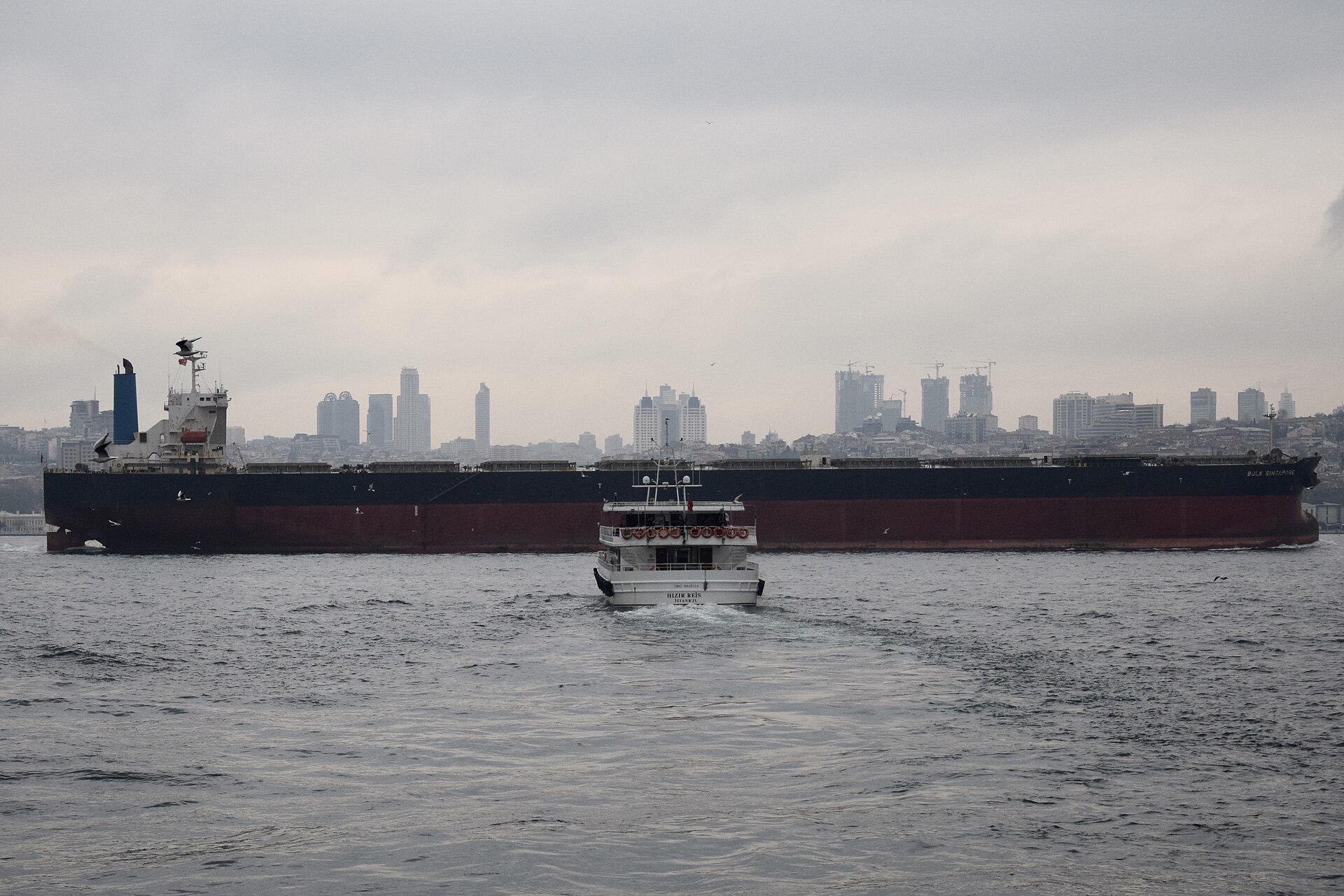


PowerCell Group has won a repeat order for 10 Marine System 225 fuel cell systems, more than 2 MW in total, for two additional hydrogen electric bulk carriers that GMI Group AS is developing, and the order takes the programme from two vessels to four. The company announced the order on 13 October 2026, with deliveries planned for 2027 and 2028. Across all four ships PowerCell will now supply 24 systems with a combined fuel cell power of 5.4 MW.
The order in numbers
| Item | First order (September 2025) | New order (October 2026) | Total |
|---|---|---|---|
| Vessels | 2, each 85 m, 4,000 t | 2, each 3,000 t deadweight | 4 |
| Marine System 225 units | 14 (derived) | 10, five per ship | 24 |
| Fuel cell power | 3.15 MW (derived) | More than 2 MW (2.25 MW) | 5.4 MW |
| Delivery | Vessel launch planned for 2027 | 2027 to 2028 |
The first order’s figures are derived from the totals: 24 systems less 10 is 14, and 24 systems at 5.4 MW means each Marine System 225 is rated at 225 kW, so 14 systems are 3.15 MW. The announcement does not state the value of either order.
Four ships on one platform
GMI Group is developing a new generation of bulk carriers that use compressed renewable hydrogen to generate electricity on board through fuel cells. The first two vessels are 85 m long with a cargo capacity of 4,000 t, and their launch is planned for 2027. They are expected to be the world’s first hydrogen electric bulk carriers. The two added vessels have a deadweight capacity of 3,000 t each and will be built by the Chowgule shipyard, with each equipped with five Marine System 225 systems.
If the first order’s 14 systems were split evenly, each of the first two ships would carry seven, which is 1.575 MW, against 1.125 MW for each of the smaller ships. Per tonne of cargo capacity that is about 0.39 kW for the larger ships and 0.375 kW for the smaller ones, nearly the same ratio. The even split is an assumption, since the announcement does not give the allocation, and the match is close enough to be consistent with similar sizing.
Why a repeat order matters to both sides
PowerCell chief executive Richard Berkling said the step from two to four vessels shows the value of the company’s business model, which combines an industrialised fuel cell platform with application engineering and control capability that can be applied repeatedly across a fleet. He said it improves delivery efficiency for the customer and widens the installed base for long term service. GMI chief executive Torstein Holsvik said adding two ships reflects confidence in the solution and the cooperation built in the first project, and that using the same core technology and delivery structure gives a solid base for a new generation of vessels powered by renewable hydrogen.
The announcement describes the reuse of the same fuel cell platform as letting engineering, certification and integration experience from the first vessels apply directly to later deliveries. In numbers, the new order adds 10 systems to the 14 already ordered, an increase of about 71 percent in units and in installed power for the programme, and 10 of the 24 systems, about 42 percent of the total, go to the two smaller ships.
Who does what, and who pays
PowerCell supplies the fuel cell systems and engineering support within its scope. eCap Marine manages integration at vessel level and certification of the hydrogen and propulsion solution. The vessel concept has received support from the Norwegian funds Enova and the NOx Fund and is part of the Green Shipping Programme. The announcement does not state the amount of that support or the contract values.
The dated facts are the 2027 launch of the first two ships and delivery of the new systems in 2027 to 2028. The open items are the price per system, the hydrogen supply and bunkering arrangements for compressed hydrogen, and the routes the ships will serve, none of which the announcement describes. For a land based fuel cell vehicle announced the day after, see Toyota’s new Sora fuel cell bus. Source: PowerCell Group announcement of the additional order, 13 October 2026.
Add EnergyNews.biz as a preferred source on Google


